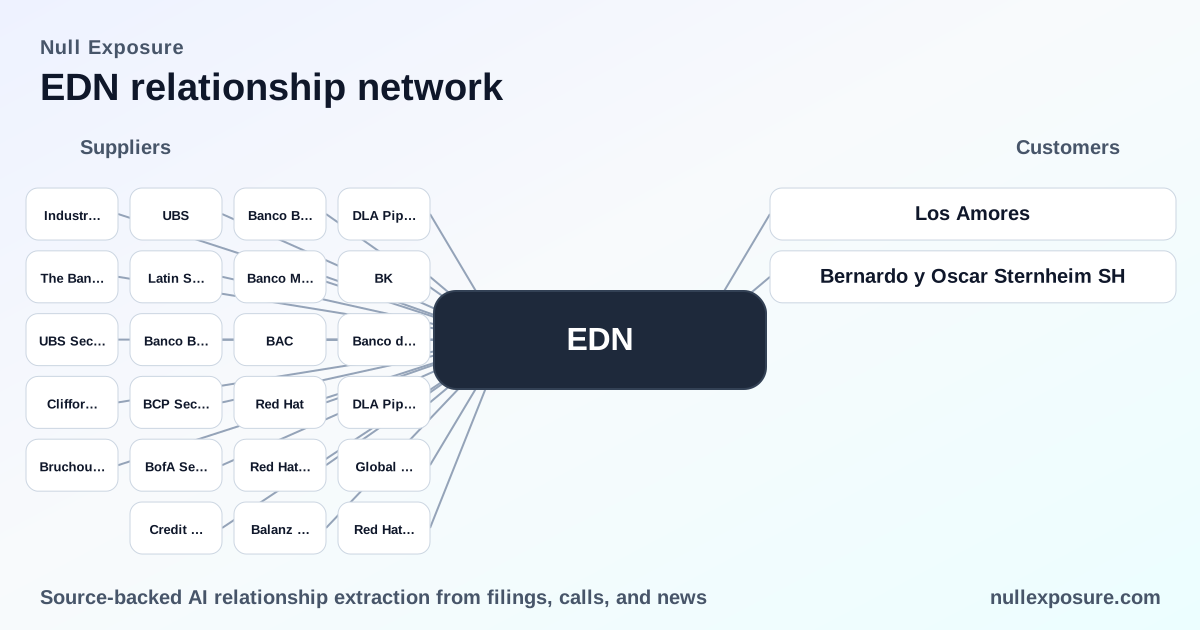
EDN Customer Relationships: Legal Incidents, Operational Signals, and Investor Implications
Empresa Distribuidora y Comercializadora Norte S.A. (EDN / Edenor) is Argentina’s largest electricity distributor in the northern Buenos Aires metro area. The company monetizes through regulated distribution tariffs and volumetric energy sales to residential, commercial and industrial customers, collecting fees under a tariff regime that exposes revenue to regulatory resets, inflation indexing and operational reliability. With a market capitalization near $1.16 billion and a trailing P/E of 6.1, EDN’s valuation reflects stable regulated cashflow tempered by operational and political risk. For a focused, research-grade view of EDN’s customer relationships and related legal incidents, see Null Exposure’s coverage at https://nullexposure.com/ — useful for sourcing underlying documents and media reports.
How EDN’s customer relationships drive value and risk
EDN operates as a regulated monopolist within its concession area: customer base breadth, tariff framework and network reliability together determine cash generation. The most relevant operating-model characteristics for investors and operators are:
- Contracting posture: EDN operates under a public concession and regulatory obligations rather than bespoke commercial contracts with most end customers; tariff schedules and service rules dominate the commercial terms for the mass customer base.
- Concentration: Revenue is highly diversified across millions of small accounts, reducing single-customer concentration risk, while a subset of industrial and commercial users generate outsized load and political noise.
- Criticality: Electricity distribution is indispensable; outages trigger direct economic damage, reputational loss and regulatory scrutiny. Incidents that cause manufacturing stoppages or food production loss lead to litigation and administrative penalties.
- Maturity: EDN is a mature public utility with legacy network assets and an established claims history, implying recurring exposure to outage-related liability and public-interest litigation.
These signals inform diligence priorities: focus on outage frequency and duration metrics, regulatory-case backlog, and the company’s operational investments to reduce interruptions.
Customer litigation snapshots — what the record shows
Below are every customer relationship referenced in the available results, summarized in plain English with source citations.
Los Amores
A judicial report describes a dispute where a local ice-cream manufacturing and distribution business, operating under the trade name Los Amores, alleged damage caused by lack of electrical service and the piece documents a legal position holding Edenor objectively liable for damages to users from service interruptions. Source: Microjuris Argentina, March 10, 2016 (article covering the court finding and facts) — https://aldiaargentina.microjuris.com/2016/03/10/edenor-es-responsable-de-forma-objetiva-por-los-danos-que-genere-a-los-usuarios-la-falta-de-servicio/.
Bernardo y Oscar Sternheim SH
A separate case involves Bernardo y Oscar Sternheim SH, a textile manufacturer identified as a high-energy consumer within Edenor’s San Martín feeder, which sought compensation for production losses during power cuts; the article frames the claim around interruption-related indemnification and the customer’s sizable consumption profile. Source: Microjuris Argentina, July 27, 2018 (report on the indemnification claim and the company’s status as a large Edenor client) — https://aldiaargentina.microjuris.com/2018/07/27/la-empresa-distribuidora-de-energia-electrica-debe-indemnizar-al-fabricante-de-telas-por-la-falta-de-produccion-durante-los-cortes-de-luz/.
What these relationship items mean for investors
Both items are operational/claims incidents tied to outage-related damages, not strategic commercial partnerships. They demonstrate three important points for investors:
- Outage liability is recurrent and visible in public records. Courts and claimant filings regularly surface when industrial and SME customers suffer production losses. The 2016 and 2018 reports show litigation flows that translate into indemnity risk and regulatory attention.
- Materiality is context-dependent. The plaintiffs in the cited cases are local manufacturers; financial impact on EDN’s consolidated results depends on the number and scale of similar claims and any regulator-imposed penalties, not on the existence of individual complaints alone.
- Reputational and regulatory consequences are immediate. Publicized rulings or settlements amplify political pressure on tariff reviews and investment obligations, which in turn affect cashflow stability.
Investors should incorporate outage frequency, average duration per customer, and the company’s capex on reliability into valuation models rather than treating these as one-off legal blips.
Constraints and what the absence of explicit constraints signals
Our review found no explicit contractual constraints or customer-side exclusivity provisions disclosed within the available relationship records. This company-level signal indicates:
- No public evidence of bespoke long-term commercial contracts restricting EDN’s tariff or service flexibility with specific customers.
- Regulatory terms—not private contract clauses—are likely the operative constraints on EDN’s commercial posture.
- Operational risk is therefore managed through regulatory compliance and infrastructure investment rather than negotiated contractual remedies with major customers.
That absence is itself informative: investors should treat EDN’s customer relationships as largely governed by concession and tariff frameworks, which increases the importance of regulatory risk assessment and capital expenditure plans in forecasting.
Actionable takeaways for analysts and operators
- Prioritize network reliability metrics when modeling downside: outage frequency, SAIDI/SAIFI trends, and capex execution matter more than itemized small-claim histories.
- Monitor regulatory proceedings and public-interest litigation for precedents that expand operator liability; these two Microjuris cases are examples where judiciary commentary shaped liability narratives.
- Engage commercially with large industrial customers to understand load profiles and potential for negotiated service-level agreements that can reduce indemnity exposure.
For a deeper repository of EDN customer incident records and curated media citations, visit Null Exposure’s research hub at https://nullexposure.com/.
Bottom line
EDN’s customer-case history in public reports demonstrates the predictable pattern for an essential utility: operational incidents generate localized claims and regulatory scrutiny, but the revenue model is dominated by regulated tariffs and mass-market distribution. Investment decisions should weight the company’s ability to reduce outages and manage regulatory relations far more heavily than isolated litigation headlines.