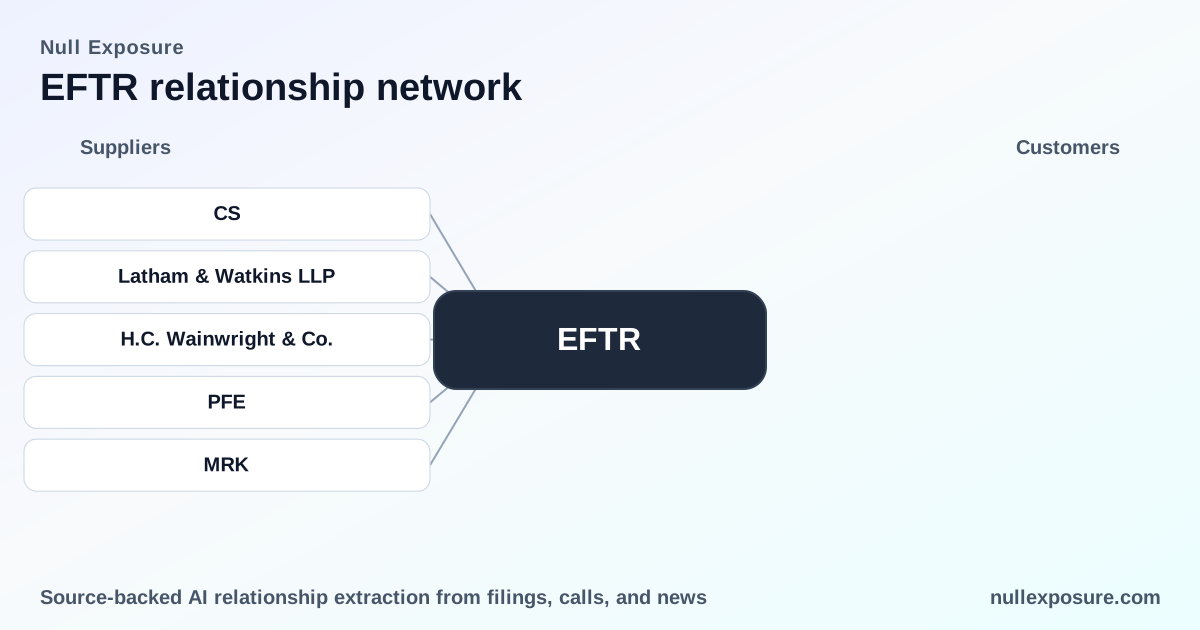
Effector Therapeutics (EFTR): Collaboration-heavy development, licensing-led value path
Effector Therapeutics is a clinical-stage oncology company that develops selective translation regulators (STRs) and monetizes primarily through licensing and strategic collaborations with large pharmas, with downstream upside tied to milestone payments, co-development opt-ins, and eventual commercial royalties or product sales. For investors, EFTR’s valuation case is execution on partnered trials and whether alliances with major drugmakers convert into late-stage assets and commercial revenue.
If you want a concise view of EFTR’s customer and collaboration footprint, visit https://nullexposure.com/ for the consolidated relationship snapshot.
How EFTR operates and where value comes from
EFTR’s commercial model is not a direct product-sales business today — it is a partnership-driven R&D company. The firm advances small-molecule candidates through clinical development while capturing value by granting exclusive licenses and entering clinical collaboration agreements with global pharmaceutical partners. Near-term financials reflect that model: limited revenue (Revenue TTM: 675,000), negative operating results (EBITDA: -32,593,000; Diluted EPS TTM: -12.57), and a corporate posture that prioritizes de‑risking programs through external capital and industrial collaborations.
This structure concentrates both upside and risk into a small set of strategic relationships and clinical milestones. Investors should weigh partnership durability and milestone structures as the central drivers of future cash flows.
The partnerships that define current customer relationships
Pfizer Inc.
Effector entered an exclusive worldwide license and collaboration with Pfizer to develop small‑molecule inhibitors of eIF4E, positioning Pfizer as a commercialization and development partner for a key target class. According to a GlobeNewswire press release dated January 9, 2020, the deal granted Pfizer rights to novel eIF4E inhibitors developed by EFTR and outlined a framework for joint development. (GlobeNewswire, Jan 9, 2020)
Merck KGaA (strategic alliance with Pfizer)
EFTR established a clinical collaboration tied to a strategic alliance between Pfizer and Merck KGaA to evaluate tomivosertib in combination with avelumab, indicating co-development activity with major immuno‑oncology playbooks. The same January 2020 GlobeNewswire release documents this collaboration as a pathway to test combination regimens in the clinic. (GlobeNewswire, Jan 9, 2020)
Merck & Co (KEYTRUDA collaboration)
EFTR has a separate clinical collaboration with Merck & Co to evaluate tomivosertib in combination with KEYTRUDA, embedding EFTR’s candidate into trials that use a top global PD‑1 therapy as the backbone. The January 9, 2020 GlobeNewswire announcement describes this arrangement and the joint study design. (GlobeNewswire, Jan 9, 2020)
What these relationships imply for investors
- Strategic validation: Partnerships with Pfizer, Merck KGaA (through its alliance with Pfizer), and Merck & Co represent high-quality external validation and materially reduce certain development risks by leveraging global trial infrastructure and market access pathways.
- Revenue profile: Current monetization is partnership-centric — licensing, milestone payments, and potential royalties — not product sales, consistent with the low reported revenue run rate and negative operating metrics.
- Concentration of execution risk: EFTR’s near-term success is tied to the outcomes of a small number of partnered trials and to whether Pfizer or Merck entities exercise development or commercialization options.
For an organized investor-facing summary of EFTR’s customer relationships and how they drive milestone exposure, see the relationship directory at https://nullexposure.com/.
Operating model signals and business constraints
EFTR’s operating model generates a clear set of company-level constraints and characteristics that investors must internalize:
- Contracting posture — collaboration-first: EFTR structures value capture through exclusive licenses and clinical collaborations rather than standalone commercialization, which accelerates de‑risking but limits near-term revenue upside to structured payments.
- Concentration: A small number of large-pharma partners represent the primary route to clinical execution and future revenue; this increases dependency on partner decisions (trial design, enrollment, and development prioritization).
- Criticality: For EFTR, partnerships are mission-critical; the company lacks scale and commercial infrastructure to independently bring a product to market today.
- Maturity: EFTR is clinical-stage, with cash flow tied to trial progression and milestone triggers rather than product cash flow; financials (negative EBITDA and EPS) reflect this developmental maturity.
- Financial constraints: Limited revenue and persistent losses mean capital markets access and partner-funded development are essential to sustain operations until potential commercialization or deal milestones.
These characteristics frame both the upside — through partner-enabled scale and licensing fees — and the downside — through partner discretion and trial outcomes.
Key risks and investor monitoring checklist
- Clinical readouts and partner decisions: The most impactful catalysts are trial outcomes and whether partners elect to further develop or license programs.
- Funding runway and milestone timing: Watch financing activity, milestone receipts, and any option exercises by partners that convert development costs into non-dilutive funding.
- Concentration risk: A small number of partners implies that a single adverse decision could sharply affect EFTR’s development trajectory and valuation.
Bottom line
EFTR is a classic small-cap, clinical-stage biotech whose value is concentrated in a handful of high-quality pharma collaborations. Those alliances provide credible development pathways and validation but also concentrate execution risk and future cash flows into partner decisions and trial outcomes. Investors evaluating EFTR should prioritize near-term clinical milestones, the structure of licensing and milestone economics, and the company’s funding position as the primary readouts of value realization.
For a quick review of EFTR’s partner network and to compare relationship exposure across peers, visit https://nullexposure.com/.