Eldorado Gold (EGO): Production, disposals and partner risk in a geographically diverse portfolio
Eldorado Gold operates, develops and sells gold and related mineral products from assets across Turkey, Canada, Greece, Brazil and Romania, monetizing through concentrated operational cash flow from production and strategic asset dispositions. The company’s core revenue drivers are commodity sales from operating mines plus periodic cash and balance-sheet relief from asset sales or project transfers; the Certej divestiture to Varvara underlines Eldorado’s use of disposal as a lever to reallocate capital and de-risk country-specific exposure. For more structured counterparty intelligence and customer relationship mapping, visit https://nullexposure.com/.
Quick financial snapshot that matters to counterparties and investors
Eldorado reports robust margins and cash generation for a mid-cap gold producer: Revenue TTM ~$2.0bn, EBITDA ~$1.15bn, operating margin ~49% and trailing PE ~10.5, demonstrating operational scale and earnings leverage to metal prices. The company’s balance-sheet and profitability profile allows it to both fund organic development and execute selective asset sales without immediate liquidity stress, which changes the bargaining position in customer and counterparty negotiations. Institutional ownership is high (~87%), concentrating shareholder influence on strategic decisions and project exits.
Why the Certej sale is a useful lens for customer and partner analysis
Eldorado’s transaction behavior provides insight into contracting posture and counterparty selection. Selling or transferring an exploration/near-development asset to a smaller listed acquirer signals an active portfolio management stance: convert non-core or politically exposed assets into cash or reduced liability while preserving capital for core operations. For counterparties and service providers, that posture implies that Eldorado will prioritize contract flexibility and creditor protection in politically sensitive jurisdictions.
The Varvara Development Group relationship: what happened and why it matters
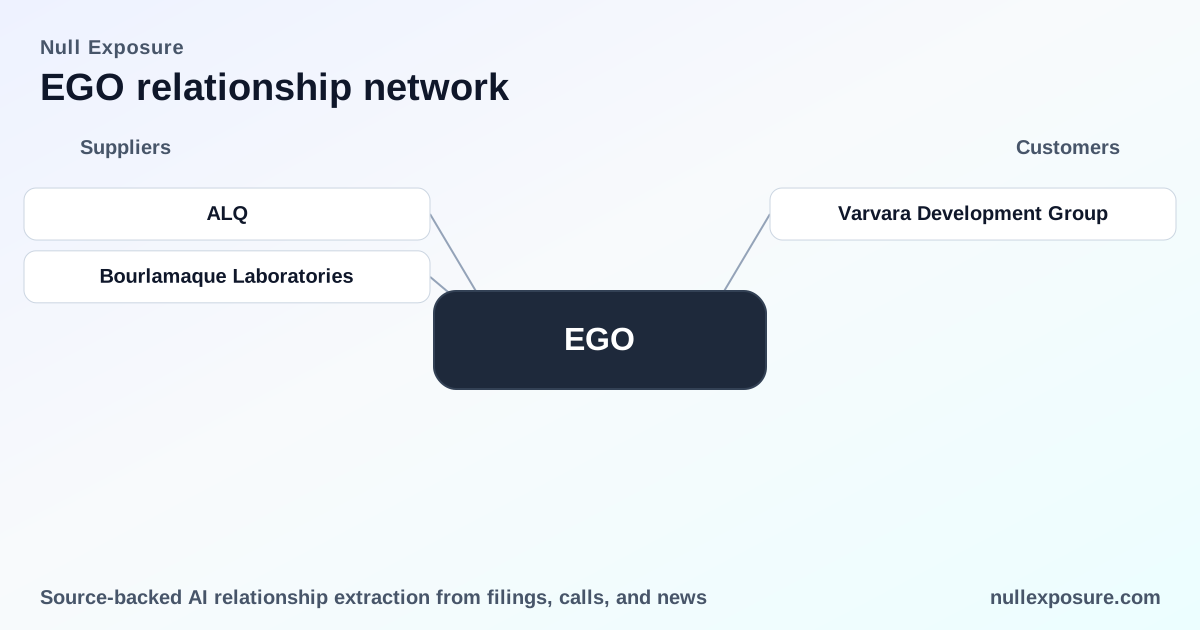
Eldorado agreed to sell the Romanian Certej gold project in Hunedoara County to Varvara Development Group (formerly O Rei Resources Corp) for up to USD 30 million, with the buyer publicly committing not to employ cyanide-based processing methods that had provoked NGO opposition and local protests (Romania-Insider reporting Profit.ro, March 2026). This transfer removes a politically contentious asset from Eldorado’s immediate portfolio while delivering a defined cash recovery and shifting project execution and permitting risk to a smaller, Toronto-listed operator (Romania-Insider / Profit.ro, March 2026).
Source: Romania-Insider coverage of Profit.ro’s March 2026 report on the sale of the Certej project to Varvara Development Group.
What each relationship indicates about Eldorado’s contracting posture and counterparty selection
- Active risk reallocation: The Certej sale demonstrates Eldorado’s willingness to divest politically exposed, non-core assets rather than sustain prolonged community opposition or capital outlay. That posture favors counterparties who accept clear exit provisions and time-limited engagements.
- Concentration and criticality signals: With a geographically diversified asset base, no single customer or buyer dominates Eldorado’s revenue stream, reducing single-counterparty concentration risk for service suppliers; however, asset-level concentration (large value per project) means any project divestiture can materially alter local contracting volumes.
- Maturity and counterparty profile: Divestitures to smaller listed juniors like Varvara indicate Eldorado is comfortable transferring development risk to counterparties with limited operating scale and different risk appetites, shifting criticality from Eldorado to the buyer on specific projects.
These are company-level operating signals based on the reviewed relationship records; no transaction-level contractual constraints were provided in the available relationship material.
Operational constraints and business-model characteristics investors should note
- Contracting posture: Eldorado exhibits a pragmatic, portfolio-management contracting posture—prefers to sell politically or operationally difficult assets rather than expend capital or accept ongoing reputational drag. That reduces long-term operational drag but increases the number of transactions and counterparties the company interacts with.
- Concentration: Although revenue is diversified across multiple countries, project-level concentration remains high: single-site issues can meaningfully affect local supplier demand and regulatory exposure.
- Criticality: Operational assets are critical to cash flow; however, Eldorado’s demonstrated use of disposals makes some assets replaceable from the company’s strategic perspective. For counterparties, that means negotiating contracts that anticipate potential ownership changes.
- Maturity of relationships: The sale to Varvara suggests Eldorado will reassign relationships on divested projects to the new owner, so existing vendor or service agreements tied to specific licenses require careful re-evaluation when an asset changes hands.
No explicit contractual limitations or constraints were identified in the relationship records reviewed; that absence is itself informative: there were no customer-level constraints disclosed in the available materials to indicate long-term exclusivity, vendor lock-in, or embedded operational covenants.
Risks and upside for investors and counterparties
- Risk: political and social opposition drives disposals. The Certej case shows community opposition and environmental concerns can transform an operating or near-development asset into a disposition candidate, accelerating transactional risk and changing revenue profiles.
- Risk: counterparty performance on divested assets. Transferring projects to smaller buyers like Varvara increases execution risk for the committed purchase price and subsequent project development—counterparties should price in permit, financing and social-license execution risk.
- Upside: disciplined capital reallocation. Divesting non-core or high-friction assets improves capital allocation and reduces headline risk for the remaining portfolio, supporting a stronger, more focused production base and predictable cash flows.
- Upside: predictable monetization mechanics. Publicly reported sale terms (up to USD 30 million for Certej) give investors a clear line of sight into Eldorado’s willingness to convert assets into cash at stated valuations.
What investors and operators should do next
- Review counterparty exposure where Eldorado is a client or supplier and update counterparty risk profiles for assets in politically sensitive jurisdictions. For curated mapping of counterparties and counterparty risk trends relevant to resource companies, see https://nullexposure.com/.
- For active investors: monitor subsequent filings and press releases for closing conditions and any contingent payments tied to Certej’s extension or permit outcomes; these will indicate the degree to which value has been realized versus deferred.
Bottom line
Eldorado’s sale of Certej to Varvara Development Group is a concrete example of portfolio optimization through asset disposition: the company converts troubled or non-core assets into definable cash while transferring execution and social-license risk to smaller, specialized buyers. That strategy materially shapes Eldorado’s contracting posture—favoring transactable exits over protracted on-the-ground remediation—and is a critical input for counterparties evaluating long-term exposure to the company.
Source: Romania-Insider summarizing Profit.ro’s reporting on the Certej sale (March 2026).