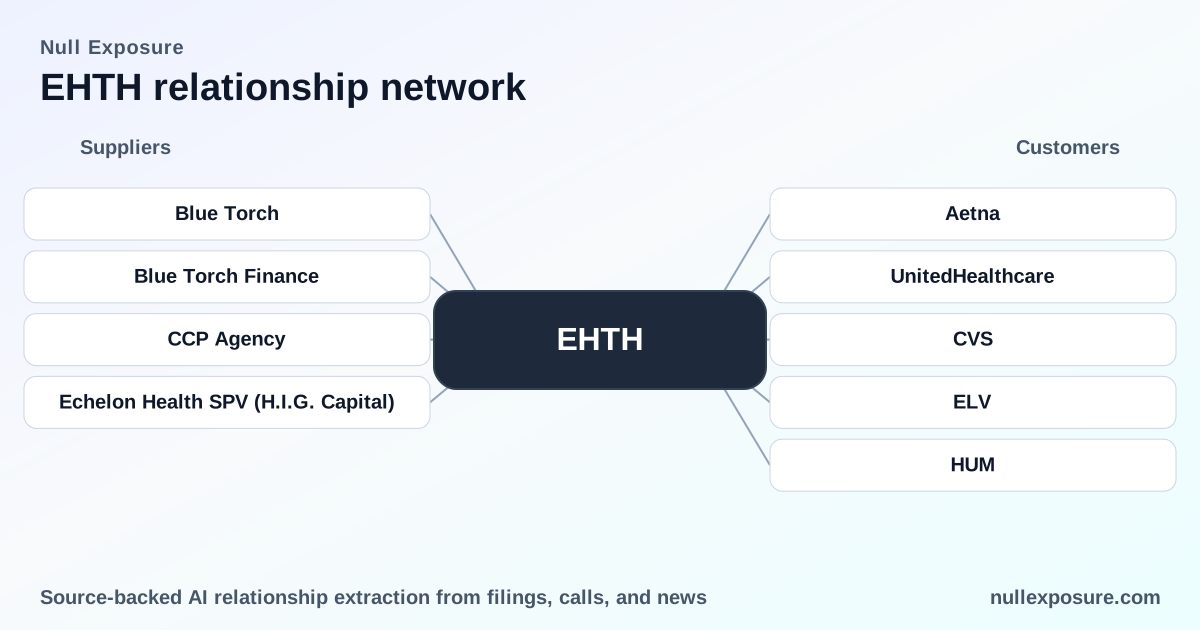
eHealth (EHTH) — Carrier Relationships Drive Revenue, Risk, and Optionality
eHealth operates a private health insurance marketplace that monetizes through commission and performance-based fees from insurance carriers plus technology licensing and advertising. The firm acts as both an insurance agency (earning commissions as the broker) and a platform/licensor (selling implementation and performance-based fees for its ecommerce technology), creating a mixed services + software revenue profile that concentrates topline exposure with a small number of large national carriers.
If you evaluate partnership concentration, go-to-market durability, or regulatory risk in the health insurance brokerage space, eHealth’s carrier roster and contract posture are the most material inputs. For additional research on counterparty exposure and relationship signals, visit https://nullexposure.com/.
Why carrier relationships are the single most important lens for EHTH investors
eHealth’s economics are directly tied to carrier payouts and platform adoption. Three insurers — Humana, UnitedHealthcare and Aetna — accounted for 24%, 22% and 18% of revenue in FY2024, respectively, leaving eHealth with a high concentration of revenue (approximately 64% from three carriers) that creates both bargaining leverage opportunities and single-counterparty risk. That concentration explains why investor focus should be on contract terms, termination rights, and regulatory headlines affecting those carriers.
Key business-model characteristics that flow from filings and disclosures:
- Contracting posture: eHealth typically operates under non-exclusive, short‑term agency relationships that are terminable on short notice, which constrains long-term revenue visibility but preserves commercial flexibility.
- Revenue mix: Commission-driven broker economics dominate, complemented by technology licensing and advertising revenues tied to carrier implementations and marketplace traffic.
- Counterparty mix and geography: The platform serves both individual consumers and large national carriers, with substantially all revenue generated in the United States.
- Relationship maturity and criticality: Many carrier relationships are mature (over ten years) and active, and eHealth also provides BPO-style services under its Amplify model — positioning it as both service provider and distribution partner. These operating signals make carrier retention, short-term renewals, and regulatory developments central to forecasting cash flow and valuation.
What eHealth’s filings and media coverage tell investors about specific carriers
Below I cover every relationship listed in the source results, with a concise take and a provenance note.
Humana (HUM) — the largest single carrier exposure
Humana accounted for 24% of eHealth’s revenue in FY2024, representing the largest single-carrier concentration and a critical source of commissions and Medicare-related sales. According to eHealth’s FY2024 Form 10‑K, Humana is disclosed among carriers representing 10% or more of total revenue. (Source: eHealth FY2024 10‑K)
UnitedHealthcare / UnitedHealthCare — the second-largest exposure, referenced multiple times
UnitedHealthcare represented 22% of revenue in FY2024, making it the second-largest single carrier exposure and a material commercial partner for Medicare and individual lines. The company is listed in eHealth’s FY2024 10‑K as a major carrier and appears in multiple account concentration disclosures. (Source: eHealth FY2024 10‑K)
Aetna — third in concentration and material to revenue stability
Aetna contributed 18% of eHealth’s revenue in FY2024, completing the trio that generates roughly two-thirds of eHealth’s top line; the relationship is disclosed as material in the FY2024 10‑K concentration table. (Source: eHealth FY2024 10‑K)
HUM (duplicate entry) — repeated disclosure reinforces materiality
Humana is referenced more than once in eHealth’s disclosures, which underscores that this relationship is both material and repeatedly cited in accounts receivable/customer concentration sections of the 10‑K. This duplication in filing entries reinforces Humana’s outsized role in revenue composition. (Source: eHealth FY2024 10‑K)
Aetna (news mention) / CVS — DOJ complaint references broker payments
A March 2026 report in Fierce Healthcare highlights a Department of Justice complaint naming insurers and brokers — including Aetna and brokers such as eHealth — alleging improper payments related to Medicare Advantage enrollments between 2016 and 2021. That article names Aetna in a legal/regulatory context that increases event risk around MA channel economics. (Source: Fierce Healthcare, March 2026)
CVS (news-channeling of Aetna issues) — prominence via Aetna affiliation
The same Fierce Healthcare coverage links Aetna to its parent/affiliate relationships in reporting; mention of CVS/Aetna in the article signals potential cross‑company scrutiny of distribution practices that intersect with eHealth’s broker payments. Investors should monitor carrier legal developments for indirect balance-sheet and referral impacts. (Source: Fierce Healthcare, March 2026)
Elevance Health — named in DOJ coverage alongside major insurers
Elevance Health (formerly Anthem/Elevance naming) is named in the DOJ complaint cited by Fierce Healthcare, placing another major carrier in the regulatory narrative that affects broker economics and distribution incentives across the industry. Any adverse outcomes for carriers or brokers could pressure commission structures and platform usage. (Source: Fierce Healthcare, March 2026)
Operating constraints and what they mean for valuation and risk
The disclosures deliver a consistent portrait of how eHealth runs its business:
- Licensing revenue is a material and repeatable component: eHealth licenses its ecommerce platform to carriers, earning implementation and performance fees tied to submitted applications and conversions — a software-adjacent revenue stream that diversifies beyond commissions.
- Contract duration and renewability weigh on revenue visibility: eHealth describes many carrier relationships as non-exclusive and terminable on short notice, which reduces long-term contractual lock-in and increases the need for continuous sales and retention effort.
- Customer base is mixed but carrier concentration is high: The marketplace serves both individual consumers and large enterprise carriers, but the top-three carrier concentration is a company-level constraint that elevates counterparty risk.
- Geographic concentration is domestic: Substantially all revenue is U.S.-based, concentrating macro and regulatory exposure to U.S. healthcare policy dynamics.
- Mature, operationally active relationships: Many carrier partners have sold through eHealth for over a decade, and eHealth operates both as a broker and a business-process service provider in certain arrangements, which increases operational stickiness but does not eliminate termination risk.
Investment implications and next steps
- Bull case: Mature carrier partnerships and a dual revenue model (commissions + licensing) provide stabilized cash flow if eHealth retains its top carriers and converts platform licensing into higher-margin recurring revenue.
- Risk case: High revenue concentration (≈64% from three carriers) combined with short‑term, non‑exclusive contracts and emerging regulatory scrutiny over broker‑carrier payments creates downside if any of the top carriers retrench or if enforcement reshapes commission economics.
For further carrier-level signal tracking and to monitor unfolding regulatory news that affects broker economics, see our research hub at https://nullexposure.com/.
Bold takeaway: Carrier retention and regulatory developments — not technology alone — will determine eHealth’s near‑term cash flow and valuation trajectory.