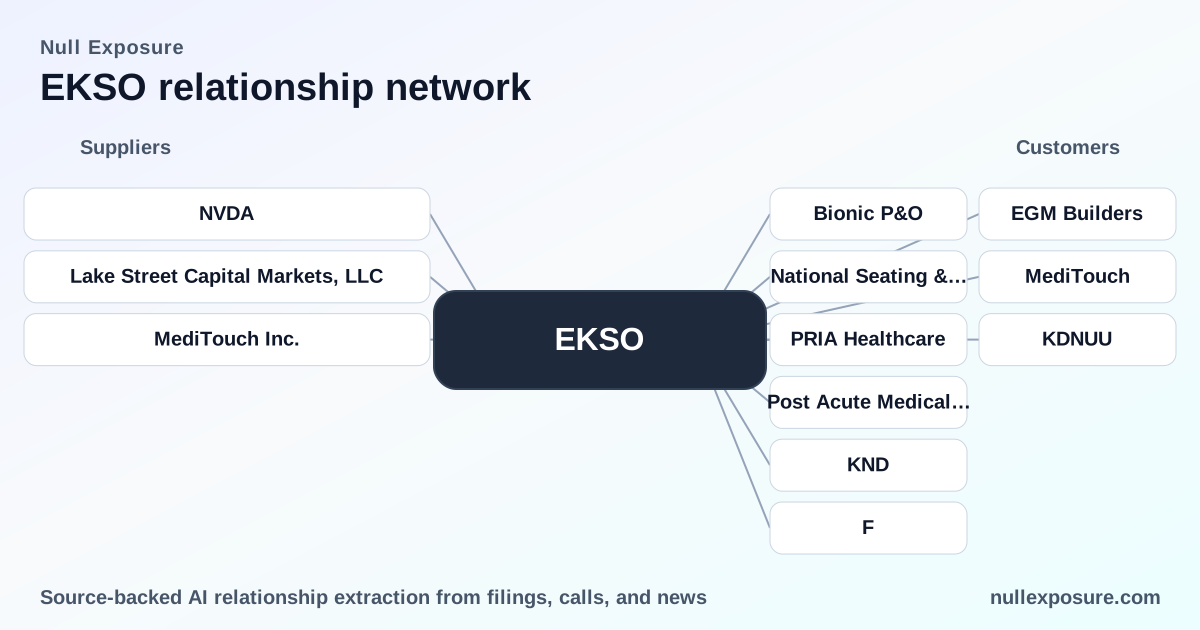
EKSO Bionics: customer map and commercial posture
Ekso Bionics builds and sells robotic exoskeletons and related rehabilitation technologies to healthcare providers, individuals and select industrial customers, monetizing through device sales, multi‑period medical device subscriptions, distributor and reseller agreements, and reimbursement‑enabled sales via Durable Medical Equipment suppliers. The business combines high‑ticket unit economics (Medicare payment ~$91k) with a channel strategy that leans on exclusive and specialist distributors for reach into complex rehabilitation and individual markets. Learn more at https://nullexposure.com/.
Why customer relationships matter for EKSO investors
EKSO’s commercial model is not a commodity hardware play: it is a channel‑driven, reimbursement‑sensitive medical device business. From the evidence available, several company‑level operating signals stand out:
- Contracting posture: EKSO recognizes subscription revenue over contract terms (typically 24 months), indicating recurring revenue and multi‑period recognition on a portion of sales.
- Counterparty mix: The company serves individual end users (Personal Health products) and institutional buyers via distributors, DMEs and small business partners (including SDVOSB channels to the VA).
- Geography: Revenue is concentrated in North America, with smaller EMEA and APAC activity.
- Concentration & materiality: One customer accounted for 10%+ of revenue across recent fiscal years, a sign of meaningful customer concentration.
- Price and spend profile: Medicare reimbursement set at approximately $91,000 for Ekso Indego Personal signals high single‑unit revenue versus volume.
- Go‑to‑market role: EKSO uses distributors and resellers (DMEs and O&P providers) to reach both clinical and consumer markets.
These signals together imply high per‑unit economics but elevated counterparty concentration and reimbursement dependence, which directly influence revenue volatility and margin stability.
Customer relationships: who they work with and what each relationship means
National Seating & Mobility (NSM)
Ekso named National Seating & Mobility as its exclusive Ekso Indego Personal distributor within the U.S. complex rehabilitation technology (CRT) industry, and reported receiving its first order from NSM in Q2 2025. This is a strategic, exclusive channeling move to reach CRT clinicians and patients through a well‑established mobility specialist (Ekso 2025 Q1/Q2 earnings calls; company announcement FY2025 via QuiverQuant).
PRIA Healthcare
Ekso engaged PRIA Healthcare to support market access and commercialization, leveraging PRIA’s experience in bringing more than 300 medical devices to market. This is a market‑access partnership intended to accelerate reimbursement and payor adoption (Ekso 2025 Q1/Q2 earnings calls).
Bionic P&O
Ekso appointed Bionic P&O as its first prosthetic & orthotic (O&P) distributor, establishing a dedicated channel into the O&P community for device distribution and clinician adoption. The move formalizes a specialist reseller channel for point‑of‑care deployment (Ekso 2025 Q1/Q2 earnings calls).
Post Acute Medical LLC
Post Acute Medical, a chain of inpatient rehabilitation hospitals, acquired additional EksoNR devices to expand exoskeleton‑assisted rehab to multiple facilities, indicating institutional adoption in post‑acute settings and recurring demand for clinical units (ptproductsonline report, FY2020).
Kindred Healthcare
Ekso collaborated with Kindred Healthcare to test and deploy EksoNR exoskeletons in Kindred’s long‑term acute care hospitals, expanding clinical footprint across multiple LTAC facilities. This relationship highlights EKSO’s traction with healthcare systems focused on neurological and mobility rehab (Exoskeleton Report FY2020; Robotics & Automation News FY2021).
EGM Builders
EGM Builders, a self‑performing general contractor in NJ and NY, was the first customer to adopt Ekso’s EVO units in construction applications, demonstrating EKSO’s industrial use case and early commercial uptake outside healthcare (ForConstructionPros report, FY2020).
MediTouch
Ekso struck an exclusive U.S. distribution agreement with MediTouch for the BalanceTutor rehabilitation system, expanding its device portfolio distribution and signaling a strategy of exclusive distributor partnerships for complementary rehabilitation products (StocksToTrade FY2025; Investing.com report FY2026).
Ford Motor Co.
Ekso collaborated with Ford on exoskeleton development for industrial workers, a partnership that advanced early industrial use‑case prototypes and validation, though commercial terms and pricing were not disclosed at announcement (Interaksyon/Philstar report, FY2017).
What these relationships collectively imply for investors
- Go‑to‑market clarity: EKSO is deliberately using exclusive specialist distributors (NSM, MediTouch, Bionic P&O) and market‑access firms (PRIA) to accelerate commercialization in both the CRT and Personal Health segments. That concentrates sales power but increases dependency on a small number of channel partners.
- Revenue mix and recognition: The presence of subscription contracts and DME resale channels means revenue is partly multi‑period and reimbursement‑driven, smoothing unit revenue timing but exposing results to payor policy shifts.
- Concentration risk: A single customer represented >10% of revenue in recent years, so partner concentration is a material risk to forecast stability.
- High ASP, low cadence: Medicare reimbursement (~$91k) establishes a high average selling price per unit; this supports attractive unit economics but requires fewer, high‑value deals to scale revenue.
- Diversification across end markets: Industrial pilots (EGM Builders, Ford) and clinical adopters (Kindred, Post Acute Medical) provide portfolio diversification, but industrial channels remain early stage compared to healthcare.
Key takeaway: EKSO combines strong unit economics and targeted distributor partnerships with concentrated counterparty exposure and reimbursement dependence; the stock’s revenue trajectory will track successful scaling of exclusive channel agreements and consistent reimbursement execution.
Explore the underlying relationship map and signal analysis at https://nullexposure.com/ for a deeper look into how these partner dynamics affect EKSO’s commercial runway.
Investment risks and monitoring checklist
- Track NSM and MediTouch order flow as early indicators of Personal and BalanceTutor adoption.
- Monitor Medicare and payor policies tied to Ekso Indego reimbursement; changes materially affect demand cadence.
- Watch for customer concentration shifts in quarterly disclosures—loss or reduction of a top customer will materially affect revenue.
- Evaluate industrial commercial traction (orders beyond pilots) to judge diversification efficacy.
Conclusion: EKSO’s customer relationships are strategic and concentrated; investors should value EKSO on a per‑unit economics basis while closely monitoring channel execution, reimbursement momentum, and any moves that reduce single‑customer dependency.