ELAN: Customer Footprint and Commercial Dependencies that Matter to Investors
Elanco Animal Health (ELAN) sells pharmaceutical and preventive products for pets and farm animals, monetizing through direct sales to producers and veterinarians and broad distribution to third‑party distributors and retailers. The company generates roughly $4.7 billion in trailing revenue (FY‑TTM) and sustains operating cash flow through recurring product sales, milestone payments tied to in‑licensing/licensing arrangements, and selective divestitures that refocus capital on higher‑margin pet health opportunities. For investors, the critical questions are how durable Elanco’s distribution relationships are, where revenue concentration sits geographically, and how external counterparties (partners, government stockpiles, large distributors) affect product access and downside risk. For a concise company overview and tracking tools, visit https://nullexposure.com/.
Key takeaway up front: Elanco combines a global distribution model with direct farm and veterinarian sales; a sizable share of revenue remains U.S.‑centric (≈46% of 2024 revenue), while strategic partnerships and government channels create episodic volume and milestone income.
How Elanco sells: structural signals every investor should read
Elanco’s public filings and disclosures describe a hybrid commercial model: products are sold worldwide to third‑party distributors and independent retailers and also directly to farm producers and veterinarians. This creates a mix of recurring reseller revenue and more concentrated direct customer contracts in farm segments. The company’s geography footprint is global (sold in >90 countries) with material concentration in North America—the U.S. accounted for 46% of revenue in 2024. Those items are company‑level signals that frame counterparty risk, contracting posture and revenue concentration.
- Contracting posture: Elanco operates as both seller (direct contracts with producers and veterinarians) and supplier to resellers/distributors; this implies standard supplier contracting risk and the need to manage SKU access through third‑party channels.
- Concentration and criticality: With near‑half of revenue from the U.S., shifts in U.S. distributor share or government procurement can move margins materially.
- Maturity and optionality: The firm monetizes through product sales plus milestone and licensing receipts, giving episodic upside (license milestones) while relying on recurring product sales for baseline cash flow.
Customer relationships that shaped headlines (and P&L)
Below are the customer and partner relationships surfaced in recent coverage. Each entry includes a plain‑English summary and the source context.
Tarsus (TARS)
Elanco’s intellectual property rights are being licensed by Tarsus for certain ophthalmic candidates, and those licensing arrangements have produced milestone payments to Tarsus—demonstrating Elanco’s role as an IP licensor within the specialty therapeutics ecosystem. According to multiple press releases and market reports in March‑May 2026, the development and commercialization of Tarsus’ products depend on intellectual property licensed from Elanco Tiergesundheit AG, and a recent China approval triggered a reported $15 million milestone to Tarsus. (See QuiverQuant and GlobeNewswire / Sahm Capital coverage, Mar–May 2026.)
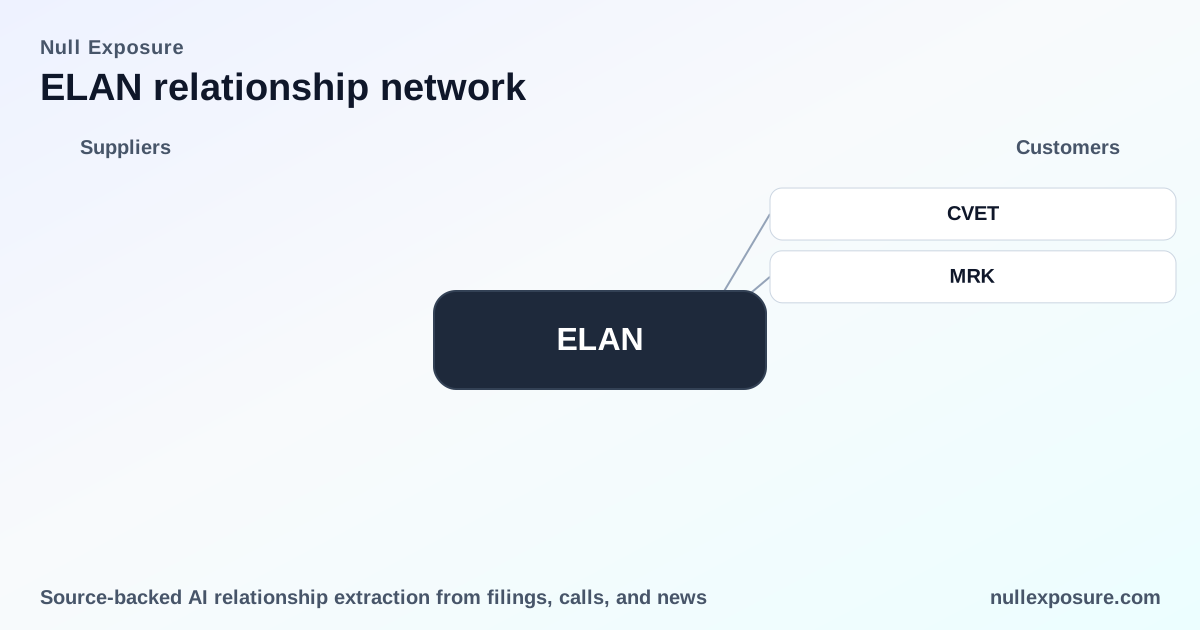
Covetrus (CVET)
Elanco maintains a broad commercial relationship with Covetrus as a distributor channel partner; management commentary in the Q4 2025 earnings call indicated a solid, longstanding relationship even as some share dynamics shift in distribution markets. Investors should treat Covetrus as a key reseller channel that materially influences retail access for pet health products. (See Elanco Q4 2025 earnings call transcript coverage on InsiderMonkey, Mar 2026.)
National Veterinary Stockpile
Elanco’s products can be procured by government emergency stockpiles: Negasunt Powder and Tanidil were authorized for emergency use against New World screwworm and will be made available only through the U.S. Animal Plant Health and Inspection Service (APHIS) and its National Veterinary Stockpile, creating episodic government sales channels outside commercial distribution. This designation places part of Elanco’s product flow under federal procurement procedures rather than normal reseller routes. (See PR Newswire release, May 2026.)
U.S. Animal Plant Health and Inspection Service (APHIS)
The U.S. federal agency APHIS is the authorized channel for emergency deployment of Elanco’s Negasunt and Tanidil products, reinforcing a government procurement relationship that can create urgent, high‑priority demand and procurement terms distinct from commercial contracts. This is documented in the company press release regarding emergency authorization for livestock treatments. (See PR Newswire, May 2026.)
Merck Animal Health (MRK)
Elanco divested its aqua business to Merck Animal Health for approximately $1.294 billion, reallocating resources toward pet health and other strategic growth areas—illustrating how Elanco uses divestiture to concentrate on higher‑return portfolios and how major competitors/partners can be buyers of business units. This transaction reduces exposure to the aquaculture segment and shifts distribution and customer relationships associated with that business to Merck. (See TradingView coverage summarizing Elanco’s SEC 10‑K report, Mar 2026.)
Operating risks and commercial constraints that investors must weigh
- Geography concentration: Global sales across 90+ countries provide diversification, but U.S. dependence is material (46% of 2024 revenue), increasing exposure to U.S. pricing, regulatory and payer dynamics.
- Channel complexity: Elanco’s revenue engine blends direct sales to producers/veterinarians with third‑party distributors and retailers; this structure reduces direct customer concentration but increases exposure to distributor shelf‑space and margin erosion negotiated by large channel partners.
- Contracting and counterparty exposure: The company’s role as both manufacturer/seller and occasional licensor means revenue is a mix of recurring product sales and lumpy milestone/license receipts—investors must model both steadier product cash flows and event‑driven upside.
- Strategic maturity through portfolio reshaping: Divestitures such as the aqua business sale to Merck signal a deliberate shift to higher‑margin pet health; these moves reduce segmental complexity but concentrate execution risk on fewer end markets.
- Government procurement dynamics: Emergency authorizations that route products through APHIS and the National Veterinary Stockpile create meaningful but exceptional demand channels with distinct procurement timing and margin profiles.
Bottom line: what to watch next
Elanco’s commercial durability rests on three pillars: the resilience of distributor relationships (e.g., Covetrus), the ability to extract recurring revenue from veterinarians and producers, and the value captured from licensing and milestone events (e.g., the Tarsus arrangements). Monitor U.S. demand trends given 46% revenue exposure, the cadence of milestone receipts, and any shifts in distributor share or contract terms. For continuing coverage and signal monitoring, see research resources at https://nullexposure.com/.
Bold, directional shifts—such as further divestitures, changes in distributor economics, or additional government procurement events—will materially reprice ELAN’s risk/return profile. Investors should incorporate both the steady base of product sales and the episodic nature of license and government channel revenue when modeling forward cash flow.