Elme Communities: liquidation-driven monetization and the buyer map investors need to watch
Elme Communities operates and monetizes primarily as an owner-operator of apartment communities concentrated in the greater Washington, D.C. metro and Sunbelt regions; its income mix historically came from short-term residential leases plus a smaller pool of longer-dated commercial leases, and in 2025–2026 the company pivoted decisively to cash realization through asset sales under a shareholder-approved liquidation plan. The near-term economics for equity holders are now dominated by realized disposition proceeds and return of capital rather than continuing rental yield. For further detail on the analytical framework used here, visit https://nullexposure.com/.
Why the Cortland portfolio sale rewrites the thesis
Elme’s strategy shift is explicit: management ran a sale-and-liquidate program that converted operating real estate into cash. The headline transaction is the completed sale of 19 multifamily properties for $1.6 billion in cash to an affiliate of Cortland Partners, which accelerates the company’s liquidation timeline and materially upgrades its balance-sheet liquidity. According to multiple press releases and market reports, the portfolio sale closed in late 2025 / early 2026 and is a central driver of Elme’s current valuation and path to winding up the REIT. (See the relationship section below for the source trail.)
Key investor implication: Elme’s remaining value for shareholders is now a function of realized sale proceeds, remaining dispositions, and the company’s execution of a liquidation timetable—less a story about operating cashflow growth from same-store apartment performance.
Complete map of Elme’s buyer relationships and transactions
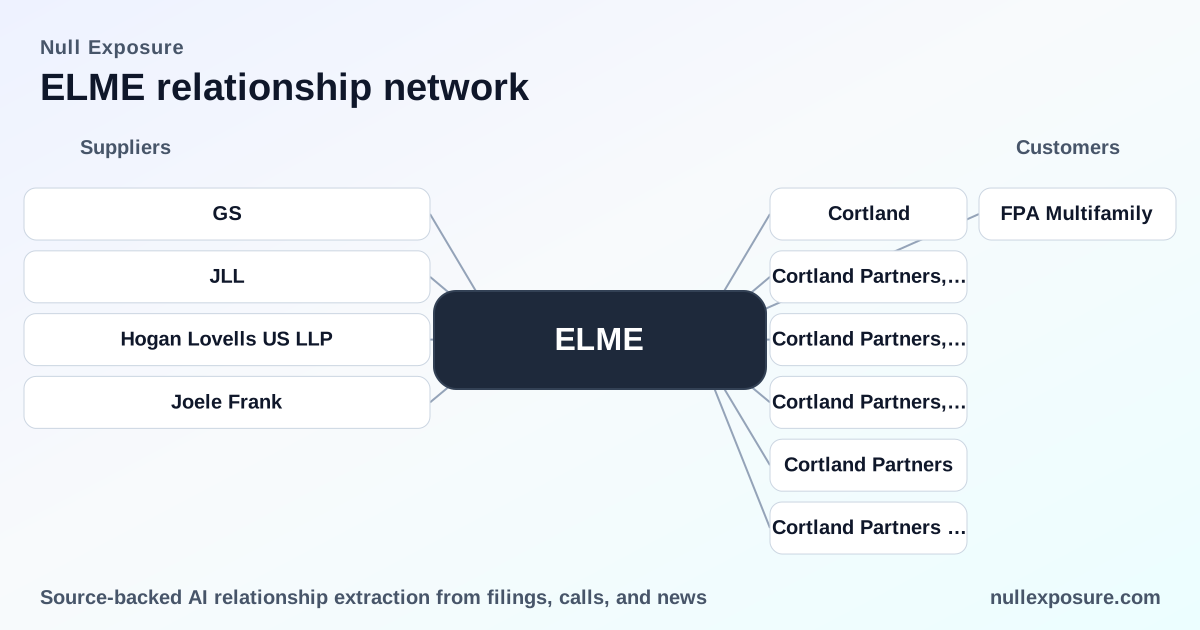
Below I enumerate every counterparty captured in public reporting for Elme’s disposition activity and provide a concise, source-backed summary of each relationship.
-
Cortland / Cortland Partners (affiliate) — Elme sold a 19-property multifamily portfolio to an affiliate of Cortland Partners for $1.6 billion in cash, a transaction the company completed as part of its shareholder-approved liquidation program. Multiple company announcements and press reports confirm closing and the strategic intent to dispose of all assets under the liquidation plan. (Sources: GlobeNewswire press release on the sale and subsequent company liquidation update, Jan–Mar 2026; QuiverQuant and CityBiz coverage, March 2026.)
-
Cortland (coverage and market reaction) — Market commentary linked the Cortland transaction to immediate share-price movement and investor re-pricing of Elme’s liquidation value; Q4 2025 reporting and investor notes highlighted the portfolio sale as the principal catalyst for a positive re-rating. (Sources: FinancialContent / MarketMinute and WRAL market coverage referencing Q4 2025 updates and the $1.6B closing, Jan–Mar 2026.)
-
Jetset Hospitality — Elme sold Watergate 600, a 309,000‑square‑foot office building in the Watergate complex, to local family office Jetset Hospitality for $52.5 million, reflecting Elme’s programmatic exit from non-core office holdings. (Source: The Real Deal report summarizing D.C. recorder filings, March 2026.)
-
FPA Multifamily — Local reporting identified a bulk disposition of more than 800 Atlanta‑area apartment units to FPA Multifamily as part of a broader sell-off of Atlanta holdings; these transactions are reported as elements of Elme’s accelerated regional exit strategy. (Source: Hoodline coverage of the Atlanta sell-off, Feb–Mar 2026.)
Each of these relationships is supported by public filings and press coverage that trace the liquidation path: the Cortland portfolio sale is the dominant transaction, and subsequent property-level sales (including the Watergate office and Atlanta assets) reflect execution of the company’s disposition plan. (Sources: Bisnow, Multifamily Dive, GlobeNewswire and regional outlets, Aug 2025–Mar 2026.)
What the contract and customer constraints tell investors about operating risk
The company’s public disclosures and regulatory excerpts reveal structural features that shape cashflow certainty and execution risk:
-
Lease tenor mix: Elme’s apartment business is dominated by short-term residential leases (generally one year or less), while a smaller component of non-residential commercial leases is longer-term and non‑cancelable, delivering predictable income for those assets. This dual posture means operating cashflow from the residential portfolio is inherently more variable and turnover-sensitive, whereas commercial leases contribute steadier, contract-backed receipts.
-
Geographic concentration: Elme’s operating footprint is focused on the greater Washington, D.C. metro and Sunbelt regions, which concentrates both market opportunity and regional economic risk—important for buyers and for pricing in a liquidation scenario.
-
Revenue concentration: No single tenant accounted for more than 5% of real estate rental revenue in recent years, signaling low single-counterparty concentration and a resident base that is largely dispersed across individual renters rather than anchor corporate tenants.
-
Role and capabilities: Elme identifies a taxable REIT subsidiary capability that allows the company to operate service businesses and provide tenant services without breaching REIT gross‑income tests; this indicates the organization retains some operational platform even as it sells assets.
Taken together these constraints present a company whose core product is apartment ownership (short-term leases) supplemented by a smaller, long-term commercial lease book—an operating profile that supports a liquidation transaction but also introduces volatility in residual operating cashflows pending full portfolio exit.
Opportunistic and risk checklist for investors
-
Opportunity: The $1.6B Cortland sale converts a large portion of asset value into cash now, providing near-term liquidity and an actionable liquidation pathway that reduces execution uncertainty for residual assets. (See GlobeNewswire and press coverage, Jan–Mar 2026.)
-
Risk: Remaining asset sales will determine residual NAV and timing of distributions; regional exposure and short-term lease cycles can compress near-term rent recovery if dispositions extend into weaker market windows.
-
Execution watch‑items: pacing of remaining sales, realized net proceeds after customary adjustments and prorations, treatment of any tax liabilities tied to the taxable REIT subsidiary, and whether further one-off disposals (like Watergate 600) fetch market prices consistent with implied NAV.
If you want a structured view of buyer counterparties and documented closing dates to track realization milestones, visit https://nullexposure.com/ for the primary portal.
Bottom line for investors and operators
Elme Communities has transitioned from an operating REIT to a liquidation vehicle where realized dispositions drive shareholder value. The Cortland $1.6 billion portfolio sale is the fulcrum of that transition; subsequent property-level transactions (including the Watergate disposition and Atlanta sales) are consistent with an orderly wind‑down. For investors, the core questions now are simple: will the company realize full expected proceeds on the remaining assets, and how quickly will capital be returned? For operators and counterparties, the takeaways are that Elme’s remaining operations are short-term lease-driven, regionally concentrated, and increasingly transaction‑oriented rather than growth‑oriented—factors that shape pricing, counterparty negotiation leverage, and timeline expectations.