Emera (EMA): A utilities play where customer relationships shape strategic optionality
Emera operates as an integrated regulated electric and services company that earns stable, regulated cash flows from generation, transmission and distribution across North America and the Caribbean while selectively deploying capital into merchant and contracted assets that boost returns. The firm's business model monetizes through regulated rates, contracted energy sales and asset ownership in island markets where utilities are scarce and counterparty relationships with governments are commercially decisive. For investors, the value lever is execution of targeted transactions that convert non-core assets into regulated-like earnings or accretive cash returns. For a succinct tracker of Emera’s customer-facing activity and announced transactions, see https://nullexposure.com/.
Why the Bahamian transaction matters to investors
Emera’s announced Memorandum of Understanding with the Bahamian government to divest Grand Bahama Power Company is a strategic, country-level disposition that rebalances Emera’s Caribbean exposure toward capital recycling and simplifies its operating footprint. The deal, announced by Prime Minister Philip Davis, accelerates a near-term liquidity event for an island utility asset and shifts counterparty risk from a commercial operator to a sovereign purchaser, changing the cash-flow profile for that asset. According to a Tribune242 news report on January 28, 2026, the Bahamian government signed an MoU to acquire Grand Bahama Power Company with the deal expected to close within 60–90 days.
All customer relationships disclosed in the results — what they are and why they matter
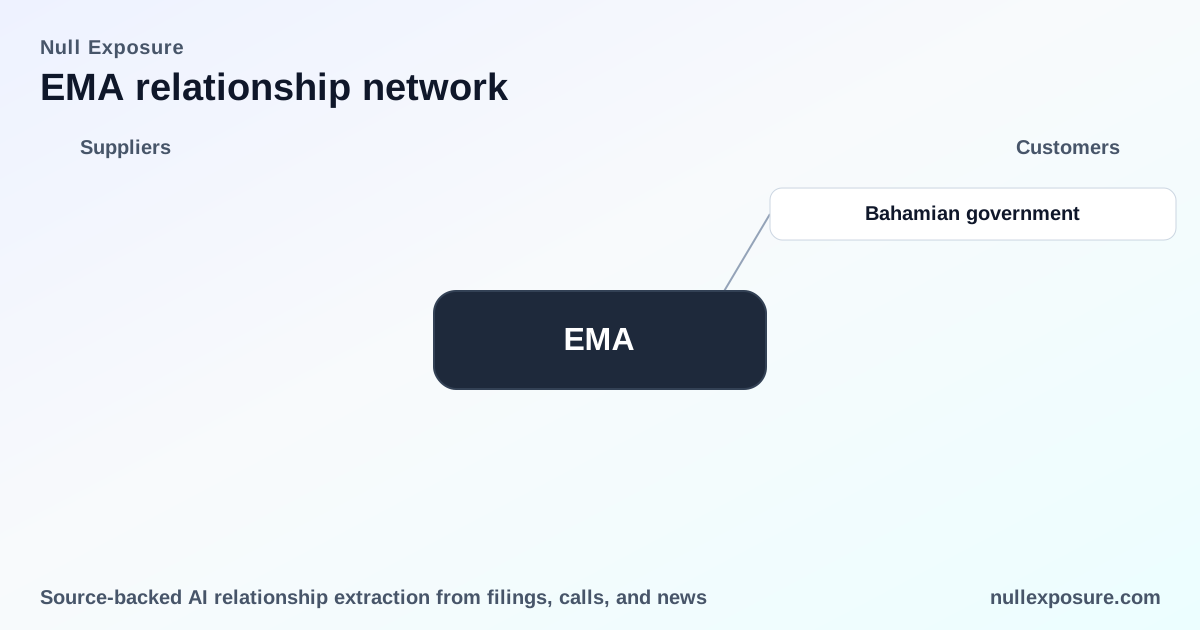
Bahamian government — The Government of The Bahamas signed a Memorandum of Understanding with Emera to acquire Grand Bahama Power Company, with the transaction expected to close within approximately 60 to 90 days following the announcement; this transfer converts a private utility relationship into a sovereign purchaser arrangement and accelerates a near-term disposal of Caribbean operations. (Source: Tribune242, Jan 28, 2026.)
What the Bahamian MoU implies for Emera’s operating posture
- Contracting posture: This transaction reflects an active seller posture: Emera is engaging in negotiated, government-level deals rather than passive portfolio run-off. The MoU structure signals a bilateral negotiation with explicit timelines rather than open-market divestiture.
- Customer concentration and criticality: Island utilities like Grand Bahama Power are inherently concentrated in their local markets and highly critical to local economies; transferring ownership to a sovereign reduces Emera’s exposure to single-asset operational risk but removes a localized cash flow stream.
- Counterparty maturity and credit: A buyer that is a sovereign government shifts credit exposure from a private counterparty to public credit, which changes risk weighting for valuation and working capital considerations.
- Execution timeline: The cited 60–90 day close window imposes a compressed execution risk and requires regulator and logistical alignment; successful completion will realize proceeds and reduce operating complexity quickly.
These observations are company-level signals derived from the transaction structure and Emera’s public positioning rather than from obligation-level constraints.
Where this transaction sits in Emera’s broader profile
Emera is a Halifax-headquartered utility with material operations in the United States, Canada, Barbados and the Bahamas and a market capitalization around $16.1 billion. Its business mixes regulated earnings with merchant and contracted assets, producing steady dividends (recent yield ~5.5%) and mid-single-digit growth characteristics supported by regulated rate bases. The divestiture of Grand Bahama Power aligns with a broader capital-allocation theme: focus on regulated growth and monetization of non-core, geographically concentrated assets to fund higher-return opportunities. (Company profile: Emera corporate materials and public filings; market data as of latest quarter 2025-12-31.)
Financial and strategic implications for investors
- Near-term cash and de-leveraging: Closing the MoU will provide near-term proceeds and reduce operating complexity in the Caribbean, improving balance-sheet optionality for targeted investments or shareholder returns.
- Earnings mix and volatility: Removing a small, island-concentrated asset lowers operational volatility, while the gain/loss on sale will affect reported EBITDA and EPS in the closing quarter.
- Regulatory and political risk transfer: Selling to a sovereign mitigates Emera’s exposure to local regulatory fluctuations and political operational risk, but it also eliminates upside from potential future local market growth.
- Valuation impact: The market will re-rate Emera’s asset base based on the net proceeds, anticipated reinvestment plan, and updated guidance on regulated rate base growth — investors should watch disclosed use of proceeds and any guidance updates from management.
Key takeaway: the MoU is value-accretive if proceeds are redeployed into higher-return regulated investments or used to improve capital structure; it is dilutive if proceeds fund low-return projects.
Risk checklist investors should monitor
- Transaction completion within the 60–90 day timeframe and any regulatory approvals required in the Bahamas.
- Precise terms of sale, including purchase price mechanics, working capital adjustments, and any transition service arrangements.
- How management allocates proceeds between debt reduction, capital expenditures, and share-based returns.
- Changes to Emerging-market exposure in the rest of Emera’s Caribbean portfolio and any contingent liabilities retained post-sale.
How Emera’s customer relationships inform portfolio decisions
Emera’s customer and counterparty moves are strategic levers that change risk-return geometry: government-level buyers compress execution timelines but also remove growth optionality; private buyers can preserve upside but carry counterparty credit uncertainty. Investors should value announced transactions not only by headline proceeds but by the portfolio-level effect on regulated earnings growth, leverage, and geographic concentration.
For ongoing monitoring of Emera’s customer-facing deals and announced transactions, track dedicated coverage at https://nullexposure.com/.
Bottom line for investors
Emera is executing selective asset recycling that tightens focus on regulated North American earnings while crystallizing value in smaller, geographically concentrated assets. The Bahamian MoU is a near-term, tangible example of that strategy: it converts an island utility exposure into a sovereign sale and accelerates balance-sheet optionality. Investors should weigh the transaction’s proceeds and reinvestment plan against Emera’s forward regulated growth profile to determine the net impact on valuation and dividend sustainability.
If you evaluate utility companies on the basis of customer-government relationships and execution risk, Emera’s recent activity is a practical case study in how sovereign deals reshape risk and unlock capital. For continual, transaction-level tracking and relationship analytics, visit https://nullexposure.com/.