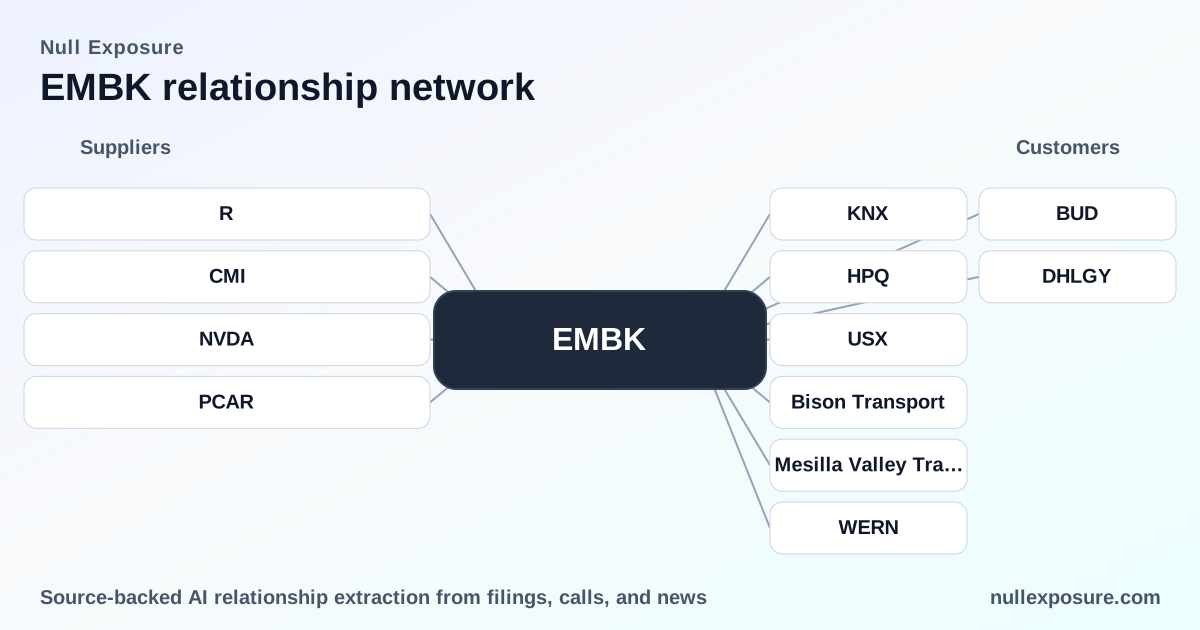
Embark (EMBK) — partner-powered commercialization, paid by carriers and shippers
Embark sells autonomous driving software and integration services to large trucking carriers and strategic shippers through pilots, a Partner Development Program and a Truck Transfer Program; it monetizes by placing technology into carrier fleets and running pilots that validate cost, sustainability and operational benefits for customers. For investors, the key thesis is that Embark’s path to revenue depends on converting pilot and partner relationships with major carriers and shippers into recurring software and service contracts. Learn more at https://nullexposure.com/.
What Embark actually sells — and how partners create value
Embark’s public activity shows a commercialization strategy built on carrier partnerships and shipper pilots rather than standalone hardware sales. The company delivers autonomous driving software embedded in Class 8 tractors, then hands trucks or integrates technology into carrier fleets under structured programs so carriers can operate the equipment under their authority. This model creates three revenue levers:
- Pilot and service fees from shippers seeking emissions reduction or operational improvements (evidence: HP drayage pilot).
- Integration and deployment contracts with carriers who adopt Embark’s stack into their terminals and routes (evidence: Partner Development Program members).
- Potential safety/usage-based licensing as carrier fleets scale coverage.
These relationships are not one-off demos; they are structured partnerships intended to produce operational data and conversion into longer-term commercial agreements.
Customer roster that matters — who’s on Embark’s partner list
Below are the customer and partner relationships the public record links to Embark, with concise takeaways and sources.
Knight‑Swift (KNX)
Knight‑Swift is the headline commercial partner: Embark placed an Embark‑equipped Kenworth T680 under Knight‑Swift’s authority and launched the Truck Transfer Program to give Knight‑Swift drivers direct access to Embark technology. This is the clearest example of Embark transferring operational control of autonomous-enabled trucks to a major carrier. (FreightWaves, March 2026: https://www.freightwaves.com/news/knight-swift-takes-the-wheel-of-embark-equipped-autonomous-truck; TheTrucker, March 2026: https://www.thetrucker.com/trucking-news/business/embark-and-knight-swift-to-place-av-technology-in-the-hands-of-knight-swift-drivers)
Werner Enterprises (WERN)
Werner is a named member of Embark’s Partner Development Program, positioning the carrier to test and refine Embark’s autonomous stack across Werner’s network and terminals. Embark is using Werner as a networked carrier partner to mature route coverage and integration steps. (TruckingInfo, May 2026: https://www.truckinginfo.com/news/embark-pursues-autonomous-tech-integrations-with-oems)
Bison Transport
Bison Transport joins the Partner Development Program as a carrier partner, representing Canadian and cross‑border carrier engagement in Embark’s validation and deployment plan. This broadens Embark’s partner footprint beyond U.S. flag carriers. (FreightWaves, March 2026: https://www.freightwaves.com/news/embark-trucks-recruits-partners-to-build-autonomous-driving-ecosystem)
Mesilla Valley Transportation
Mesilla Valley Transportation is listed in the Partner Development Program alongside Werner and Bison as a carrier partner tasked with testing and refining Embark technology in operational fleet settings. That relationship supports Embark’s multi‑carrier validation strategy. (FreightWaves, March 2026: https://www.freightwaves.com/news/embark-trucks-recruits-partners-to-build-autonomous-driving-ecosystem)
U.S. Xpress (USX)
U.S. Xpress joined the Partner Development Program and planned to add its terminals to Embark’s Coverage Map, indicating Embark’s approach of integrating at the terminal level to expand operational reach. U.S. Xpress also figures in later coverage as a deal announcement. (CCJDigital, March 2026: https://www.ccjdigital.com/equipment-controls/autonomous/article/15291769/embark-completes-winterconditions-autonomous-test; TruckingInfo, March 2026: https://www.truckinginfo.com/news/embark-autonomous-truck-company-could-close-its-doors)
DHL (DHLGY)
DHL is referenced among announced deals with Embark, placing a major global logistics integrator in Embark’s partner list and underscoring interest from large parcel and freight networks in autonomous trucking capabilities. (TruckingInfo, March 2026: https://www.truckinginfo.com/news/embark-autonomous-truck-company-could-close-its-doors)
HP Inc. (HPQ)
Embark runs an electric vehicle drayage pilot with HP that targets emissions reductions across HP’s supply chain, demonstrating a shipper‑facing commercial use case where Embark’s technology is embedded into electrified drayage workflows for sustainability and logistics benefits. (TheTrucker, March 2026: https://www.thetrucker.com/trucking-news/equipment-tech/autonomous-technology-developer-embark-trucks-releases-inaugural-esg-report)
Anheuser‑Busch (BUD)
Anheuser‑Busch and other Fortune 500 shippers are providing end‑customer input to Embark on how autonomous trucks can be integrated and scaled in supply chains, representing strategic shipper advisory and potential future demand. (FreightWaves, March 2026: https://www.freightwaves.com/news/embark-trucks-recruits-partners-to-build-autonomous-driving-ecosystem)
Operational and contract signals investors should treat as company-level facts
The public relationship set reveals Embark’s operating posture: partnership-driven deployments, terminal-level coverage scaling, and pilot engagements with strategic shippers. From these items we draw the following company-level operating model signals (not tied to any single contractual excerpt):
- Contracting posture — collaborative and programmatic. Embark relies on structured partner programs (Partner Development Program, Truck Transfer Program, pilots) to diffuse technology into carrier operations rather than unilateral fleet rollouts.
- Customer concentration — concentrated among anchor carriers and Fortune‑level shippers. Named partners include national carriers (Knight‑Swift, Werner, U.S. Xpress) and large shippers (HP, Anheuser‑Busch), which implies significant revenue upside if a handful convert but also concentration risk if those conversions do not occur.
- Criticality — operationally significant but early in commercial lifecycle. Pilots like HP’s EV drayage and truck transfers to Knight‑Swift are strategically important proof points for customers, but they remain at the pilot/partner stage rather than widespread carrier adoption.
- Maturity — pre‑scale commercialization. The Partner Development Program and route/terminal coverage mapping indicate progress toward scale, but the relationship list reads as an early commercial funnel rather than large recurring contracts.
There were no formal contractual constraints captured in the available relationship records, which is itself a signal: the public record emphasizes partnership announcements and pilots rather than disclosed long‑term license or revenue arrangements.
Investment implications and what to watch next
- Conversion is the metric that matters. Track whether pilots and Truck Transfer placements convert to recurring software, support or licensing agreements with carriers and shippers. Evidence of multi‑year, revenue‑bearing contracts will be the most material catalyst.
- Coverage map and terminal integrations. Expansion of Embark’s terminal coverage (e.g., U.S. Xpress’s terminal additions) will scale route economics and customer lock‑in.
- Counterparty diversification. Success converting carriers beyond the named partners reduces concentration risk; conversely, failure to convert anchors would compress valuation prospects.
- Operational and regulatory risk. Carrier‑operated autonomous trucks shift operational risk and regulatory exposure to the deployment partner; monitor operational incident reporting and regulatory developments.
For a concise, relationship‑level view and ongoing monitoring of Embark’s partner activity visit https://nullexposure.com/.
Bold takeaway: Embark’s revenue inflection depends on turning partner pilots with major carriers and shippers into recurring, contractual deployments — the current public record documents a deliberate partner‑centric path but not yet large-scale contract rollouts.