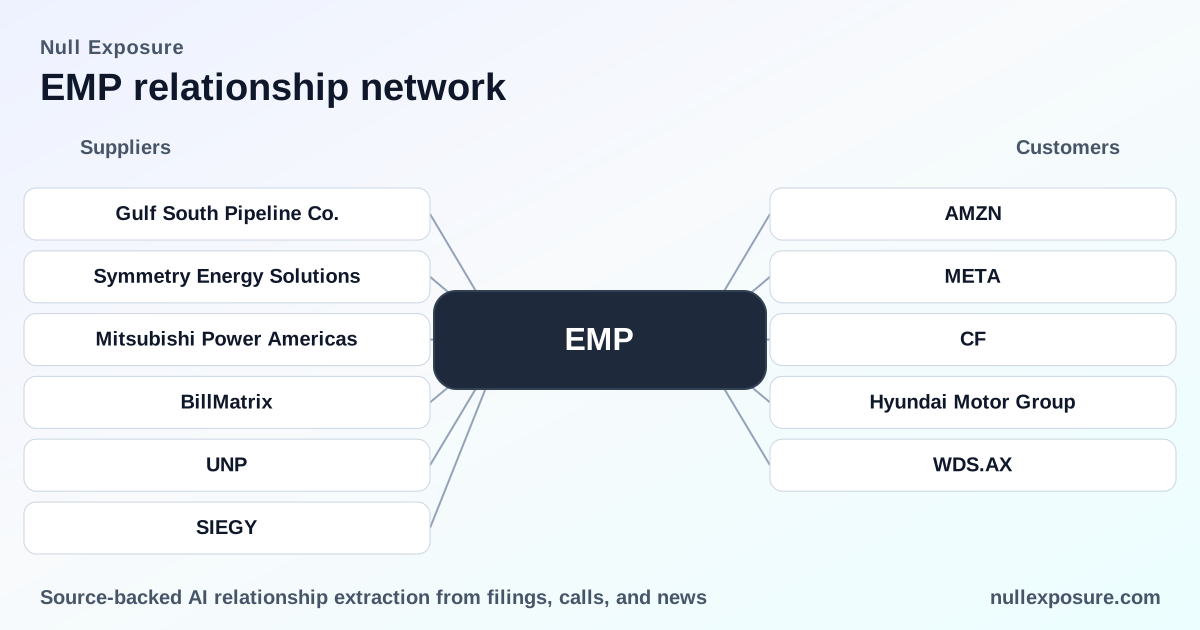
Entergy Mississippi (EMP) — Customer Relationships and Strategic Risks
Entergy Mississippi is a regulated electric utility that generates, transmits and distributes power to retail and large enterprise customers in Mississippi; it monetizes through regulated retail rates, riders and large-customer electric service agreements (ESAs) that fund incremental infrastructure investments and create material new load. For investors, the relevant dynamic is simple: steady regulated cash flows from a broad residential base combined with episodic, high-capex customer-driven growth (data centers, industrial projects) that drive near‑term transmission and generation spend. Learn more at https://nullexposure.com/.
Thesis: regulated utility economics with targeted commercial growth
Entergy Mississippi collects the majority of its revenues through rate-regulated retail tariffs and recovery mechanisms; those mechanics anchor baseline earnings while negotiated ESAs and large customer supply agreements create incremental, often multi‑year cash streams and justify major grid investments. The company is both a seller of capacity and an infrastructure service provider when large tech and industrial customers require bespoke interconnection and distribution upgrades. That dual role compresses traditional utility risk (regulatory recovery) while exposing the company to project-specific execution and regulatory approval risk.
How the operating model shapes counterparty exposure
- Contracting posture: Entergy operates under a mix of long-term, regulatory-determined arrangements and commercially negotiated ESAs and supply agreements. The Unit Power Sales Agreement and other long-term mechanisms provide predictable entitlements and payments, while recent five-year resilience frameworks and large-customer ESAs enable forward-looking cost recovery for major investments.
- Concentration and materiality: No single customer represents more than 10% of Entergy’s revenues, so baseline concentration is low; however, large projects can rapidly change load profiles and justify $100m+ spend bands, concentrating regulatory and execution risk around a handful of deals.
- Criticality and maturity: Some cash flows (payments under Unit Power Sales Agreement) are critical to affiliates’ operations; many large-customer arrangements are active and ramping — ESAs and supply agreements are in force or under regulatory review and are driving near-term capital allocation decisions.
- Geography and regulatory overlay: Revenue and assets are domestic (U.S.) and subject to state public utility commissions (MPSC, LPSC, APSC, city councils). Regulatory approvals and tariff riders materially determine the timing and recovery of project costs.
Customers and counterparties cited on recent calls
Below are every relationship mentioned in the source material with a plain-English takeaway and the original source.
-
Amazon (AMZN) — Entergy referenced Amazon among its customer set when discussing large customers being served by the utility, reflecting the company’s role in powering two new AWS data centers in Madison County, Mississippi under a large-customer supply arrangement. Source: EMP 2024Q4 earnings call (transcript, March 8, 2026).
-
AMZN — Duplicate mention of Amazon in the same call; the reiteration underscores Amazon’s visibility in investor commentary and the prominence of data-center customers in Entergy’s growth narrative. Source: EMP 2024Q4 earnings call (transcript, March 8, 2026).
-
Meta (META) — Executives noted an anticipated ESA with Meta to expand capacity needs, as referenced in supplemental testimony related to Entergy Louisiana filings; this indicates cross-jurisdiction coordination among Entergy operating companies to serve very large hyperscale customers. Source: EMP 2024Q4 earnings call and related supplemental testimony (March 8, 2026).
-
META — A repeat reference to Meta within the same disclosure; the duplicate mention highlights an active, high-profile customer deal tied to significant network and generation planning. Source: EMP 2024Q4 earnings call (transcript, March 8, 2026).
-
CF (CF) — The call referenced CF Industries’ FID on a $4 billion low-carbon ammonia facility, a regional industrial investment that creates large industrial demand and potential wholesale/retail supply opportunities for the utility. Source: EMP 2025Q1 earnings call (transcript, March 7, 2026).
-
CF Industries — Duplicate entry of the CF Industries mention from the same earnings call, reinforcing the industrial demand vector as a driver of increased utility volumes and potential commercial negotiations. Source: EMP 2025Q1 earnings call (transcript, March 7, 2026).
-
Hyundai Motor Group — Management referenced a large Hyundai Steel investment connected to regional economic development in Ascension Parish, Louisiana; such industrial investment signals multi‑state enterprise demand that utilities must support through transmission and generation planning. Source: EMP 2025Q1 earnings call (transcript, March 7, 2026).
-
WDS.AX (Woodside) — The company cited Woodside’s FID on a $17.5 billion LNG project and its regional job and investment impacts, a reminder that global energy projects translate into localized utility demand and potential wholesale arrangements. Source: EMP 2025Q1 earnings call (transcript, March 7, 2026).
-
Woodside — Duplicate mention of Woodside from the same call; the repetition emphasizes the scale of LNG-driven industrial load as a structural demand contributor to Entergy’s service territories. Source: EMP 2025Q1 earnings call (transcript, March 7, 2026).
What the deal roster implies for capital allocation and regulatory risk
Entergy Mississippi is executing a clear strategy: leverage regulated recovery mechanisms for baseline operations while using ESAs and large-customer supply agreements to underwrite major grid investments. That trade-off reduces merchant risk but concentrates capital intensity around a handful of customers and projects. Investors should track:
- Regulatory approvals for riders and ESAs that determine cost recovery timing.
- Execution timelines for transmission and generation projects tied to new load (500 kV line, combined-cycle units cited in related filings).
- Load ramp profiles from hyperscale data centers and industrial plants that can materially alter distribution and wholesale procurement needs.
Mid-article note: for a deeper view of customer exposure and related filings visit https://nullexposure.com/.
Investment implications — where upside and risk concentrate
- Upside: securitized recovery of infrastructure investments and predictable rate-regulated margins preserve cash-flow stability while new large customers boost long‑term load and utility scale.
- Risk: regulatory delays, project cost overruns and concentrated capex exposure create episodic pressure on returns if ESAs or riders are modified or deferred. The Unit Power Sales Agreement and FERC‑approved mechanisms provide structural revenue protection for affiliated generation, but investors must price in execution risk for large customer projects.
- Monitoring checklist: public filings on ESAs/rider approvals, state PUC dockets, quarterly updates on construction schedules and any changes in counterparty FID or timelines.
Bottom line
Entergy Mississippi blends steady regulated utility economics with targeted commercial contracts that justify heavy near‑term capital spending. For investors, the company’s revenue base is stable, but valuation must reflect concentrated, project-driven capex and regulatory execution risk. Stay focused on docket developments and the timing of load ramps tied to Amazon, Meta, and the large industrial projects referenced above.
For a concise dashboard of customer relationships and regulatory signals, visit https://nullexposure.com/.