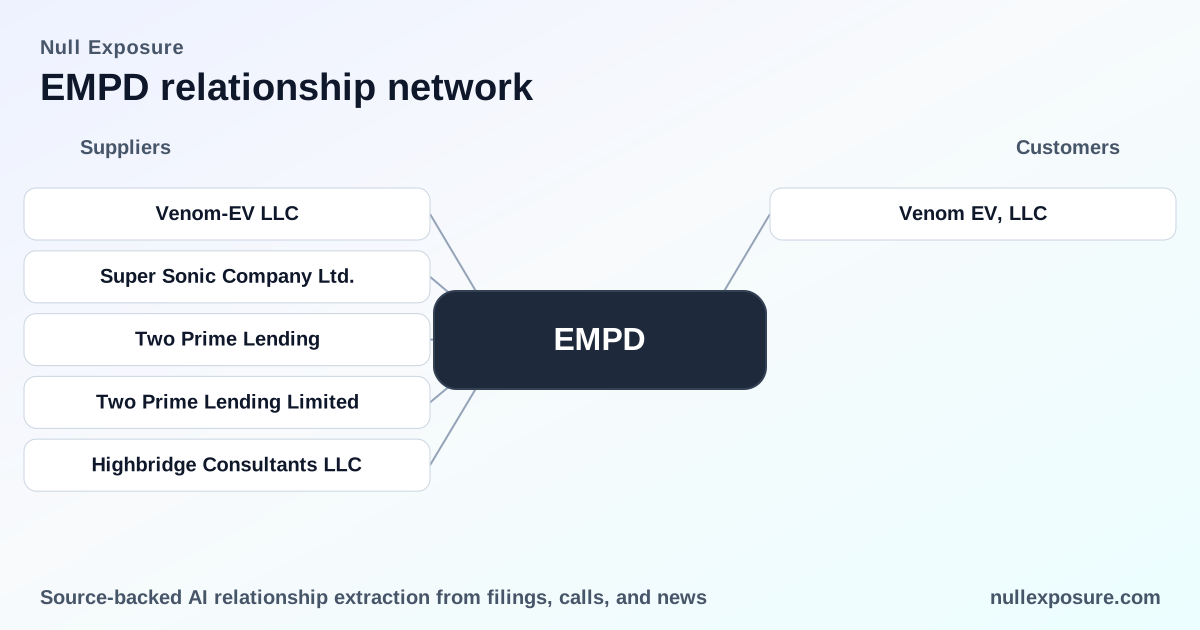
Empery Digital (EMPD): Customer relationships that re-shape the Volcon playbook
Empery Digital designs and sells electric off‑road powersport vehicles and monetizes through direct retail, dealer/distributor sales, and selective financing of inventory. The company drives revenue by selling vehicles and accessories to powersports dealers, importers, and consumers, while extracting additional value through inventory financing and strategic asset transfers that convert operating exposure into equity stakes. For investors, the core risk/reward centers on how commercial partnerships — notably with Venom EV — convert operating losses and inventory funding into cash inflows and equity upside.
Learn more about our coverage at https://nullexposure.com/
How Empery earns — a commercial narrative, not just unit sales
Empery’s revenue model is straightforward: sell electric off‑road vehicles and accessories through a mixed channel strategy and finance inventory for select counterparties to accelerate sales while earning financing cashflows. The company recognizes revenue when control transfers to dealers or distributors, and for customers without credit it operates on spot, pre‑payment terms. At the same time Empery extends short‑term credit (typically 30–90 day terms) to qualifying dealers, which concentrates working capital risk into a dealer and importer network. These contracting terms create a cycle where inventory financing is both a distribution lever and a liquidity exposure — a central theme in recent transactions.
The Venom EV relationship — turning brand ownership into a finance play
Empery executed a material strategic restructuring with Venom EV, LLC in early March 2026. Under the agreement, Empery divested the Volcon brand to Venom in exchange for a non‑dilutable 10% equity stake in Venom’s reorganized Delaware corporation, while continuing to finance Venom’s inventory purchases. According to a MarketScreener release on March 9, 2026, the asset transfer was paired with this equity arrangement as a way to retain upside while offloading operational responsibility for the brand. (MarketScreener, Mar 9, 2026.)
Empery’s reported cash flows also reflect active inventory financing for Venom: in its third‑quarter 2025 operational highlights (published via a company press release distribution on The Globe and Mail), Empery disclosed inventory financing payments of $1,378,000 for golf cart purchases by Venom under a financing agreement, with expected cash inflows of approximately $1,500,000 in Q4 2025. That sequence shows the company is converting short‑term financing outlays into near‑term recoveries tied directly to the Venom relationship. (Company press release / The Globe and Mail, Q3 2025 operational highlights.)
A third media notice reiterated that Empery will continue to finance Venom’s inventory following the asset transfer, underscoring that the company preserved a debtor/financier role even after divesting brand ownership. (Labourseetlavie coverage, Mar 9, 2026.)
Takeaway: Empery transformed a brand ownership asset into an equity stake and an ongoing financing relationship — preserving upside while reallocating operational risk.
Every customer relationship reported in the record
- Venom EV, LLC — Empery divested the Volcon brand to Venom in exchange for a non‑dilutable 10% equity position and continues to provide inventory financing, with documented financing cashflows in Q3/Q4 2025. (MarketScreener, Mar 9, 2026; company press release distributed via The Globe and Mail, Q3 2025; Labourseetlavie, Mar 9, 2026.)
These entries capture the entirety of customer relationships surfaced in the reviewed materials; the Venom transaction is the primary counterparty event driving both strategic repositioning and near‑term cashflow impacts.
What the constraints tell investors about Empery’s operating posture
The company disclosures and excerpts reflect a pragmatic, short‑term commercial contracting posture:
- Contract tenor and cash timing: Empery offers 30–90 day credit to qualifying dealers but requires pre‑payment for spot orders from non‑creditworthy buyers. This mixed model accelerates revenue recognition for some buyers while concentrating receivable and inventory funding risk on a smaller set of financed dealers and importers.
- Channel mix and reach: Empery sells through powersports dealers, bicycle retailers, golf cart dealers, and importers — and also sells directly to consumers online. As of late March 2025 the company reported 117 active powersports dealers, 13 bicycle dealers and 8 golf cart dealers, indicating an early‑stage but diversified dealer footprint rather than a mature, high‑volume retail base.
- Geography and distribution: The company’s international strategy includes signed agreements with importers across LATAM, the Caribbean, New Zealand, Australia and Japan, signaling a targeted global rollout for two‑wheel products rather than a broadscale global penetration.
- Role exposure and spend bands: Empery operates as distributor/reseller to local partners and maintains inventory financing lines; one disclosed Supply Agreement allows Venom to purchase up to $3 million of golf carts on 90‑day payment terms, which implies material short‑term receivable concentration when executed.
- Customer types and unit economics: Empery sells direct to individual consumers (online delivery in the continental U.S.) and to dealers/importers — that mix creates heterogeneous margin profiles and variable working capital needs.
Collectively, these constraints signal an asset‑light brand strategy combined with concentrated short‑term finance exposure: Empery uses targeted financing to unlock distribution while shifting operational ownership where possible (as with Venom).
What investors should watch next
- Receivable concentration and working capital recovery: Monitor actual cash collections tied to the Venom financing and any further supply agreements that extend the $3M exposure profile. The Q4 2025 inflow referenced previously is an early test of recoverability.
- Execution of third‑party distribution: The company’s expansion through importers in LATAM and other markets will determine whether distributor margins scale or whether Empery must continue financing partner inventories to sustain sales.
- Equity upside vs residual exposure: The non‑dilutable 10% stake in Venom preserves upside, but Empery remains exposed as Venom’s financier; the balance between equity value creation and credit losses is pivotal.
Bottom line — convert operating losses into optionality
Empery is executing a pragmatic pivot: offload operational burden while monetizing via inventory finance and retained equity stakes. That strategy reduces operational capex and direct distribution costs, but concentrates credit and short‑term liquidity risk into a small set of financed counterparties. For investors, the Venom deal is a litmus test — if financed inventory converts predictably into cash and the Venom equity appreciates as operations stabilize, Empery retains upside without heavy operational commitments; if collections falter, the company’s thin revenue base and negative margins magnify downside.
If you want a concise monitoring checklist for Empery’s counterparty exposures and collection milestones, visit https://nullexposure.com/ for our ongoing coverage and model updates.