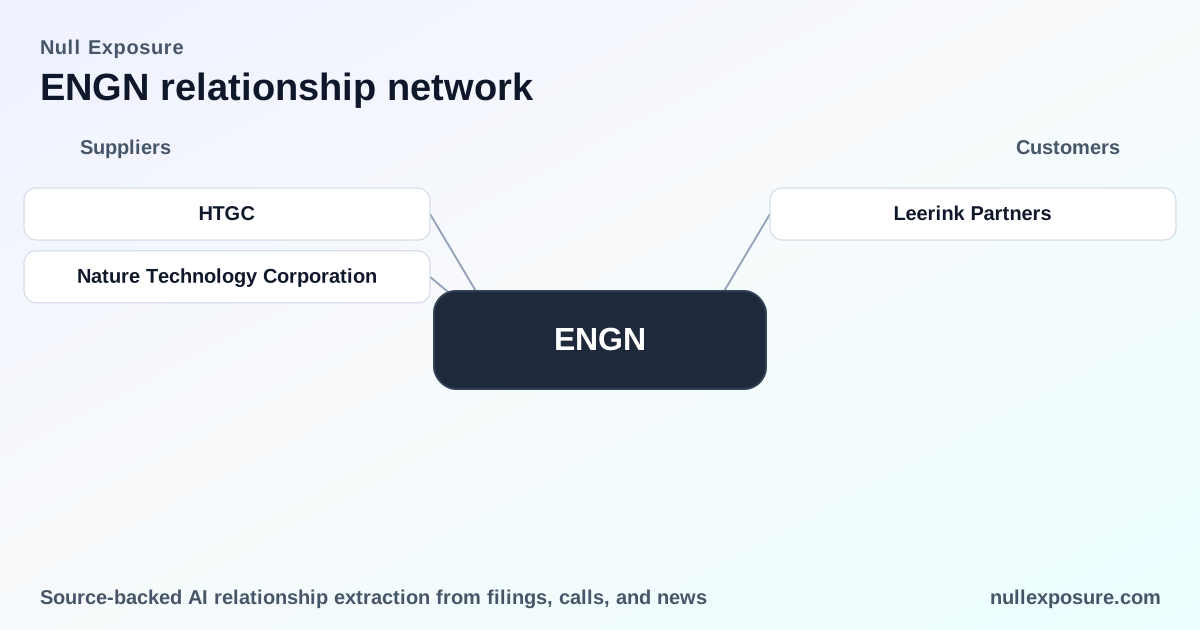
enGene Holdings (ENGN) — Customer Relationships and Commercial Readiness
enGene Holdings is a clinical‑stage biotechnology company that develops genetic medicines by delivering therapeutics to mucosal tissues and other organs. The company currently monetizes through equity capital markets and plans to commercialize its lead candidate, detalimogene, by retaining U.S. commercial rights while selectively partnering outside the United States; near‑term value is therefore driven by clinical progress, regulatory milestones, and financing activity rather than product revenues. For investor research that requires a concise dossier on counterparties and commercial posture, this note distills enGene’s customer/partner footprint, relevant commercial constraints, and the implications for investors and operators. For a broader set of counterparty relationships and signals, visit https://nullexposure.com/.
Business model in one line: clinical‑stage biotech with a U.S.‑retained commercial strategy, selective external partnering internationally, and financing dependence until regulatory approval and commercialization.
What the listed relationship actually is: capital markets, not a commercial customer
- enGene has an observable relationship with Leerink Partners documented as a sales agreement to sell common shares. This is a financing/capital markets relationship, not a product customer contract. According to a MarketScreener news item on March 9, 2026, enGene entered a sales agreement with Leerink Partners to sell common shares. This transaction indicates active equity monetization and reliance on investment banks or brokers to distribute stock to the market. (MarketScreener, March 9, 2026.)
Takeaway: Equity distribution through a broker reflects near‑term funding behavior rather than product commercialization.
Full relationship coverage (no omissions)
Leerink Partners
enGene executed a sales agreement with Leerink Partners to sell common shares, signaling use of an institutional broker‑dealer for equity distribution and capital raising; the arrangement is recorded in news coverage dated March 9, 2026. (MarketScreener, March 9, 2026.)
There are no other customer relationships disclosed in the provided results.
How the disclosed relationship fits the operating model
The Leerink Partners agreement is a capital markets engagement, so treat it as part of enGene’s financing strategy rather than its commercial go‑to‑market network. That distinction matters for risk assessment:
- Contracting posture: enGene is acting as a capital issuer in the Leerink arrangement; counterparty obligations are transactional and time‑limited (share distribution), not long‑term supply or commercialization commitments.
- Concentration and criticality: reliance on a single or a small set of capital markets counterparties increases funding risk if market access narrows; the disclosed relationship does not mitigate clinical or go‑to‑market execution risk.
- Maturity: capital market relationships can be executed quickly to address short‑term funding needs; they do not reflect commercial maturity or product market acceptance.
Company‑level constraints that shape commercial and counterparty risk
The following points are derived from company disclosures and should be read as signals about enGene’s commercial strategy and partner risk profile rather than attributes of any single counterparty.
- Third‑party and government dependency: enGene explicitly ties commercial success to acceptance by physicians, patients, and third‑party payors, including government health administration authorities and private insurers. This signals downstream reimbursement and pricing risk and the need to engage with government payors globally. (Company filing language.)
- Global commercialization intent: the company plans to market detalimogene in the United States and non‑U.S. jurisdictions, indicating a geographically broad commercial target and the likely need for multiple regional partners or localized market access strategies. (Company filing language.)
- Seller posture for product commercialization: enGene states that it intends to retain U.S. commercial rights and commercialize independently, while selectively partnering outside the United States. This implies a hybrid business model: direct‑to‑market in its home priority (U.S.) and licensing or distribution partnerships abroad. (Company filing language.)
- Development stage and regulatory readiness: enGene has not received regulatory approval in any jurisdiction; all product efforts are at the clinical development stage. This elevates regulatory and technical execution risk and keeps the company dependent on external capital until approvals and reimbursements are secured. (Company filing language.)
Taken together: these constraints define a commercial strategy that is US‑centric for direct sales, internationally partner reliant, reimbursement‑sensitive, and capital‑dependent until products are approved and launched.
Investment implications and risk framework
- Short‑term valuation drivers: with no product revenues reported (RevenueTTM = 0), equity transactions such as the Leerink sales agreement are meaningful liquidity signals. Market capitalization (~$510M) and analyst interest (consensus target $23.27) reflect investor expectations tied to clinical and regulatory milestones rather than current sales. (Company financials and analyst consensus.)
- Operational leverage to approval: retaining U.S. rights means enGene will need to build or buy a U.S. commercial organization if its candidate reaches approval, which is capital intensive and operationally demanding; the company’s financing behavior is therefore strategically relevant to execution risk.
- Partnering strategy risk/benefit: selective international partnerships can accelerate global launch and de‑risk market access, but they introduce counterparty selection risk and revenue sharing. The company’s stated preference for U.S. independence and foreign partnerships suggests investor outcomes will vary by region and partner quality.
- Payor and government exposure: given explicit dependence on government and private payors for market acceptance, investors must model pricing negotiations, formulary placement, and potential reimbursement delays into forecasts.
What operators and diligence teams should verify
- Confirm the terms and duration of the Leerink sales agreement and whether additional capital facilities exist; these define near‑term liquidity runway.
- Map potential international partners and their regional capabilities against enGene’s stated preference to retain U.S. rights; partner selection will materially affect ex‑U.S. revenue potential and time‑to‑market.
- Validate regulatory timelines for detalimogene and other candidates, including upcoming milestones that could trigger additional financings or accelerate commercialization planning.
- Assess payer engagement strategies and early health‑economics modeling to evaluate reimbursement feasibility in key markets.
Bottom line and next steps
enGene is a clinical‑stage biotech that currently monetizes through capital markets activity and plans a hybrid commercialization model—direct in the U.S. and partnered abroad. The sale agreement with Leerink Partners is evidence of active capital management rather than product commercialization. Investors should prioritize clinical/regulatory milestone tracking, cash runway assessment, and the company’s partner selection strategy to evaluate long‑term commercial upside.
For an expanded view of counterparty signals and similar dossiers, see https://nullexposure.com/.