Energys Group (ENGS): Customer relationships that reveal how the retrofit play monetizes growth
Energys Group delivers end-to-end retrofitting solutions—LED lighting, boiler optimisation and insulation—selling hardware and installation services and licensing its brand for regional distribution. The company monetizes through project revenues on installations and through licensing/partner arrangements that drive recurring procurement by third-party operators and resellers. For investors, the key read is project-based cash flow with early-stage scale characteristics and outsized revenue volatility. Learn more at https://nullexposure.com/.
How Energys makes money and how that shapes its commercial posture
Energys operates as a project contractor and systems supplier to institutional and commercial buildings, converting existing infrastructure to lower CO2 and operating costs. Revenue is realized at the point of project completion and through ongoing relationships where the company supplies specification, equipment and installation services. The firm’s FY2024 financial snapshot underscores the business model trade-offs: Revenue TTM $6.89M, Gross profit $1.41M, but Operating margin -67.5% and Diluted EPS -$0.23—clear signs of a company still investing to scale rather than harvesting margins.
Key company-level signals that drive customer risk and opportunity:
- Contracting posture: Project-based contracting with on-site installation and performance upgrades; contracts are episodic and execution-intensive rather than subscription-like.
- Concentration and liquidity: Small market cap ($37.2M) and limited public float (8.94M shares) combined with 30.9% insider ownership and 0.3% institutional ownership indicate high insider concentration and thin liquidity, which affects deal flow visibility and investor exit options.
- Criticality to customers: Services directly reduce energy spend and CO2 output, giving the company strong commercial leverage with cost-conscious public and private institutions when projects are awarded.
- Maturity: Financials indicate an early-stage commercial rollout—negative EBITDA, sharp quarterly revenue decline vs prior year, and elevated EV/EBITDA—consistent with a company still proving scalable execution.
These traits imply that progress is tied to securing repeatable installation pipelines and expanding licensing partners rather than to steady annuity revenues.
Customer relationships: what was observed and why they matter
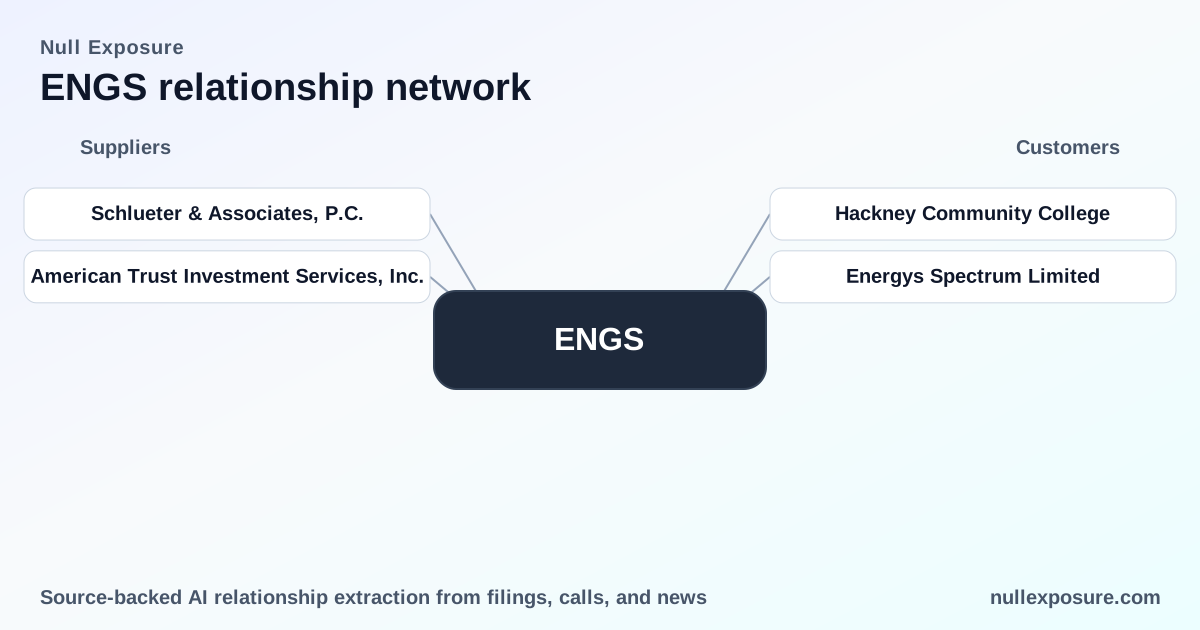
Hackney Community College — a classic institutional retrofit win
Energys completed a major energy retrofit at Hackney Community College that converted 4,900 lamps to LED and included boiler optimisation controls and specialist insulation supplied and installed by Energys Group. This is a textbook institutional engagement that showcases the company’s full-service delivery capability and its ability to win educational-sector projects with measurable energy-saving outcomes. According to a 2016 report on SpecificationOnline, the work supported the college’s Shoreditch campus energy upgrade (FY2016).
Energys Spectrum Limited — channel expansion through licensing and minority investment
Energys signed a memorandum of understanding to acquire a 49% interest in Energys Spectrum Limited, the exclusive Energys licensee for Hong Kong and Macau, which procures the company’s products and recommends them to its clients. The April 2025 GlobeNewswire release describes this target as an operating partner that actively promotes the Energys brand and facilitates regional procurement, representing a strategic push toward market access and indirect sales via regional licensees (FY2025).
Why these two relationships are informative for investors
Both relationships illustrate two complementary go-to-market tracks:
- Direct project delivery to public institutions (Hackney Community College) demonstrates Energys’ capacity to execute on-site retrofits and capture installation margins.
- Channel and licensing expansion (Energys Spectrum Limited) indicates a deliberate strategy to scale internationally without duplicating fixed-cost installation infrastructure, using minority stakes and exclusive license models to drive procurement.
Both models are necessary for scaling: direct installations validate technical capability and local references; licensed partners extend geographic reach and supply demand without proportionate increases in headcount or capex.
Investment implications and principal risk vectors
- Revenue volatility is structural: project timing drives quarter-to-quarter swings. Energys’ FY2024 performance—quarterly revenue decline of ~43% YoY—exemplifies how one or two project cycles can materially shift results.
- Execution risk and margin recovery matter more than topline for valuation. With negative operating margins and EBITDA losses, investors should prioritize evidence of tightening project costs or higher-margin recurring revenue.
- Counterparty concentration risk: the mix of institutional projects and licensed partners reduces single-buyer exposure, but the company’s small scale means any lost large project would have outsized P&L impact.
- Liquidity and governance: high insider ownership supports founder control but creates trading illiquidity and potential governance concentration; low institutional ownership signals limited sell-side coverage and analyst visibility.
Tactical takeaways for research and operations teams
- For traders: expect episodic news flow tied to project awards and licensing deals; position sizing should account for low float and potential headline-driven moves.
- For operators and partners: prioritize metrics that demonstrate install margins and post-installation performance guarantees—these are the levers that convert reference projects into repeatable contracts.
- For M&A and corporate development teams: minority stake licensing deals like the Energys Spectrum transaction provide a path to geographic expansion with capital-light exposure to new markets.
If you want a consolidated view of Energys’ commercial footprint and licensing strategy, see our platform for customer-centered intelligence at https://nullexposure.com/.
Final read
Energys is a small-cap retrofit specialist with two observable commercial legs: direct institutional installations and licensed channel partnerships. The company’s current financial profile classifies it as growth-before-profit scale-up; investor returns will depend on converting one-off project wins into predictable pipelines and on the efficacy of licensing partnerships to deliver repeat procurement. The two customer relationships reported here reflect that dual approach and are the concrete commercial signals to monitor in the coming quarters.