ENIC: How Enel Chile monetizes asset recycling and branded energy partnerships
Enel Chile operates, monetizes, and optimizes value as a vertically integrated regulated utility that generates, transmits and distributes electricity across Chile while actively managing its generation portfolio through asset sales and commercial energy-offtake partnerships. The company earns regulated distribution revenue and merchant/contracted generation margins, and it supplements core cash flows with strategic asset disposals and commercial supply agreements that recycle capital into higher-return opportunities. For investors, the customer relationships disclosed in public reporting and press coverage highlight two consistent themes: asset recycling to third-party renewable operators and branded energy/supply agreements with large corporate and institutional customers. For further intel and relationship analytics, visit https://nullexposure.com/.
Why customers and counterparties matter for Enel Chile
Enel Chile’s customer and counterparty footprint influences cash flow volatility, regulatory exposure and the pace of capital redeployment. Sales of generation assets or long-term offtake agreements reduce operational concentration and shift counterparty risk from merchant exposure to credit exposure with industrial buyers or renewable operators. That structural shift is significant for valuation because it lowers generation operating risk while crystallizing proceeds that support debt reduction or grid investments.
Below I cover every matched relationship surfaced in our review and explain what each connection signals for Enel Chile’s commercial posture.
Sonnedix and the Arcadia solar divestiture — a clear capital-recycling transaction
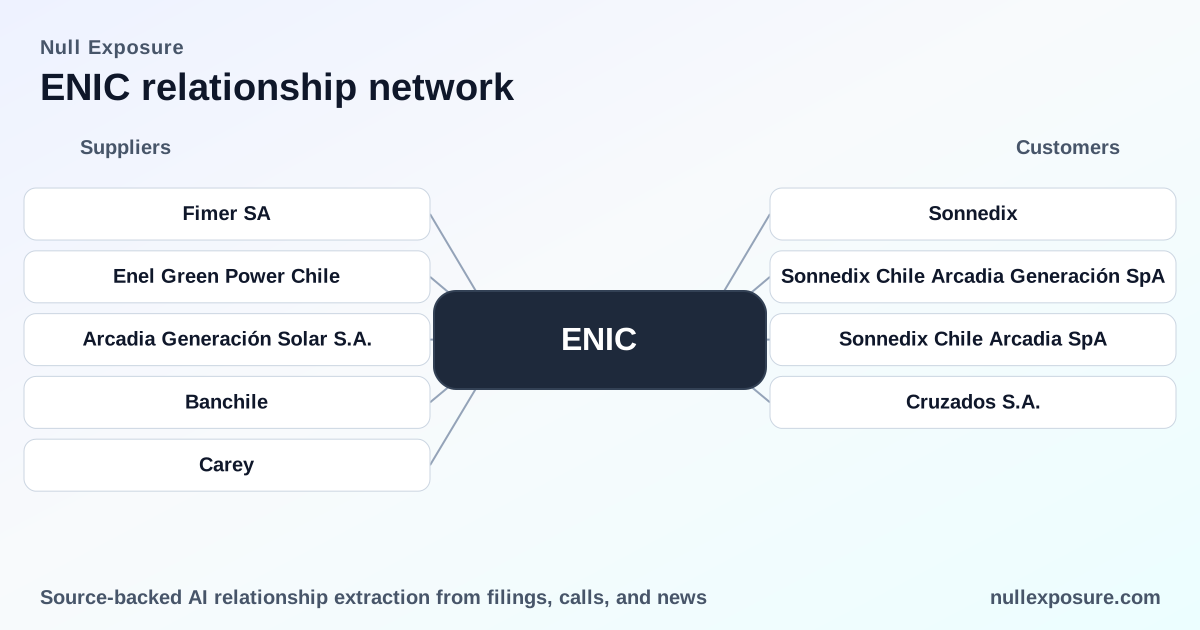
Enel Chile executed a sale of its Chilean photovoltaic generation portfolio to Sonnedix for approximately US$550 million, transferring nearly all ownership in Arcadia Generación Solar S.A. The deal packaged four operational plants totaling 416 MW of net installed capacity in Atacama and Antofagasta and required antitrust approval from Chile’s Fiscalía Nacional Económica before closing. According to Forbes (July 12, 2023), Enel Chile signed the sale agreement to Sonnedix, and La Tercera (reporting on the October closing) confirms the transfer of the four plants and the regulatory clearance on October 24, 2023. LexLatin also described Sonnedix as an international solar operator acquiring Enel Chile’s photovoltaic business (FY2023 reporting).
- Sonnedix Chile Arcadia SpA / Sonnedix Chile Arcadia Generación SpA: Enel Chile sold 99.99% of the shares of its Arcadia solar subsidiary as part of the transaction to Sonnedix, completing a transfer of operating assets and associated revenue streams to a specialist solar operator (Forbes, July 2023; La Tercera, October 2023).
- Sonnedix (parent reference): The counterparty is a global renewables owner/operator; the sale represents Enel Chile’s deliberate shift to monetize built renewable capacity and reduce merchant exposure while extracting liquidity for corporate use (LexLatin, FY2023 reporting).
Investor takeaway: the Sonnedix transactions are not commodity purchases but strategic divestitures that convert installed capacity into cash, reduce operating complexity and change future margin profiles from generation margin to either distributed/grid exposure or contracted supply agreements.
Cruzados S.A. — an energy supply / branding partnership in stadium services
Enel Chile’s subsidiaries (Enel Generación and Enel X) signed an agreement to supply 100% renewable energy to the new Universidad Católica stadium, positioning the venue as Chile’s first fully sustainable sports arena. Eldinamo reported the commercial tie-up under the "Energía" category between Enel’s local units and Cruzados S.A. (September 1, 2023).
- Cruzados S.A.: This is a commercial supply and branding arrangement to provide renewable energy services for a large, high-visibility customer, reinforcing Enel Chile’s role in corporate sustainability initiatives and energy-as-a-service offerings (Eldinamo, Sept 2023).
Investor takeaway: branded, municipal or institutional supply agreements like this generate steady contracted revenue, enhance Enel’s retail and customer-facing product set (Enel X services), and support non-generation growth vectors.
ANNA — a matched vendor excerpt flagged in filings (FY2024 10‑K)
A FY2024 10‑K filed by the company ANNA lists vendors used for exploration and seismic purchasing and includes names such as Eni and CGG; this vendor language surfaced in our matching set against Enel Chile records. The excerpt is a vendor roster rather than a direct customer contract involving Enel Chile (ANNA 10‑K, FY2024).
- ANNA: The FY2024 filing references vendors for seismic acquisition and other services; the matched text is a generic vendor example and does not constitute evidence of a commercial customer relationship where Enel Chile supplies electricity to ANNA (ANNA 10‑K, Dec 31, 2024).
Investor takeaway: treat matches to third-party vendor lists with caution — they can generate false positives in automated matching and should be validated against primary contract or corporate disclosure.
What the relationship set collectively signals about Enel Chile’s operating model
- Contracting posture: Enel Chile follows a dual posture—maintaining regulated distribution contracts while executing discrete, large-scale commercial transactions (asset sales and corporate supply agreements). The Sonnedix divestiture is a typical non-operational contracting outcome: one-time monetization of generation assets rather than an ongoing supplier relationship.
- Concentration and criticality: Asset sales reduce concentration risk in Enel Chile’s generation segment and shift criticality toward grid and distribution networks that remain core to the regulated cash flow base; meanwhile, bespoke contracts (stadium energy) are low-to-medium revenue but high-visibility.
- Maturity and sophistication: These relationship types are consistent with a mature utility executing portfolio optimization: Enel Chile is actively recycling capital, partnering with specialist renewable operators, and monetizing non-core generation while pursuing commercial energy products through Enel X.
- Visibility and disclosure: Public reporting and press coverage provide clear signals for material transactions (e.g., the Sonnedix sale), while some matched items (e.g., third-party 10‑K vendor lists) reflect noise that requires manual validation.
Risks and relevance for valuation
- Cash flow profile shift: Monetizing generation assets trades recurring generation margin for one-time proceeds and lower ongoing operational risk; investors should reflect that in free cash flow forecasts and terminal assumptions.
- Counterparty credit and execution risk: Selling to specialized operators transfers operational execution risk to buyers; however, it introduces counterparty credit exposure on proceeds and contractual warranties tied to sales.
- Regulatory gating: Significant disposals of generation assets in Chile require regulatory approvals, as shown by the Fiscalía Nacional Económica review for the Sonnedix transaction—regulatory timing and conditions can affect deal economics.
Conclusion and next steps for due diligence
Enel Chile is executing a clear capital-recycling strategy while expanding branded supply relationships. For investors, the material Sonnedix divestiture and visible corporate energy engagements (Cruzados) are the most consequential customer-counterparty signals in public reporting. Validate deal economics, timing of proceeds recognition, and post-sale service arrangements in company filings and regulatory disclosures.
For a deeper, relationship-by-relationship intelligence view and refreshed coverage of counterparties, explore our platform at https://nullexposure.com/.