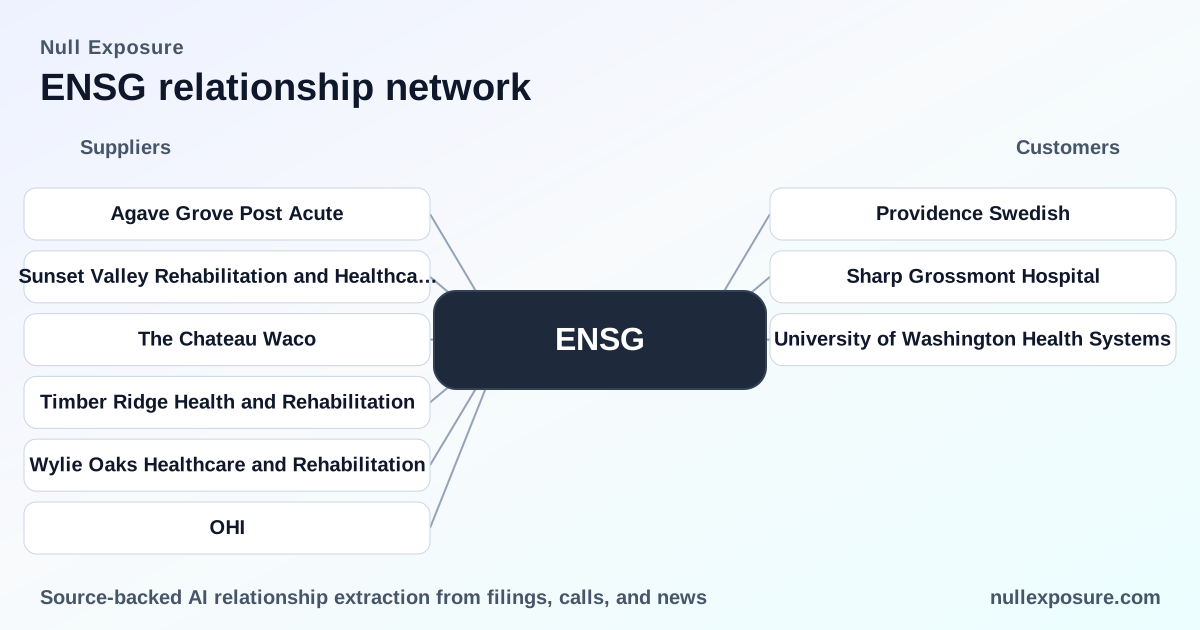
ENSG: Customer Relationships, Contracting Posture, and Investment Implications
The Ensign Group operates and monetizes a geographically diversified portfolio of post-acute care businesses—skilled nursing, senior living and ancillary services—by owning, leasing and operating facilities and billing payors (Medicaid, Medicare, managed care and private pay) for patient care. Revenue is driven by facility-level operations and long-term real estate leases, with Medicaid representing a substantial and recurring payor exposure; Ensign converts bed capacity and ancillary services into predictable cashflows through high facility count and long-term contracting. For investors, the critical question is how durable those cashflows are given payor concentration and the company’s leasing posture. For a concise profile of Ensign and its enterprise-level signals, see NullExposure.
If you want a clean, operational view of ENSG customer and contracting exposure, visit https://nullexposure.com/ for granular relationship analytics.
Quick investment thesis — scale, contracting, and payor concentration
Ensign’s scale ($5.27 billion revenue TTM; market cap roughly $10.6 billion) and operating margins have produced consistent cash generation, yet the business is structurally dependent on long-term facility arrangements and government payors. The company monetizes by operating beds and ancillary services while locking economics through long-term leases and optioned purchases. This combination supports stable topline visibility but concentrates performance risk around Medicaid reimbursement and state budget dynamics.
What the customer relationships reveal: three institutional acute-care partners
Below I walk through every customer relationship flagged in the available results and spell out the commercial and strategic implications.
Providence Swedish — embedded preferred-provider role
Shoreline (an Ensign facility brand) served as a preferred provider within Providence Swedish, which allowed facility leaders to meet monthly with acute providers to identify and solve care-transition challenges. This denotes an operational partnership that prioritizes coordinated discharges and referral pathways. According to an earnings call transcript published March 9, 2026, this relationship is active and positioned around care-continuum alignment.
Source: Q4 2025 earnings call transcript posted on InsiderMonkey (published March 9, 2026).
University of Washington Health Systems — pathway to referrals and clinical coordination
Shoreline also operated as a preferred provider within the University of Washington Health Systems, enabling recurring engagement between Ensign facility leaders and acute-care clinicians to improve transitions and reduce avoidable readmissions. The mention in the same March 2026 earnings call frames this as a strategic channel for post-acute volume flows and clinical integration.
Source: Q4 2025 earnings call transcript posted on InsiderMonkey (published March 9, 2026).
Sharp Grossmont Hospital — collaborative patient service relationship
Ensign management acknowledged support from partners at Sharp Grossmont Hospital and signaled intent to continue servicing their patients, indicating an active referral and service-delivery relationship. That public acknowledgement in the March 2026 call signals ongoing operational collaboration in Southern California markets.
Source: Q4 2025 earnings call transcript posted on InsiderMonkey (published March 9, 2026).
How relationships fit Ensign’s operating model and constraints
The relationship set above is compact—three named acute-care partners highlighted in public remarks—but the company-level constraints contextualize how those ties scale and how risk concentrates.
- Contracting posture: long-term leasing architecture. Ensign operates a large share of facilities under long-term non-cancelable operating leases with typical initial terms in the mid-to-high teens (14–20 years) and renewal options; this underpins durable access to beds but locks expense and capital commitments over multi-decade horizons, per company disclosures referencing lease terms through December 31, 2025.
- Counterparty mix: heavy government payor exposure. Medicaid accounted for approximately 45.8% of revenue in FY2025, with Medicare and managed care representing other material components; government payors are a dominant cashflow source and therefore a primary sensitivity in reimbursement shifts.
- Customer type and criticality: provider/service model. Ensign functions principally as a service provider in the post-acute continuum; facility operations generated about 95.6% of revenue for the year ended December 31, 2025, making the operational relationship with acute-care hospitals and health systems critical to volume and utilization outcomes.
- Geographic concentration: national footprint but state-level sensitivity. Ensign operates in 17 states and specifically cites material exposure in California, Texas and Arizona; state budget adjustments in those jurisdictions can meaningfully affect net patient service revenue.
- Relationship stage and maturity: active, operationally embedded partnerships. Management commentary and facility programing indicate these acute-care ties are active and incorporated into recurring workflows (monthly meetings, preferred-provider status), not simply transactional referral arrangements.
These constraints trade off stability for exposure: long leases and high facility counts create predictable bed supply and operating scale, but government payor reliance and state-level funding volatility are the primary downside drivers.
Investment implications and risk checklist
Investors should weigh the following, informed by both relationship data and company-level constraints:
- Upside: Ensign’s scale (373 facilities as of year-end 2025) and embedded relationships with health systems create durable referral channels that support occupancy and revenue per patient. The company’s long-term leases secure bed access and reduce competitive displacement risk.
- Downside: Medicaid’s 45–46% revenue share and the 95.6% revenue concentration in skilled nursing make state reimbursement policy the single largest macro risk. Lease obligations amplify downside if utilization or reimbursement deteriorates.
- Operational signals to monitor: acute-care referral volumes from named partners (Providence Swedish, UW Health, Sharp Grossmont), state Medicaid rate updates in California/Texas/Arizona, and occupancy trends across the core 17-state footprint.
Bottom line and what to watch next
Ensign is a service-led, asset-levered operator whose customer relationships with regional health systems are operationally meaningful and support referral flows; those ties are reflected explicitly in management’s FY2026 commentary. The investment case balances predictable facility-driven cashflows against concentrated payor risk and long-term lease commitments that can amplify downside in adverse reimbursement or occupancy cycles.
For a deeper dive into ENSG’s customer map and to track changes in partner exposure over time, visit NullExposure’s home page at https://nullexposure.com/.
Key metrics to watch next quarter: occupancy trends, Medicaid reimbursement guidance by state, and any expansion of preferred-provider agreements that could materially increase referral volumes.