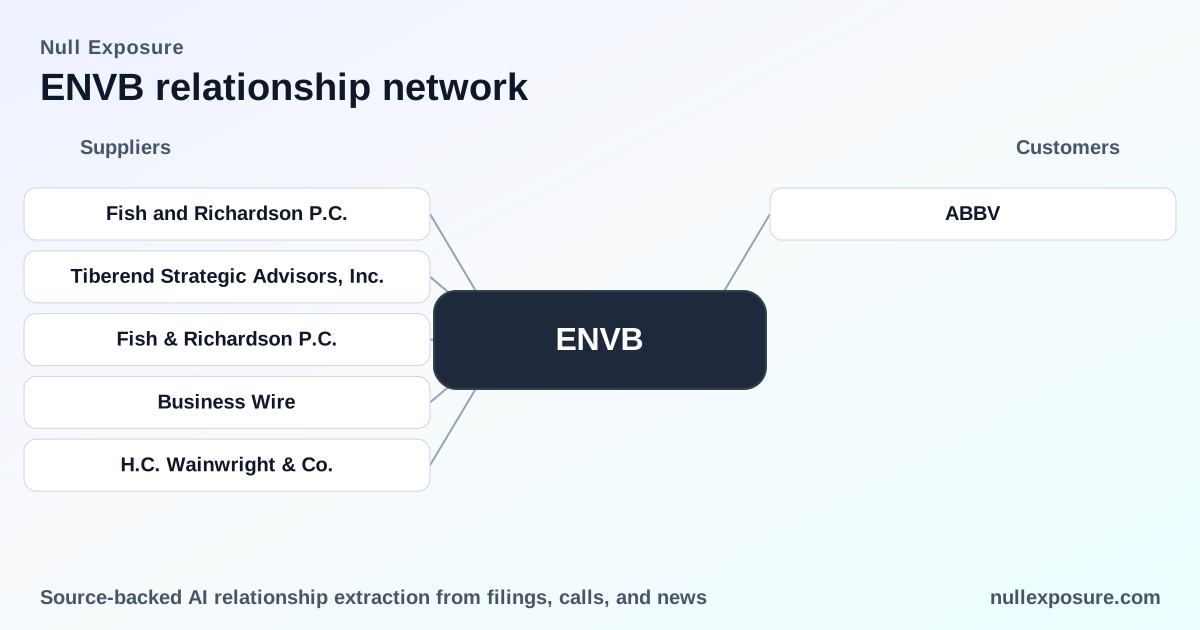
Enveric Biosciences (ENVB): Customer relationships driving an out‑license and asset‑monetization model
Enveric Biosciences builds and monetizes cannabinoid‑based therapeutic assets primarily by developing proprietary molecules and then out‑licensing or selling those assets to specialty partners and large pharma. Revenue flows are a mix of upfront licensing fees, potential milestone payments and occasional one‑time asset monetizations; the company supplements this model with trademark and topical product licenses through its Akos subsidiary. For investors, the key read is that Enveric’s commercial value is concentrated in a small number of high‑leverage relationships rather than broad product sales. Learn more at https://nullexposure.com/.
How Enveric’s customer relationships map to its commercial model
Enveric operates like a small biotech that converts R&D into contractable IP and then monetizes through licensing and selective divestiture. That operating posture creates a revenue profile characterized by:
- Lumpy, milestone‑driven receipts rather than predictable recurring revenues.
- High counterparty concentration: a few partners (including big pharma) can materially change valuation if deals close or fail.
- Contracting posture that favors exclusive, royalty‑bearing agreements and sublicensing rights, enabling outsized upside if a partner commercializes successfully.
These are company‑level signals supported by recent transaction activity and public filings; details on those constraints follow below. If you want a deeper cross‑company relationship view, visit https://nullexposure.com/.
Deal-by-deal: the customer relationships you need to know
TOTEC Pharma / TOTEC Pharma LLC
Enveric’s Akos subsidiary licensed the RCANN trademark portfolio to TOTEC Pharma to support topical cannabinoid cream technology targeting radiation dermatitis, and the company reported an expanded collaboration via a trademark license in its FY2025/FY2026 reporting. According to an Investing.com SEC‑filing summary dated May 2, 2026, Akos granted the RCANN license to TOTEC; InvestingNews also described an expanded trademark license on May 2, 2026.
Sources: Investing.com (SEC filing summary, May 2, 2026) and InvestingNews (corporate update, May 2, 2026).
AbbVie (ABBV / AbbVie Inv.)
Enveric sold or otherwise transferred its bretisilocin asset to AbbVie in a transaction described in multiple news reports as valued at up to $1.2 billion, representing a transformational, one‑time monetization of a lead asset. News coverage on March 9, 2026, reported that AbbVie acquired bretisilocin under terms that include substantial potential consideration.
Sources: StockTwits coverage (March 9, 2026) and Newsable/AsianetNews market report (March 9, 2026).
Restoration Biologics LLC
Enveric executed two licensing agreements with Restoration Biologics for cannabinoid‑COX‑2 conjugate compounds, covering pharmaceutical and potential non‑pharmaceutical applications for joint disease treatment. The company disclosed these agreements in its FY2025/FY2026 corporate update.
Source: InvestingNews (financial results and corporate update, May 2, 2026).
Contracting posture, concentration and maturity — what the constraints tell investors
The public relationship signals and constraint excerpts from Enveric’s filings and disclosures convey a consistent commercial playbook:
-
Geography and target markets: Enveric’s licensing activity shows a North American focus in recent agreements, with licensees and partners incorporated or operating in U.S. jurisdictions (e.g., Ohio and Delaware licensees cited in company disclosures). This indicates management prioritizes U.S. commercialization paths and regulatory alignment. (Company disclosure excerpts referencing Aries Science and MycoMedica Life Sciences originate from July–November 2024 filings.)
-
Relationship roles and financing behavior: The company has used structured financing arrangements as well as licensing; prior agreements include a purchase commitment from a financing partner (Lincoln Park Capital) that functioned as a buyer of equity in a funding arrangement, reflecting active balance‑sheet management alongside out‑licensing. (Reference: November 3, 2023 purchase agreement and registration rights with Lincoln Park.)
-
Licensing characteristics: Where disclosed, licenses are exclusive, royalty‑bearing, and provide sublicensing rights, consistent with a strategy to retain meaningful upside via royalties and milestone participation rather than pure divestiture in every deal (evidence drawn from July–November 2024 license excerpts).
-
Maturity of commercial relationships: The mix includes early‑stage out‑licensing (formulation and topical product rights), trademark licensing for commercialization of non‑prescription topical assets, and at least one large asset sale to a major pharma partner — demonstrating a spectrum from early‑stage partnerships to late‑stage asset monetization.
These signals are derived from Enveric’s public disclosures and the constraint excerpts summarizing licensing and financing events in 2023–2024.
What this means for valuation and operational risk
Enveric’s relationship profile creates a distinct risk/reward dynamic for investors and operators:
-
Upside is concentrated but significant. The AbbVie bretisilocin transaction — reported at up to $1.2 billion — shows how a single agreement can change Enveric’s commercial outlook materially. That makes pipeline quality and IP defensibility central valuation drivers.
-
Revenue volatility is structural. With FY2025 revenue reported at roughly $35.4 million and an EBITDA loss (‑$8.6m), the company relies on discrete licensing events and milestone receipts rather than sustained product revenues. Expect significant quarter‑to‑quarter noise tied to contract milestones and one‑off disposals.
-
Counterparty and concentration risk are elevated. Small numbers of counterparties (specialty licensees and single large pharma buyers) mean that partner execution and deal completion carry outsized price sensitivity.
-
Contract terms matter. The prevalence of exclusive, royalty‑bearing licenses with sublicensing provisions means future upside is tied to the contract royalty economics and milestone schedules, not just headline deal values.
-
Balance sheet solutions are part of the operating toolkit. Equity purchase agreements and registration rights indicate management will use financing backstops to fund operations between material licensing events.
Key financial context: market capitalization is approximately $6.8 million with negative EPS and an EBITDA loss in the most recent reporting period, a reminder that commercial milestones and asset sales are the primary levers for value realization.
Practical takeaways for investors and operators
- Focus due diligence on IP strength for lead assets (e.g., bretisilocin history) and the specific royalty and milestone schedules embedded in licenses.
- Monitor counterparties: large‑cap pharma partners reduce execution risk; small specialty licensees increase go‑to‑market uncertainty.
- Treat revenue forecasts as scenario models driven by binary events (deal closings, milestones, asset transfers) rather than linear sales growth.
- Use the company’s public licensing disclosures and financing agreements as primary inputs to stress‑test valuation sensitivity to timing and probability of milestone receipts.
Bottom line: Enveric is a small biotech that converts cannabinoid R&D into monetizable IP through licensing and selective asset sales; its valuation hinges on a small set of high‑value relationships and the contractual economics they encode.
For a consolidated view of Enveric’s partner map and to track relationship‑level signals over time, visit https://nullexposure.com/.