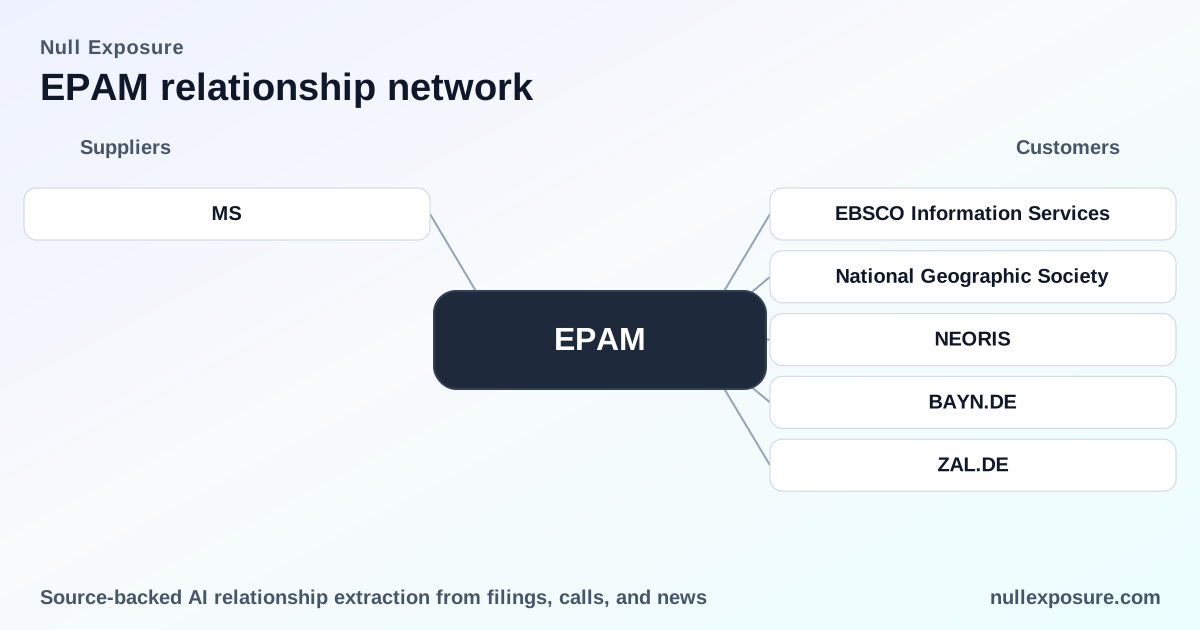
EPAM Systems: Customer Relationships and What They Mean for Investors
EPAM Systems operates as a global professional services firm that monetizes primarily through high‑value engineering and consulting engagements—fixed‑price and time‑and‑materials contracts that deliver digital platforms, cloud migrations, AI solutions and analytics to large enterprises. Licensing is a small adjunct revenue stream, while services represent the core commercial model, producing the bulk of reported revenue and gross profit. For an investor, EPAM’s economics are driven by utilization, large account expansion, and cross‑sell of adjacent capabilities such as cloud and AI.
Explore our relationship map and source-backed summaries on the homepage: https://nullexposure.com/
How EPAM runs the client engine — a concise operating profile
EPAM’s public disclosures and quarterly commentary paint a coherent operating model. Important, company‑level signals:
- Service‑led monetization: Professional services comprised 99.4% of reported revenues in the latest annual breakdown, confirming EPAM sells engineering and consulting labor at scale rather than productized software.
- Contracting posture: Revenue is delivered through time‑and‑materials and fixed‑price arrangements, with licensing provided selectively and non‑exclusively where clients need reuse of pre‑existing IP. Company filings show licensing and other revenues are a low‑single digit percentage of total sales.
- Client concentration and maturity: EPAM targets large enterprises, and its client base is mature—over 65% of revenue in 2024 came from clients with more than five years of engagement, supporting predictability but also tying growth to account expansion.
- Geographic footprint: North America is the largest market (reported segment revenues of roughly $2.87B in the referenced table), EMEA is material (~$1.79B), APAC is small, and Latin America is expanding through recent acquisitions.
- Role and criticality: EPAM functions as a strategic service provider for digital transformation, cloud and AI programs; its work is frequently mission‑critical for enterprise clients.
- Revenue drivers and risks: Organic growth hinges on upsell across data, cloud and AI, while acquisitions (for example, NEORIS and First Derivative) are shaping geographic and sector exposure—this increases growth optionality but also introduces integration and revenue‑quality considerations.
Discover the full sourcing and relationship evidence on the homepage: https://nullexposure.com/
Client relationships called out in recent disclosures
Below are every customer relationship referenced in EPAM’s 2025 Q4 commentary and associated reporting, presented with plain‑English summaries and source attribution.
National Geographic Society
EPAM was named National Geographic’s preferred digital transformation partner under a new multiyear agreement focused on digital capabilities and content platforms. According to EPAM’s 2025 Q4 earnings call (published March 7, 2026), this is a strategic, multiyear partnership.
EBSCO Information Services
EPAM partnered with EBSCO Information Services to enhance software development processes using the AIRun Transform framework, signaling process modernization work for content and discovery platforms. This was disclosed in EPAM’s 2025 Q4 earnings call (March 7, 2026).
NEORIS
Public reporting highlighted a ramp‑down in business from EPAM’s largest NEORIS customer, which triggered a securities probe and is tied to an observable revenue impact. A SimplyWallSt news item (March 2026) reported the probe and the disclosed customer ramp‑down that affected FY2026 revenue dynamics.
ZAL.DE (Zalando — referenced by EPAM)
EPAM cited work driving impact across data, analytics, AI and cloud transformation for the Zalando group, reflecting large‑scale retail transformation engagements in EMEA. This client reference was included in the 2025 Q4 earnings call (March 7, 2026).
Zalando (duplicate listing)
Zalando was named again in the same earnings commentary as a focus area for data and cloud‑led transformation, reinforcing EPAM’s active relationship with major European retail platforms. Source: EPAM 2025 Q4 earnings call (March 7, 2026).
Bayer / BAYN.DE
EPAM partnered with Bayer to build an AI‑powered pricing tool deployed across 35 countries, evidencing capability in advanced analytics and commercialization tooling for large life‑science clients. This engagement was disclosed during EPAM’s 2025 Q4 earnings call (March 7, 2026).
BAYN.DE (duplicate listing)
Bayer was again cited in the quarterly commentary for the same AI pricing initiative covering multi‑country deployment, reinforcing EPAM’s delivery role on enterprise AI projects. Source: EPAM 2025 Q4 earnings call (March 7, 2026).
Deutsche Bank
EPAM’s work supporting enterprise‑scale database migration and cloud adoption was highlighted in recognition for Databases: EMEA; EPAM’s engagement with Deutsche Bank focused on accelerating cloud adoption and cost reduction. A MyChesco news report covering EPAM’s Google Cloud partner awards (May 2026) referenced this Deutsche Bank collaboration.
What these relationships tell investors about growth, concentration and risk
These client vignettes illustrate EPAM’s repeatable playbook: win large, multi‑year engagements with global enterprises and extend scope into adjacent capabilities (AI, cloud, data). Several investment‑relevant conclusions follow:
- Revenue quality is service‑centric and relationship‑driven. With services at ~99% of revenue, EPAM’s topline depends on utilization, long‑term contracts and account expansion rather than recurring software license annuities. This increases operating leverage and sensitivity to client demand cycles.
- Large‑enterprise exposure is a double‑edged sword. Work with Bayer, Deutsche Bank, Zalando and National Geographic demonstrates strategic client penetration and productized delivery of AI/cloud capabilities, but the NEORIS ramp‑down and related securities probe illustrate idiosyncratic concentration risk introduced by acquisitions and large account shifts.
- Geography and vertical diversification are in active flux. North America drives the largest share of revenue, EMEA is significant, and LATAM exposure is increasing via acquisitions—this supports growth but requires integration discipline and careful revenue recognition.
- Contracting and criticality favor stickiness. EPAM’s role as a systems integrator on mission‑critical cloud/AI programs increases switching costs and supports long revenue tails, which underpins the reported client maturity statistics in company filings.
- Operational leverage and margin profile hinge on utilization and delivery mix. Given professional services dominance, incremental utilization increases translate directly to operating income upside; conversely, client ramp‑downs or project delays compress margin quickly.
Bottom line for investors
EPAM is a high‑touch engineering services franchisor: growth is delivered through large enterprise engagements, capability expansion in cloud and AI, and selective licensing that does not drive the business model. The company’s relationship roster shows deep, strategic engagements with marquee enterprises—this validates EPAM’s go‑to‑market while also concentrating execution risk in a handful of large deals and acquisition integrations. NEORIS‑related revenue disruption and the resulting regulatory attention are the most material, company‑specific risk flagged in recent reporting.
For a deeper, source‑level view of EPAM’s client map and how each relationship trends over time, visit our relationship hub: https://nullexposure.com/