EPR-P-C: Preferred Income Backed by an Experiential REIT with Concentrated Tenant Exposures
EPR Properties issues the 5.75% Series C cumulative convertible preferred (EPR-P-C) to deliver a fixed income stream and upside optionality through conversion into common equity; the instrument monetizes investor demand for stable yield while sitting on a balance sheet whose cashflows are driven by leases to large experiential operators. For income-focused investors, EPR-P-C offers yield stability layered over EPR’s niche exposure to entertainment, recreation, and leisure real estate—but that stability is exposed to tenant concentration and operator health. For a deeper look at the analytics behind tenant exposures and investor signals, visit https://nullexposure.com/.
The investment thesis in one paragraph
EPR-P-C functions as a yield product with conversion optionality issued by an experiential REIT that earns rent from leisure-focused operators (movie chains, entertainment complexes, golf and recreation venues). The preferred dividend is funded by lease cashflows and the preferred’s downside/credit sensitivity is therefore directly linked to the operating performance and credit standing of EPR’s largest tenants. Institutional investors should evaluate the preferred alongside EPR’s tenant concentration, lease terms, and the operating resilience of marquee lessees.
What the customer relationships reveal about cashflow drivers
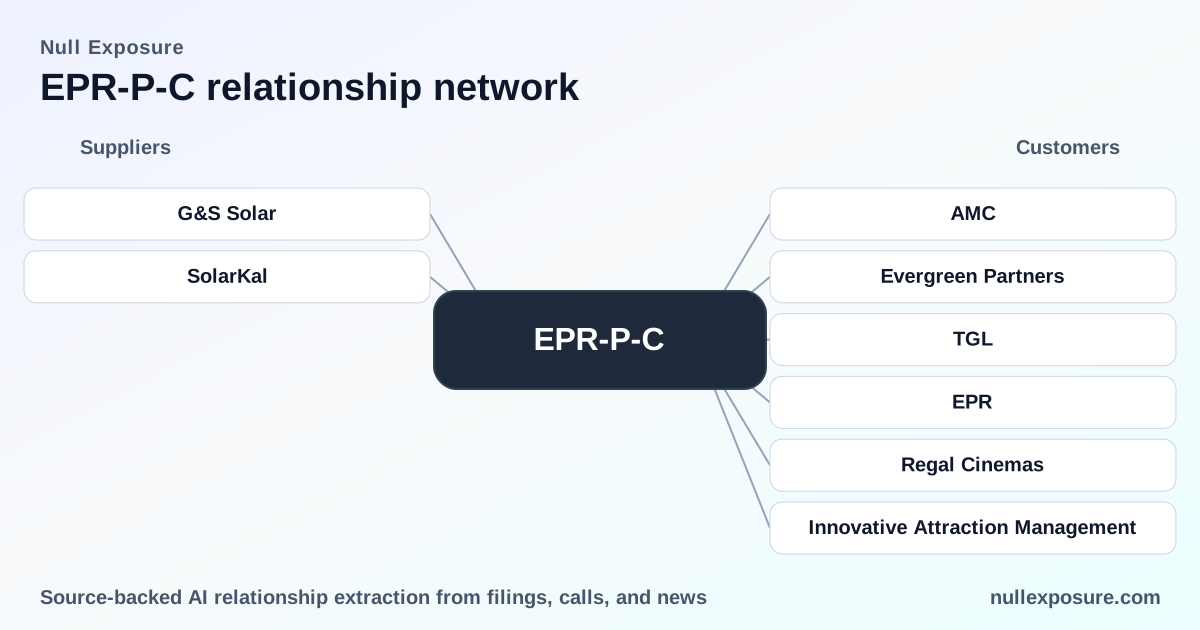
Below I cover every relationship flagged in recent coverage and summarize the practical implications for investors in EPR-P-C. Each entry is a concise, plain-English takeaway with its source.
AMC
EPR has material exposure to AMC as one of its largest tenants; press coverage highlights ongoing financial stress at AMC that can influence EPR’s rent collection risk and valuation assumptions. According to Simply Wall St reporting from March 9, 2026, investor attention increased when AMC’s financial issues were reported and directly tied to EPR’s revenue exposure.
AMC Entertainment
Coverage consistently identifies AMC Entertainment as the REIT’s largest tenant and a focal point for dividend and valuation commentary, underscoring concentrated counterparty risk on the revenue line. A Simply Wall St item dated March 9, 2026, specifically links EPR’s steady dividend narrative to revenue exposure stemming from AMC Entertainment.
Topgolf
Topgolf is a major, diversified revenue source for EPR; recent results show Topgolf locations generating meaningful quarterly revenue and surpassing other individual tenants in contribution. A Globe and Mail press release from March 9, 2026, states Topgolf produced $25.2 million in revenue for EPR in the referenced quarter, equal to 14.4% of overall revenue.
TGL
TGL (Topgolf’s ticker) shows up in coverage as the market-level reference for EPR’s Topgolf exposure; investors should treat TGL references as synonymous with the Topgolf revenue contribution called out in press coverage. The Globe and Mail release on March 9, 2026, is the source linking TGL/Topgolf to a sizeable share of EPR’s revenues.
Evergreen Partners
EPR is active beyond marquee branded tenants and provides capital to local operators; in one example EPR advanced financing to Evergreen Partners for land acquisition and mortgage funding. The Globe and Mail press release (March 9, 2026) notes a $1.2 million provision to Evergreen Partners and an additional $5.9 million in mortgage financing.
Advance Golf Partners
EPR structures leases and then places operations with experienced local operators; Advance Golf Partners is cited as the lessee/operator for certain golf properties that EPR will lease and have run by a third-party operator group. Industry reporting on March 9, 2026 via Finviz referenced Advance Golf Partners as the operator that will lease and run daily-fee golf courses developed by EPR.
EPR (company mention)
Coverage that references “EPR” alongside its lessees is useful for investors tracking how management is allocating capital and structuring leases; press pieces on March 9, 2026 summarize portfolio moves and tenant revenue contributions that underpin preferred dividend coverage. Finviz and Globe and Mail materials dated March 9, 2026 consolidate EPR’s commentary on asset leasing and operator selection.
Innovative Attraction Management
EPR has repeat commercial relationships with park operators; Innovative Attraction Management appears as a counterparty in at least one transaction, indicating EPR’s strategy of repeated partnerships with select operators. A Globe and Mail press release from March 9, 2026 calls out this as the second deal with that park operator.
Regal Cinemas
Regal Cinemas is listed alongside other theater operators as a tenant in EPR’s portfolio, providing additional but smaller-scale exposure compared with Topgolf and AMC. The Globe and Mail release (March 9, 2026) references Regal as one of the cinema tenants that EPR landlords alongside its larger counterparts.
Key takeaways for preferred-holders and portfolio managers
- Tenant concentration is a primary credit lens. EPR’s dividend support for preferred instruments is tied to a small number of large, operationally sensitive tenants. Press coverage from March 9, 2026 highlights Topgolf and AMC as especially influential on revenue and market sentiment.
- Cashflow diversity includes operator-finance activities. EPR’s mortgage and direct financing to operators like Evergreen Partners signals an income stream beyond straight lease receipts, but also increases capital-exposure complexity.
- Operator selection and repeat partnerships are part of the operating model. EPR systematically places properties with specialized operators (Advance Golf Partners, Innovative Attraction Management), which supports operational scale but creates operator-concentration vectors.
- EPR-P-C’s stability depends on lease enforceability and tenant health rather than covenant structures alone. Investors should prioritize lease maturity profiles, rent escalation mechanics, and tenant covenant strength when sizing exposure.
Company-level constraints and operating posture
There are no explicit constraint excerpts in the record for EPR-P-C; as a company-level signal, assess EPR’s operating model as follows: high counterparty concentration, moderate to high criticality of marquee tenants to near-term cashflow, and an active capital deployment posture that includes financing operator acquisitions and mortgages. This combination produces a contracting posture that is opportunistic—EPR pursues structured leases and operator financing—but operational maturity varies by operator segment (cinema, Topgolf, golf/parks), meaning credit resilience is heterogeneous across the portfolio.
What investors should monitor next
- Lease maturities and renewal rates for Topgolf, AMC, and major cinema tenants.
- Performance indicators from operator partners (Topgolf same-store metrics, golf course cashflows, park attendance).
- Any company disclosures on preferred dividend coverage ratios and conversion mechanics relative to common equity.
For a structured view of counterparty exposures and tailored analytics for capital allocation, visit https://nullexposure.com/ for investor-focused tools and reporting.
Bold final thought: EPR-P-C provides attractive fixed income with conversion upside, but the preferred’s credit profile is driven by a concentrated set of experiential tenants and EPR’s hands-on operator financing—factors that require active monitoring by yield-focused investors.