Epsilon Energy (EPSN): Customer Relationships That Drive Cash and Concentration Risk
Epsilon Energy monetizes its upstream and midstream footprint through two complementary channels: commodity sales of natural gas, oil and NGLs, and fee-based gathering and compression services derived from its ownership interest in the Auburn gathering system in Northeastern Pennsylvania. Revenue flows are a mix of short-term commodity receipts and usage-linked midstream fees, with a handful of large counterparties accounting for a disproportionate share of cash receipts and trade receivables.
If you want a quick portfolio-grade read on counterparty exposure, start here: Epsilon’s business produces highly concentrated revenue with operational durability from long-term gathering contracts—a structural dynamic that creates both predictable midstream cash and elevated counterparty concentration risk. For deeper customer analytics and relationship signals, visit https://nullexposure.com/.
How Epsilon actually gets paid (and why that matters)
Epsilon operates as an onshore North American oil and gas E&P with an attached midstream presence. Two revenue engines coexist:
- Direct commodity sales to customers under short payment terms generate spot-like cash flow tied to commodity prices. The company sells natural gas directly with payment terms generally under 30 days, and 60 days for revenues related to the gas gathering system.
- Fee-for-service gathering and compression revenue is usage-based and recognized over time on units of gas gathered, producing more predictable, volume-linked receipts that are contractually recurring.
The company’s midstream posture is not purely spot exposure: Epsilon executed a 10‑year Anchor Shipper Gas Gathering Agreement (ASGGA) effective January 1, 2024, which establishes a long-term baseline of gathering revenues with Appalachia Midstream Services, LLC. According to Epsilon’s FY2024 Form 10‑K, that ASGGA was executed on May 17, 2024. This contract provides stability to the services revenue line while commodity sales remain short-cycle and price-sensitive.
The three counterparties you need to know
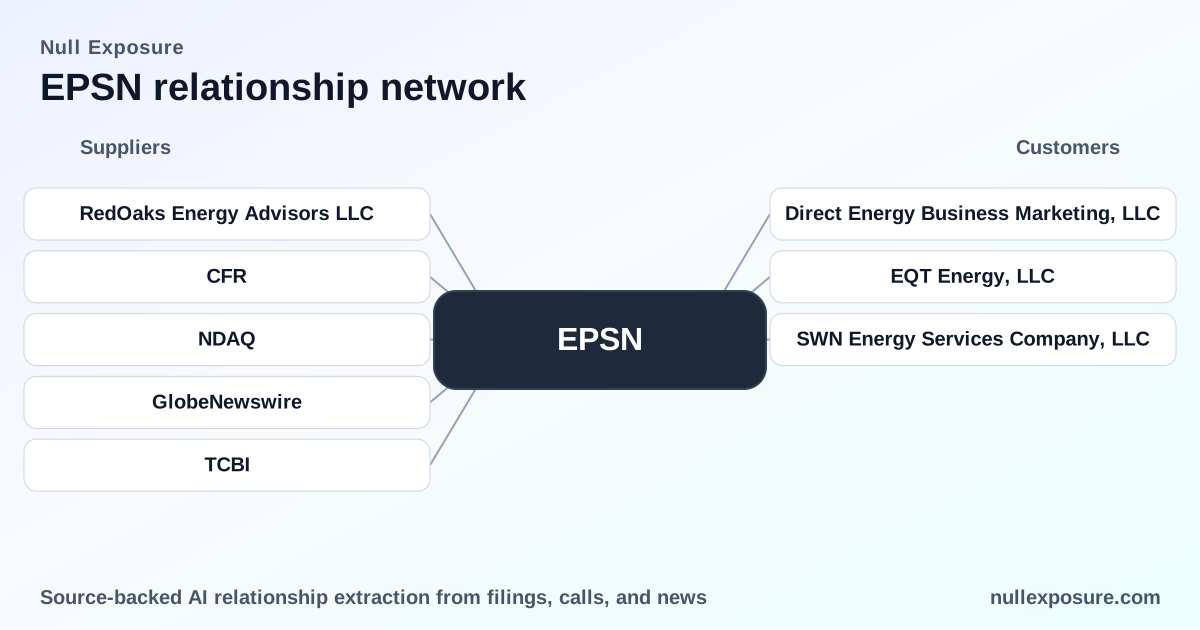
Epsilon’s FY2024 disclosures identify three named customers that materially influence revenue and receivables. Each is a concentrated source of revenue and therefore a natural focal point for counterparty risk monitoring.
Direct Energy Business Marketing, LLC
Direct Energy Business Marketing, LLC accounted for 10% or more of Epsilon’s total revenue in FY2024, making it one of the firm’s largest purchasers of produced gas. According to Epsilon’s FY2024 Form 10‑K, Direct Energy was explicitly listed among the customers contributing at least 10% of revenue.
EQT Energy, LLC
EQT Energy, LLC also represented 10% or more of total revenue for FY2024 and sits alongside Direct Energy as a major buyer of Epsilon’s gas production. Epsilon’s FY2024 Form 10‑K lists EQT Energy, LLC as a material customer for that year.
SWN Energy Services Company, LLC
For the year ended December 31, 2024, Epsilon sold natural gas through Appalachian Regional Marketing (ARM) to 34 unique customers, and SWN Energy Services Company, LLC accounted for 10% or more of total revenue. This disclosure comes from the FY2024 Form 10‑K and highlights that aggregation channels like ARM concentrate counterparty exposure when a few buyers dominate volumes.
Each of the three named counterparties is drawn from Epsilon’s FY2024 Form 10‑K and is explicitly disclosed as representing ≥10% of total revenue for the period, defining near-term commercial concentration.
For a broader view of how we source and structure these relationship signals, see https://nullexposure.com/.
Operating posture and contract characteristics investors should weight
Epsilon presents a hybrid contracting posture:
- Long-term elements: The ASGGA with Appalachia Midstream Services, LLC (effective 1/1/2024, ten-year primary term) signals a degree of midstream revenue durability and capacity reservation that supports predictable fee income (FY2024 Form 10‑K disclosure).
- Short-term commodity sales: Typical gas sales contracts carry payment terms under 30 days, and gathering-related receipts may be collected on up to 60-day terms, giving the company fast cash conversion but ongoing price exposure.
- Usage-based economics: Gathering and compression fees are calculated per unit of gas processed and recognized over time using an output method, aligning midstream revenue with throughput volumes rather than fixed tolling alone.
- Geographic concentration: Approximately 50% of revenue in FY2024 (and 77% in FY2023) derived from activity in Pennsylvania, underlining a regional concentration risk tied to Appalachia supply fundamentals.
- Role diversification: Epsilon acts as both seller of commodities and service provider via its gathering system, which spreads revenue sources but links much of the firm’s cash flow to a limited set of counterparties.
Taken together, these characteristics produce a business that combines stable fee revenue with volatile commodity receipts—and accordingly, a mixed risk-reward profile.
Concentration and credit risk: the hard numbers that matter
Epsilon’s filings state that three customers represented 89.1% of the company’s total trade accounts receivable for the year ended December 31, 2024. That level of receivable concentration makes counterparty credit performance a material earnings and liquidity lever: a single prolonged payment disruption could meaningfully impact working capital.
- Credit exposure is concentrated: The top-three receivable concentration is a critical balance-sheet sensitivity.
- Operational mitigation exists but is incomplete: The long-term ASGGA and fee-based midstream fees deliver recurring cash, but those flows are still tied to Appalachian volumes and a few large buyers.
Investment implications — what to watch if you own or trade EPSN
- Liquidity and working capital will track counterparty performance. With near-term payment terms on gas sales and high receivable concentration (89.1% in three customers), monitor collections and counterparties’ credit events.
- Midstream contracts provide a floor to revenues. The 10‑year ASGGA is a positive counterbalance to commodity cyclicality, improving the predictability of service revenues.
- Regional concentration increases correlation to Appalachia fundamentals. Pennsylvania production volumes and regional pricing dynamics will have outsized impact on Epsilon’s top-line and throughput-based fees.
- Diversification or loss of large customers is binary for near-term cash flows. Because a small number of counterparties account for material revenue and receivables, management’s ability to broaden offtake or add new shippers is a core operational KPI.
Bottom line: predictable services, concentrated credit
Epsilon combines predictable, usage-linked midstream revenues anchored by a 10‑year gathering agreement with short-cycle commodity sales that produce concentrated counterparty exposure. For investors and operators, the trade-off is clear: stability from fee contracts versus elevated counterparty concentration and regional dependence. Monitor receivable trends, collections, and any signs of shifting offtake among the three material customers named in the FY2024 Form 10‑K.
For a practical next step in tracking these counterparty dynamics and receiving timely signal updates, visit https://nullexposure.com/.