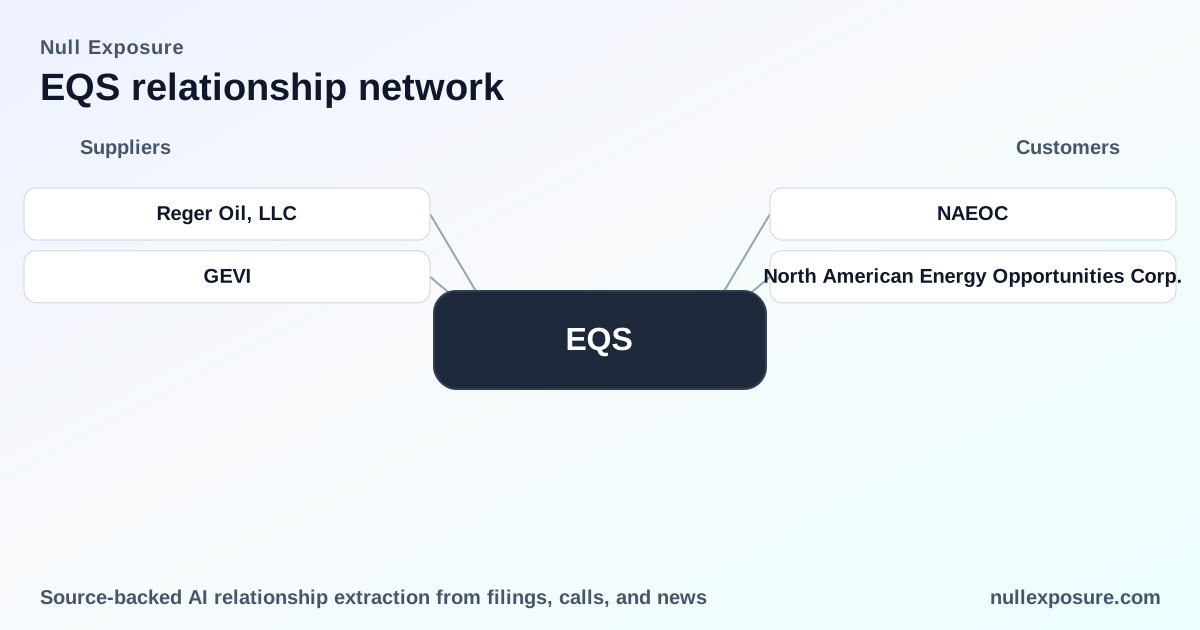
EQS (Equus Total Return): Customer relationships that shape exit timing and communications reach
Equus Total Return Closed Fund (ticker: EQS) operates as a closed-end investment vehicle focused on distressed and undervalued equity and debt securities, monetizing through capital appreciation of portfolio holdings and realized proceeds from asset dispositions. Management extracts value by actively restructuring positions and selling subsidiaries or portfolio companies, creating episodic but material cash events that drive NAV changes and shareholder returns. For investors tracking counterparty exposure and go‑to-market behavior, the record of buyers, acquirers and distribution partners around EQS’s assets is a direct signal of exit execution and communications capability. Learn more at https://nullexposure.com/.
What the relationship list tells investors about EQS’s commercial footprint
EQS’s reported customer and counterparty interactions fall into two operational buckets: asset disposals to strategic buyers and use of external communications/distribution services. The former drives liquidity and realised value; the latter affects public messaging and regulatory disclosure reach. The specific counterparties on file deliver visibility into both the Fund’s exit markets and how it disseminates information to stakeholders.
North American Energy Opportunities Corp. — buyer of Equus Energy
Equus sold its subsidiary Equus Energy, LLC to North American Energy Opportunities Corp. (NAEOC) for $4 million, representing a direct monetization of an energy-related portfolio asset and a reduction of portfolio complexity. According to a TradingView summary of a Reuters release (April 11, 2025) and corroborating press (CityBiz and FinancialContent, March 2025–May 2026), the transaction closed as part of EQS’s ongoing portfolio rationalization efforts (FY2025–FY2026).
UFP Industries, Inc. — acquirer of PalletOne
UFP Industries agreed to acquire PalletOne, Inc., a business sold out of EQS’s portfolio, in a transaction valued at $250 million; this sale is a material disposal that demonstrates EQS’s ability to realize value in secondary markets. The transaction was reported in FY2026 coverage (SimplyWall.St referencing the deal announcement) and signals a sizeable liquidity event for the Fund.
EquipmentShare.com Inc. — financing and lease structure counterparty
Public excerpts describe a funding structure tied to a lease agreement involving EquipmentShare where EQS is referenced as the payer of variable lease payments tied to customer rental fees, indicating EQS’s involvement in structured financing arrangements that generate predictable cash flows for noteholders. The description of the lease-based funding arrangement is recorded in an FY2025 note (Intellectia.ai) and highlights EQS’s participation in securitized or leased-backed financing structures.
Alibaba Group (BABA) — communications distribution reference
Alibaba used an announcement “released via EQS” to publicize a Milan installation project, which shows EQS’s role (in the capacity reported) as a conduit for corporate announcements or distribution services for large issuers. A March 2026 media excerpt (ts2.tech) cites Alibaba’s statement distributed via EQS, underscoring the Fund’s operational intersection with broader corporate news channels.
EVO / Evotec SE — dissemination of regulatory announcements
Multiple entries show EQS News transmitting Voting Rights and Total Voting Rights announcements on behalf of Evotec SE, indicating EQS’s engagement in regulatory announcement dissemination services. TradingView-captured notices (March 2025–2026) reference EQS News as the transmission vehicle and explicitly state the issuer is responsible for announcement content, underscoring EQS’s role as a distribution intermediary.
Constraints and what they reveal about EQS’s operating model
The structured constraints in the evidence set indicate two company-level signals: (1) a service-provider posture, and (2) placement in a services segment. The Fund’s public documentation includes language committing to provide significant managerial assistance to portfolio companies to qualify certain securities under regulatory tests—this is a deliberate operating posture that makes EQS an active partner in portfolio company turnarounds rather than a passive holder. That managerial-assistance stance is consistent with a closed‑end fund pursuing value through governance and operational intervention, which increases execution leverage on exits but also concentrates operational responsibility and monitoring costs.
- Contracting posture: active and interventionist — EQS contracts to provide managerial assistance, which increases control over turnaround outcomes but requires skilled operating capability.
- Concentration and criticality: Insider ownership is high (56.8%) and institutional ownership is low (1.07%), signaling concentrated governance and potential for idiosyncratic policy or strategic shifts driven by insiders rather than broad institutional stewardship.
- Maturity and revenue model: Revenue is episodic and tied to transactions and portfolio realizations (revenue TTM is modest), while the Fund’s price-to-book near 1.0 and NAV-focused structure point to valuation sensitivity around realised disposal events.
For investors, those signals translate into higher operational risk balanced by the prospect of asymmetric upside when exits like the PalletOne sale execute.
How to use these relationship signals in investment analysis
- Treat large asset disposals (UFP/PalletOne, NAEOC/Equus Energy) as discrete valuation events that materially move NAV; model scenarios for NAV uplift and cash runway around similar disposals.
- View dissemination relationships (EQS News usage by Evotec and Alibaba announcements) as an indicator of the Fund’s access to formal distribution channels—useful for monitoring how fast and broadly EQS can communicate NAV events or reorganizations to markets.
- Factor in the company-level constraint that the Fund operates as an active manager providing managerial assistance; this raises operating leverage and the importance of management execution in your alpha assumptions.
If you want the underlying relationship evidence and a standardized extraction for modeling, visit https://nullexposure.com/ for the source links and document-level references.
Bottom line for investors
EQS monetizes through active portfolio management and periodic disposals; its recent counterparties—NAEOC, UFP, EquipmentShare, Alibaba-linked releases and Evotec distribution—map directly to the two levers that drive returns: realized sales and public communications. High insider ownership and an active managerial posture concentrate decision-making and operational risk, so returns track the Fund’s ability to execute exits and manage restructuring. Monitor future disposal activity and announcement channels as leading indicators of NAV re-rating and liquidity generation.