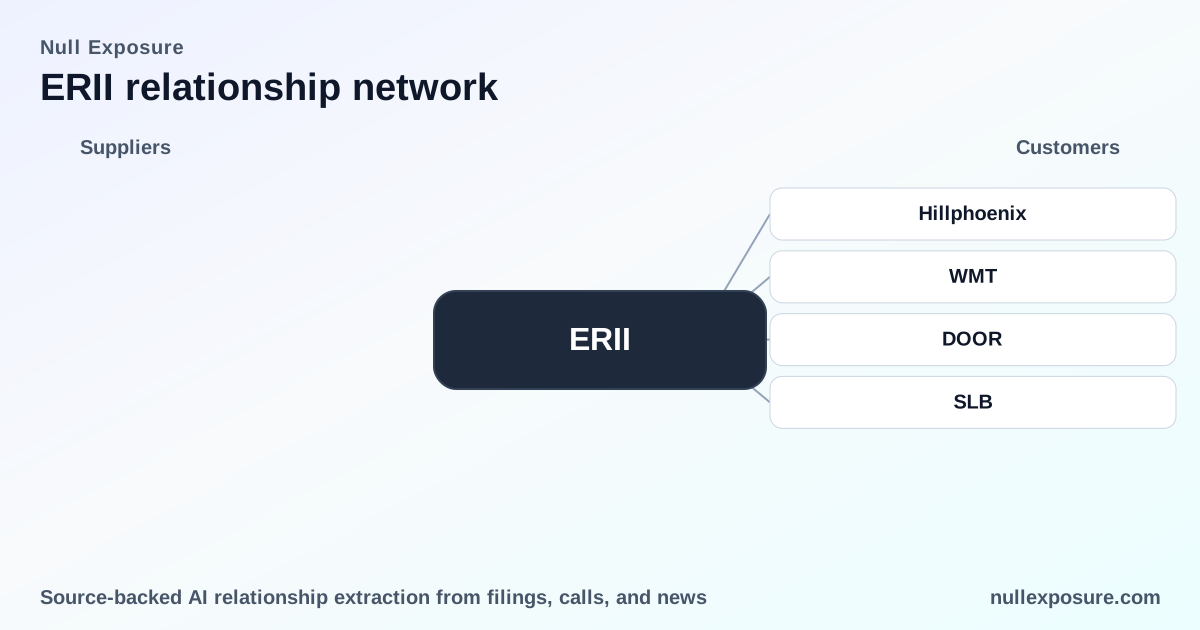
Energy Recovery (ERII) — Customer Relationships, Commercial Pathway, and Investment Implications
Energy Recovery designs and manufactures energy-recovery devices and related fluid-handling hardware for desalination, wastewater, and industrial fluid markets, monetizing through the sale of PX pressure exchangers, pumps and hydraulic components to OEMs and project developers, plus recurring aftermarket spares and service revenue from installed fleets. The company’s go-to-market mixes large, multi-year municipal and MPD (modular plant deployment) projects with shorter OEM projects and aftermarket replenishment, creating a revenue profile that is part hardware, part recurring services. Learn more about how we source and analyze customer relationships at Null Exposure: https://nullexposure.com/.
Business model in one line: sell critical, hard-to-replicate fluid-handling hardware into capital projects and OEM channels, then capture higher-margin aftermarket services once equipment is deployed.
How Energy Recovery’s customer dynamics shape revenue and risk
Energy Recovery’s commercial posture blends contract maturity and concentration in ways that matter for investors. The company services large MPD customers on long-term, project-driven contracts (typical shipment timelines 16–36 months), while simultaneously running an OEM channel that delivers shorter, sub-16-month projects and an aftermarket channel that is inherently spotty and tied to upgrade cycles and spare parts demand. These mixed contract types create a revenue stream that is both predictable around major project wins and lumpy at the OEM/aftermarket level.
- Contracting posture and maturity: Long MPD timelines create multi-quarter visibility when projects are secured; OEM projects provide quicker turnover; aftermarket is variable and driven by installed-base maintenance cycles. These attributes support a hybrid working-capital profile—capital tied up during MPD delivery windows, offset by repeat aftermarket margins after deployment.
- Counterparty profile and concentration: The company sells to a mix of large enterprises and government-related water authorities, and public disclosures signal customers accounting for 10%+ of revenue in certain periods, indicating material concentration risk at the company level.
- Geography and scale: Energy Recovery operates globally, with the Middle East and Africa and other international regions representing the bulk of revenue outside the U.S.; the company runs a global direct-sales and on-site technical support organization to service those markets.
- Commercial criticality: The PX and pump products are integral to large desalination systems, making Energy Recovery a critical supplier for MPD customers and major OEMs—this confers pricing power on winning bids but exposes the company to execution and delivery risk on high-dollar projects.
Customer relationships and the commercial pipeline
Hillphoenix
Energy Recovery has signed a Memorandum of Understanding with Hillphoenix and is “on a path to a commercial agreement,” with management guiding that a formal commercial arrangement is likely in 2026. This positions Hillphoenix as a strategic OEM partner that can introduce Energy Recovery technology into large retail refrigeration and related systems. Source: FY2025 Q3 earnings call and public transcript coverage (InsiderMonkey, March 2026).
Walmart (WMT)
Management stated that the company’s approach to a major retailer like Walmart will involve a significant OEM such as Hillphoenix, and that through Hillphoenix they expect introductions and test installations in retailer stores in the first half of the year. Walmart thus represents a potential downstream channel and end-market demand driver that is contingent on OEM commercialization with Hillphoenix. Source: ERII FY2025 Q3 earnings call (March 2026) and earnings transcript coverage (InsiderMonkey, March 2026).
DOOR
In ERII’s Q3 FY2025 earnings remarks the company referenced DOOR in the same context as its Hillphoenix relationship, indicating commercial discussions and pipeline positioning through OEM channels. The mention places DOOR among referenced OEM/retailer or distribution touchpoints in management commentary on channel strategy. Source: ERII FY2025 Q3 earnings call (March 2026).
Schlumberger (SLB)
Energy Recovery has exited the exclusive licensing agreement for the VorTeq™ technology with Schlumberger, representing a formal shift in licensing posture and IP commercialization strategy. The end of that exclusive arrangement signals greater freedom for Energy Recovery to pursue alternative licensing or direct commercialization pathways that were previously constrained. Source: SmartWaterMagazine report covering executive appointments and corporate licensing changes (FY2024).
What these relationships imply for investors
- Commercial leverage via OEMs: The Hillphoenix relationship is a high-impact channel play—if converted to a commercial contract, Hillphoenix’s customer reach (including large retailers like Walmart) will materially accelerate penetration into downstream retail refrigeration and store-level test deployments. The pathway emphasizes go-to-market via OEMs rather than direct retailer sales.
- Revenue mix and timing risk: Expect revenue cadence driven by discrete MPD project awards (16–36 month delivery cycles) and shorter OEM projects (1–16 months), with aftermarket revenue fluctuating year-to-year. Revenue predictability improves when MPD deals are secured; otherwise near-term topline can be lumpy.
- Concentration and materiality: Public disclosures highlighting customers above the 10% revenue threshold are a reminder that individual wins or losses can move reported results materially; investors should monitor customer-level disclosures and project pipelines for signs of concentration risk or diversification progress.
- Strategic flexibility from licensing changes: Exiting the VorTeq™ exclusive license with Schlumberger reduces constraints on Energy Recovery’s licensing and commercialization choices, enabling the company to pursue broader direct and partner-led deployments of core technologies.
- Operational implications: Long MPD timelines require strong execution discipline—manufacturing, quality control, and logistics for large shipments are critical. The installed-base aftermarket channel supports margin expansion over time, but only after hardware deployment.
Key takeaways for analysts and operators
- ERII is a hardware-first company with a recurring aftermarket engine; investors should value both upfront project economics and the lifetime aftermarket stream.
- OEM partnerships (Hillphoenix) are the principal vector for scale into large retailers (e.g., Walmart). Monitor commercial agreement milestones and pilot/test-store rollouts as leading indicators.
- Project concentration and geographically driven revenue (EMEA and global markets) create both opportunity and cyclicality. Track MPD contract awards and OEM order flow for cadence.
- Corporate licensing posture is now more flexible following the termination of the exclusive VorTeq agreement with Schlumberger, opening routes to monetization previously limited under exclusivity.
If you want granular relationship scoring and pipeline tracking for ERII customers, Null Exposure maintains ongoing coverage and primary-source linkages at https://nullexposure.com/.