Ero Copper: Customer Relationships, Streaming Obligations, and What Investors Should Price
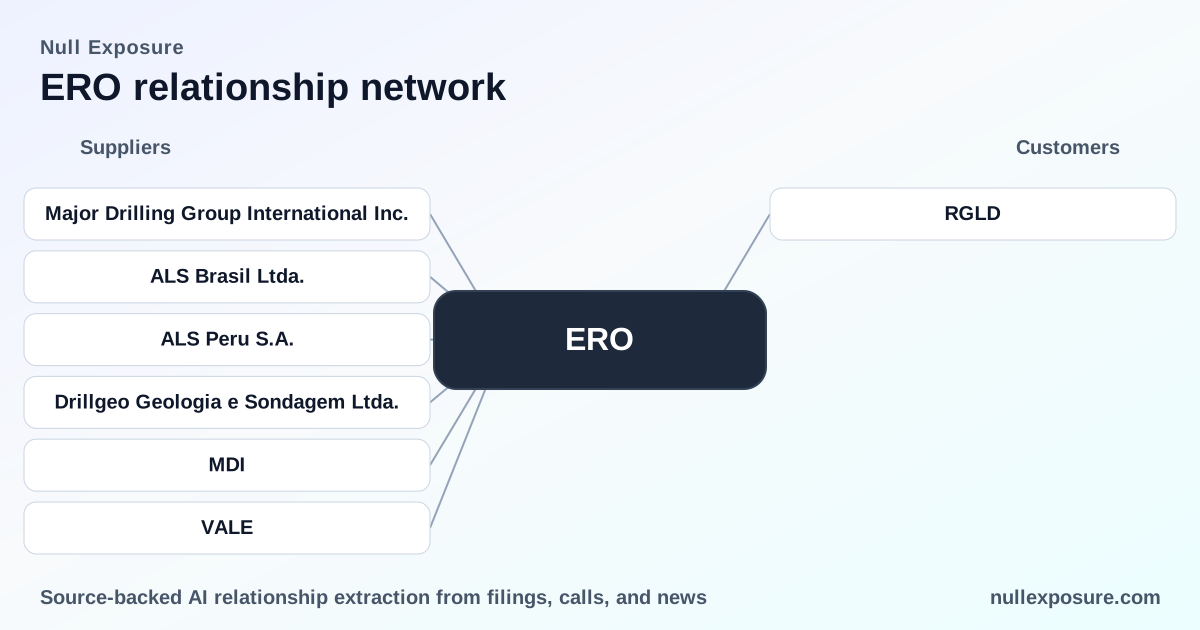
Ero Copper operates and monetizes as a mid-tier copper producer that sells copper concentrate and realizes byproduct revenue from contained gold; its cash flow profile is therefore a function of concentrate volumes, realized metal prices and structured off-take/streaming arrangements that reduce headline ounces available for sale. Ero reports concentrate shipments and explicitly nets ounces deliverable under the Xavantina Gold Stream to Royal Gold, which directly affects near-term gold receipts and margins on concentrate sales. For a detailed look at the customer-side disclosures and how they influence commercial risk, continue reading or visit https://nullexposure.com/ for proprietary monitoring and alerts.
What the customer disclosures actually reveal to investors
Ero’s publicly reported customer information in the reviewed filings is transactional and specific: the company reports ounces of gold “sold in concentrate” and then nets out the quantity deliverable to a streaming counterparty. That construct is important because it separates concentrator economics from streaming economics—stream receipts reduce the metal that flows to a spot purchaser and create a predictable off-take to a financial counterparty.
Key operational characteristics for investors:
- Contracting posture: Reporting language indicates a mixed commercial model—merchant-style concentrate sales to purchasers coupled with a streaming agreement that produces recurring deliverables to a specialty finance counterparty.
- Concentration: The disclosed single-stream relationship (Xavantina Gold Stream / Royal Gold) is a material bilateral arrangement for byproduct gold allocation and therefore concentrates counterparty exposure.
- Criticality: Streaming obligations are contractually senior for the named ounces; deliverable ounces are removed from the merchant sales pool and affect realized revenue and gross margin dynamics.
- Maturity: The streaming construct is an established financing mechanism in mining; the public disclosure shows active, ongoing deliverable flows rather than one-off transactions.
No constraint records were returned in the data feed for ERO’s customer scope, which is itself a signal: the dataset contains direct transaction and streaming disclosures but no additional contractual constraints or penalty clauses captured in this review.
The customer relationships disclosed in the filings
Ero’s relationship records in the reviewed material are limited but explicit about the streaming interaction. Below I cover every relationship entry in the results.
RGLD — entry recorded first on 2026-03-09
Ero reported that “Gold Sold in Concentrate includes 14,999 ounces of gold shipped to customer, net of 2,245 ounces deliverable to Royal Gold under the Xavantina Gold Stream,” signaling that 2,245 ounces are contractually allocated to Royal Gold rather than to spot concentrate purchasers. According to the company’s FY2026 operating and financial results press release on GlobeNewswire (March 5, 2026), the Xavantina stream reduces the pool of gold sold through merchant channels. (GlobeNewswire, March 5, 2026)
Royal Gold — entry recorded first on 2026-03-09 (same press release)
The press release explicitly references Royal Gold as the recipient of deliverable ounces under the Xavantina Gold Stream, meaning Royal Gold receives a fixed entitlement of gold contained in concentrate rather than acting as a conventional concentrate buyer. According to Ero’s FY2026 disclosure on GlobeNewswire, 2,245 ounces were deliverable to Royal Gold during the reporting period, which should be treated as streaming cashflow outside of ordinary concentrate sale proceeds. (GlobeNewswire, March 5, 2026)
Royal Gold — duplicate entry seen 2026-05-02
A later GlobeNewswire posting reiterates the same commercial point: Ero’s “Gold Sold in Concentrate includes 14,999 ounces… net of 2,245 ounces deliverable to Royal Gold under the Xavantina Gold Stream.” The repetition in May confirms the ongoing nature of the stream allocation as the company continues to report shipments and deliverable volumes in routine results commentary. (GlobeNewswire, May 2, 2026)
Takeaway: All three records point to the same commercial reality—Royal Gold (RGLD) is a streaming counterparty under the Xavantina arrangement and reduces the ounces of gold available for standard concentrate sales. This is a structural revenue allocation, not a spot sale.
(If you want continuous tracking of these customers and streaming impacts, see https://nullexposure.com/ for monitoring and historical aggregation.)
Why the stream matters to valuation and near-term cash flow
Streaming arrangements change the profile of metal exposure and cash flow in four concrete ways:
- Revenue mix: Deliverable ounces to a streamholder generate either a fixed payment or a formulaic cash flow to the streamer rather than full market revenue on the open market; that compresses realized byproduct margins vs. gross contained metal value.
- Volatility dampener: Streams convert upside in metal prices into predictable, contractually limited receipts for the miner but reduce upside on delivered ounces.
- Counterparty credit: Royal Gold is a large, publicly traded precious-metals financier; contractual performance by the miner and enforceability of the stream are central to operational planning and should be monitored in quarterly reports.
- Pricing transparency: When the company nets deliveries in reporting, investors need to reconstruct gross production to understand total in-ground performance versus the economics that flow to shareholders.
Bottom line: The Xavantina stream is an explicit revenue-allocation mechanism that materially affects how much gold contributes to Ero’s concentrate sale proceeds and, therefore, its gross profit and cash generation for owners.
Operational and investor recommendations
For operators and procurement teams:
- Maintain separate operational KPIs for gross contained metal versus net sales after streaming allocations; do not treat reported “sold in concentrate” as full production.
- Track stream deliverables and payment terms in financial planning to ensure mill throughput decisions reflect contractual gold sweep obligations.
For investors and analysts:
- Model streaming cashflows explicitly and adjust realized metal exposure when projecting free cash flow and EBITDA margins.
- Treat Royal Gold’s entitlement as a recurring liability on ounces, not as a counterparty purchaser in the same category as concentrate buyers.
Closing synthesis
Ero’s customer disclosures in the reviewed records are focused and operational: concentrate sales remain the commercial outlet for copper and gold, while the Xavantina Gold Stream with Royal Gold removes a fixed tranche of ounces from the merchant pool. That structure reduces short‑term gold upside for shareholders but provides an alternate financing and offtake certainty that operators rely on to fund capital and development. Investors should price the stream explicitly into cash‑flow models and monitor quarterly shipment disclosures for any change in deliverable volumes or counterparty language.
For continuous surveillance of Ero’s counterparty disclosures and streaming impacts, visit https://nullexposure.com/ for tailored alerts and historic consolidation of these customer signals.