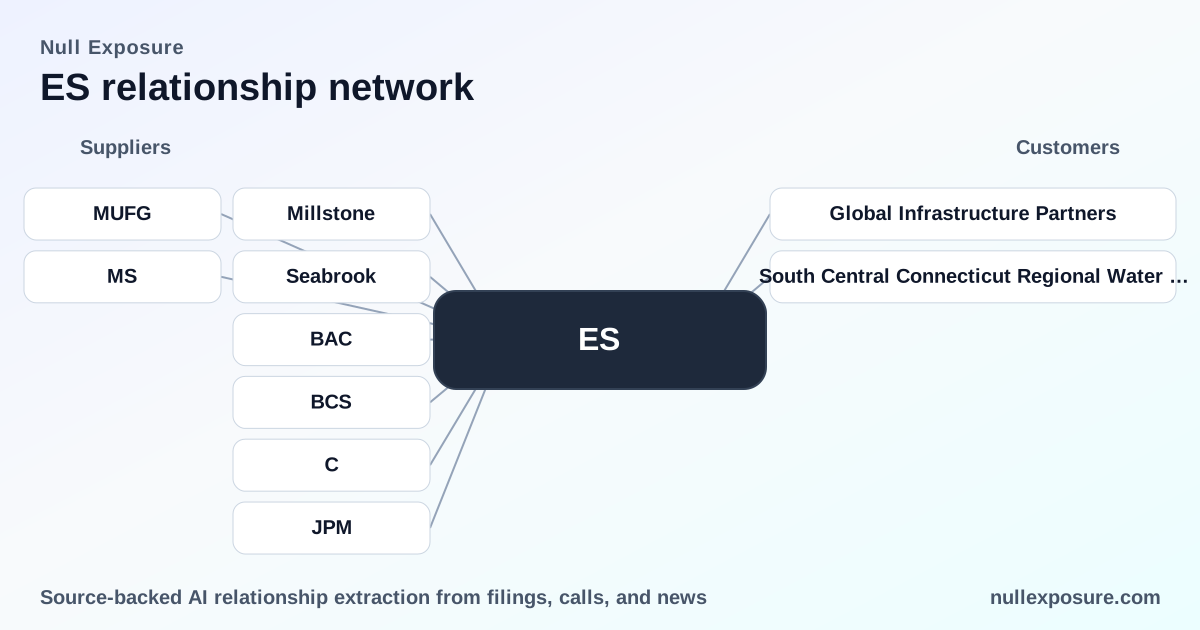
Eversource Energy (ES): Customer-relationship map and commercial implications
Eversource Energy operates as a regulated utilities platform that monetizes through tariffed distribution and transmission of electricity, natural gas and water to roughly 4.6 million customers across New England, plus project-related commercial activity in offshore wind. The company generates stable cash flow from regulated retail sales while supplementing revenue through merchant wholesale sales and project-level asset transactions. For investors, the combination of regulated earnings and occasional large project dispositions creates predictable base earnings together with episodic balance-sheet volatility tied to project transfers and contingent obligations. For a concise corporate data snapshot, see Eversource’s investor portal and financial filings; for ongoing monitoring of counterparties and transaction exposure, consider tracking published notices and press coverage on major disposals. Explore more on NullExposure.
What the recent customer and counterparty headlines mean for value
Eversource’s commercial posture is a hybrid: core regulated utility cash flows are low-risk and customer-concentrated across New England, while large-scale offshore wind dispositions and construction-management activities introduce transactional counterparty exposure and contingent liabilities. The regulatory framework allows recovery of certain costs through rates, which supports earnings stability, but project sales and post-closing purchase-price adjustments are material drivers of near-term P&L and balance-sheet volatility.
Key operating signals from the relationship constraints:
- Contracting posture: A meaningful portion of merchant wholesale activity is short-term (day-ahead and real-time ISO‑NE sales), implying low contractual duration on those revenues and higher sensitivity to near-term market prices.
- Customer concentration and geography: Revenue is geographically concentrated in New England (CT, MA, NH) and derived largely from many residential, commercial and industrial end-customers rather than a few large counterparties.
- Materiality and audit focus: Management discloses that certain project cost estimates and regulatory asset recoverability are material to the financial statements and a focus of auditors, signaling that large project settlements can move reported results.
- Relationship roles: Eversource acts both as a long-term seller (regulated distribution) and as a service provider (construction management for wind projects), with occasional buyer/seller roles when divesting project stakes.
A mid-article note if you want ongoing counterparty intelligence: NullExposure homepage.
Global Infrastructure Partners — $75 million after-tax charge (FY2026)
Eversource recorded a $75 million after-tax charge in its FY2025 results that is linked to updated liabilities arising from the sale of offshore wind projects to Global Infrastructure Partners (GIP), reflecting post-sale adjustments to estimated obligations. According to Eversource’s FY2026 results cited on TheMachineMaker (March 2026), management recognized this charge as part of the accounting and settlement process tied to the GIP transaction.
Global Infrastructure Partners — sale of 50% stakes in South Fork and Revolution Wind (FY2026)
Eversource is selling its 50% ownership share in South Fork Wind and Revolution Wind to GIP, transferring project ownership and associated future returns and obligating Eversource to certain post-closing price adjustments and cost-sharing commitments. A report in DailyEnergyInsider (May 2026) describes the transaction and the related contingent liability framework that Eversource recorded at close.
Ørsted (Orsted) — Sunrise Wind disposition and prior sale activity (FY2026)
Eversource completed the sale of its 50% share of the Sunrise Wind project to Ørsted, and that disposition is part of a broader pattern of Eversource exiting certain offshore project stakes, with related contractual conditions and regulatory approvals noted in prior disclosures. DailyEnergyInsider’s coverage (May 2026) highlights the formal sale process that closed in mid‑2024 and the contractual contingencies that accompanied the transfer.
South Central Connecticut Regional Water Authority — proposed Aquarion Water sale (FY2026)
Eversource moved to sell the Aquarion Water Company to the South Central Connecticut Regional Water Authority, a transaction reported as a proposed sale in local press and regulatory filings; the deal transfers a regulated water utility franchise and associated rate-base to the regional authority. A company statement referenced on AIJourn (March 2026) summarized the proposed sale and its regulatory trajectory.
How each relationship changes credit and earnings dynamics
- Project disposals to GIP and Ørsted convert development upside into near-term cash and contingent liabilities. The sale proceeds reduce development risk on the balance sheet but create post-closing obligations and possible purchase-price adjustments that are sufficiently large to be material; the $75 million after-tax charge is an explicit example. This pattern signals a deliberate tilt to monetize project equity while accepting contingent exposure tied to construction cost overruns and handback clauses.
- The Aquarion sale rebalances the regulated asset mix away from water retail ownership toward a focus on core energy delivery, which simplifies operations but reduces recurring water rate-base earnings. Regulatory approval processes create timing risk for the realization of proceeds and any rate-recovery treatments.
- Operationally, short-term wholesale sales and a retail customer base concentrated in New England anchor core cash flow, whereas project-level counterparties introduce episodic variability—both upside and downside—that investors must model separately.
Risk considerations and what to watch next
- Contingent liabilities are a recurring theme. The recorded contingent liability of $365 million (related to Revolution Wind at the time of sale) and the $75 million after-tax charge show that post-closing adjustments can be material to near‑term results. Monitor subsequent filings and guidance for adjustments to these estimates.
- Regulatory recovery is essential to earnings stability. Eversource’s ability to recover costs through rates underpins much of its return profile; regulatory decisions on cost recovery and asset transfer treatment will determine the full P&L impact of disposals.
- Concentration by geography increases regulatory and weather-related risk. New England-focused operations mean state-level regulatory policy and regional energy market prices drive much of the company’s regulated and merchant economics.
- Contract duration asymmetry matters. Short-term wholesale sales introduce volatility in commodity revenues, whereas regulated tariffs provide stable but slower-growing return streams—investors should separate merchant exposure from regulated earnings when modeling cash flow.
Bottom line for investors and operators
Eversource’s business model delivers stable regulated cash flows complemented by strategic disposals of offshore wind assets that crystallize value but introduce contingent obligations. The recent set of transactions with Global Infrastructure Partners and Ørsted demonstrate a clear monetization strategy that reduces development risk while shifting some execution and cost-overrun exposure into contingent liabilities; the proposed Aquarion sale reduces operational scope in non-energy water retail. Investors should value regulated earnings conservatively and explicitly model project-related contingent items as potential near-term P&L and balance-sheet events.
For a focused view on counterparties and evolving transactional exposure, visit NullExposure for tailored monitoring and relationship analytics: https://nullexposure.com/.