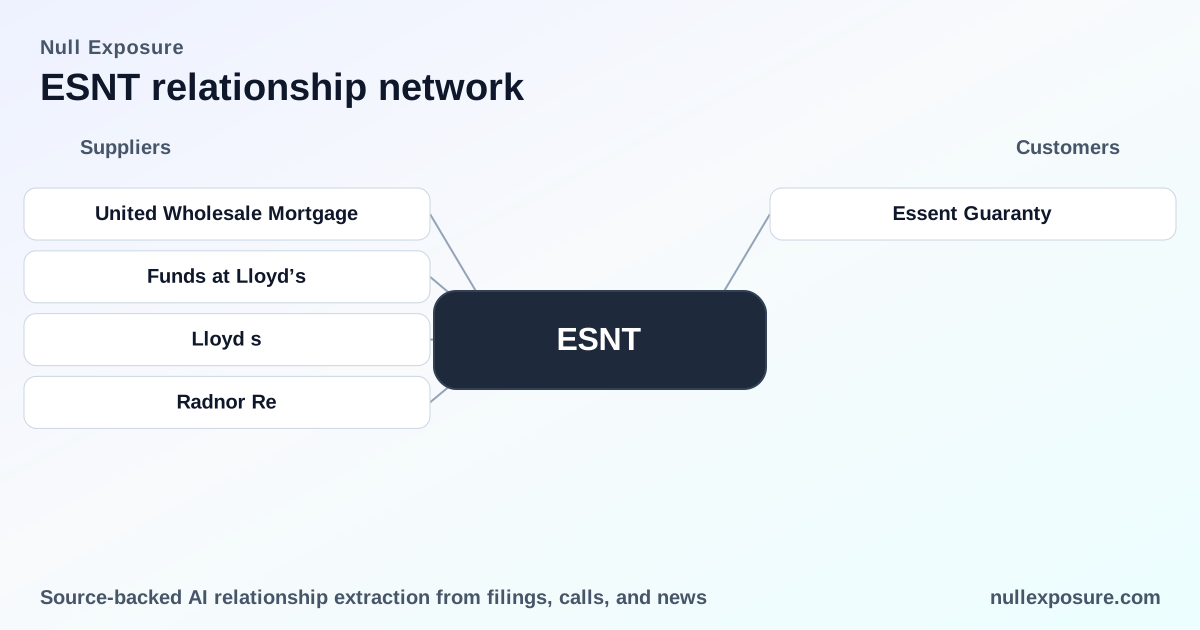
Essent Group (ESNT): Customer relationships that drive a capital‑light mortgage insurance franchise
Essent Group Ltd underwrites private mortgage insurance and related credit‑risk services to mortgage lenders and investors, monetizing primarily through recurring premium income, supplemental fee‑based services (title and settlement) and investment returns on reserves and reinsurance structures. The business is built around master‑policy relationships with large lending counterparties, supported by reinsurance and capital markets instruments that fund claim payments; understanding counterparty concentration and contractual optionality is essential for investors evaluating revenue durability and collateral risk.
For a deeper look at counterparties and contract signals, visit our research hub at https://nullexposure.com/.
Why customer relationships determine valuation here
Essent is a distribution‑driven insurer: lender relationships generate the flow of insured loans, and the company’s underwriting economics scale with volume while being sensitive to customer churn and pricing. Two structural features stand out: (1) master policies set standardized terms but do not lock in volume at the loan level, because customers can cancel coverage on individual loans; and (2) customer concentration is high, so large lenders materially influence new insurance written and earnings. Both characteristics make top‑counterparty dynamics a core underwriter risk and a value driver.
A concise snapshot: Essent reported roughly $990 million of net premiums earned and a profit margin well above peers in recent filings, underpinned by service expansion into title and settlement to leverage existing lender relationships.
How Essent Guaranty fits into the picture
Essent Guaranty is Essent’s U.S. mortgage insurance subsidiary and the operational vehicle through which private mortgage insurance is written and reinsured. According to Essent’s FY2024 10‑K, proceeds from certain notes were deposited into reinsurance trusts “for the benefit of Essent Guaranty” and those trusts are designated to fund reinsurance claim payments and principal repayments on the related insurance‑link notes. (Source: Essent 2024 Form 10‑K)
Every reported customer relationship (complete coverage)
Essent Guaranty — The company’s Pennsylvania‑domiciled, monoline mortgage insurer is the on‑the‑ground counterparty for U.S. mortgage insurance business and the named beneficiary of reinsurance trust proceeds that fund claims and principal on insurance‑linked notes. (Source: Essent 2024 Form 10‑K; company disclosures FY2024)
Contracting posture and operational constraints — what the filings reveal
The public filings and extracted relationship signals describe a business with a mix of standardized frameworks and loan‑level flexibility that favors customers:
- Master policy framework: Essent issues master policies that establish eligibility, coverage terms, premium obligations and claims mechanics; this standardization enables scale and consistent pricing across lender partners. Evidence in the 10‑K explains the master policy and its role in setting general terms and conditions. (Company filing language FY2024)
- Loan‑level cancellability (short‑term posture): Under the master policy terms, lenders or their servicers retain the unilateral right to cancel coverage for any insured loan at any time, creating ongoing churn risk at the product level. This contract feature directly pressures retention and pricing discipline. (Company filing language FY2024)
- Concentration and large‑counterparty exposure: One lender represented approximately 17% of total revenue in 2024, and the top ten customers produced 50.2% of new insurance written (NIW) on a flow basis for the year — a clear concentration signal that gives a small set of counterparties outsized influence on growth and earnings. (Company filing language FY2024)
- Government market linkage: The business enables sale of low down‑payment loans into the secondary market primarily to the GSEs (Fannie Mae and Freddie Mac), so underwriting and eligibility align to GSE guidelines and secondary‑market dynamics. (Company filing language FY2024)
- Geographic focus: The mortgage insurance operations are U.S.‑centric and written through Essent Guaranty, which is licensed in all 50 states and D.C., concentrating regulatory, credit and business risk in the U.S. housing and mortgage markets. (Company filing language FY2024)
- Materiality and criticality of relationships: Management flags the retention of large lending customers as critical to future volumes and profits; loss of one or more major customers would have a material adverse effect. (Company filing language FY2024)
- Business scope and adjacent expansion: Essent describes title and settlement services as an adjacent product set intended to broaden revenue channels and increase wallet share with lenders. The acquisition of a title operation is positioned as a way to leverage the existing lender network and operational expertise. (Company filing language FY2024)
These constraints together imply a service‑provider model that sells standardized insurance products but operates in a concentrated counterparty ecosystem with meaningful customer optionality — a combination that warrants active monitoring of retention rates, pricing spreads and reinsurance effectiveness.
Reinsurance, capital markets and where investor focus should be
Essent structures reinsurance and capital markets instruments to transfer and finance risk; the FY2024 filing cites insurance‑linked notes (ILNs) whose proceeds fund reinsurance trusts for the benefit of Essent Guaranty. Investors should treat these trust structures as a core part of the capital stack: they preserve capital efficiency and distribute credit risk, but they also require transparency on counterparty exposure, collateral quality and trigger mechanics. (Source: Essent 2024 Form 10‑K)
- Key monitoring items: counterparty concentration metrics (top‑ten NIW), policy cancellability and retention statistics, ILN and reinsurance trust terms, and any changes in GSE acceptance criteria or state licensing that could affect underwriting access.
Explore our platform for concentrated‑counterparty analytics at https://nullexposure.com/.
Investment implications and risk‑return framing
Essent’s model produces high operating leverage when volumes grow and stable statutory capital when reinsurance and ILNs function as intended. On the risk side, customer concentration and loan‑level cancellability reduce revenue stickiness, especially in a rising‑rate or stressed housing environment where lenders reprice and reallocate originations. The addition of title and settlement services is a deliberate move to diversify fee streams and deepen lender relationships, but the core economics remain anchored to mortgage insurance flow volumes.
For investors, the trade is clear: premium income and investment yields support strong margins today, but future earnings are tightly linked to maintaining a small set of large lender relationships and the integrity of reinsurance funding vehicles.
Bottom line: what to watch next
- Track retention and cancellation metrics and the revenue share by top counterparties quarterly.
- Scrutinize ILN and reinsurance trust disclosures for changes in funding or collateral.
- Monitor GSE policy shifts and state licensing that could affect Essent Guaranty’s underwriting reach.
For ongoing monitoring and counterparty scoring, visit our research tools at https://nullexposure.com/.
Bold, lender‑driven economics and concentrated counterparty exposure define Essent’s customer risk profile — that combo explains both the company’s strong margins and the primary sources of operational risk investors must track.