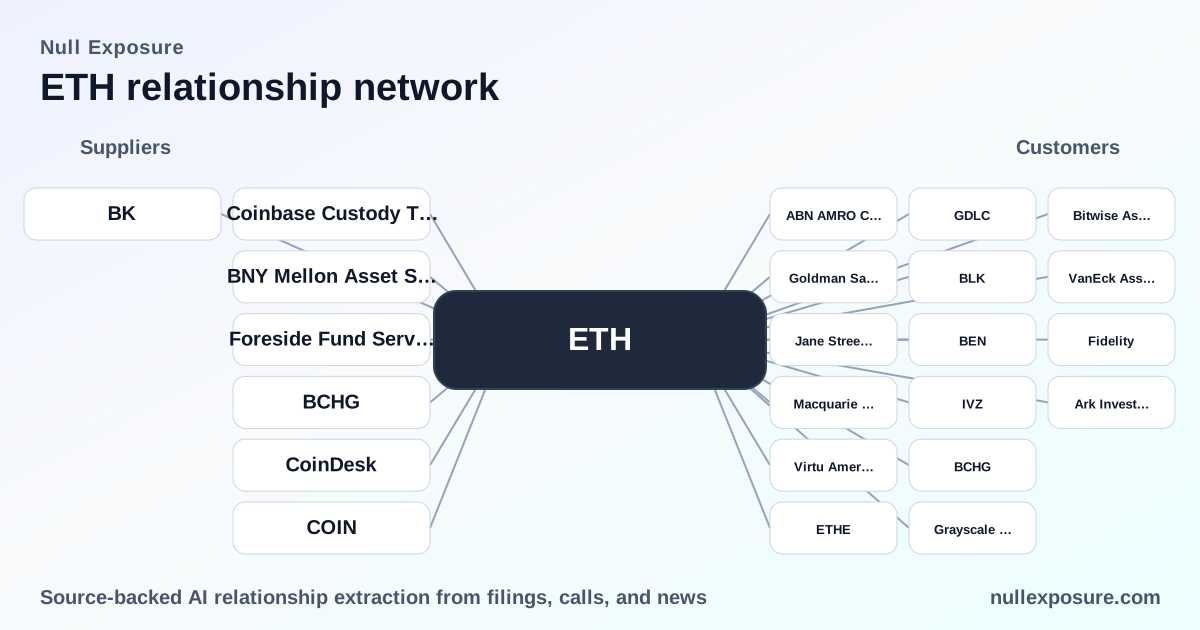
ETH customer relationships: who the Trust trades with and what that means for investors
The ETH Trust issues exchange-traded shares listed on NYSE Arca under ticker ETH and derives its value from underlying Ether holdings; it monetizes through the ETF-like vehicle mechanics of share creation and redemption and through the Trust’s asset management arrangement. Market-facing counterparties—authorized participants and large asset managers—are the operational spine of distribution, liquidity and secondary-market performance. For a concise, actionable briefing on counterparty exposure and strategic implications, read on or visit https://nullexposure.com/ for a deeper look.
The core market-making cohort and why they matter
The Trust’s Annual Report (Form 10‑K, FY2024) lists five entities that have executed Participant Agreements to act as Authorized Participants. These firms are the operational levers for creation/redemption activity and primary liquidity provisioning on the Trust’s shares. That position makes them functionally critical to NAV arbitrage, settlement flows and taxable-event allocation. According to the same 10‑K, Authorized Participants accept explicit settlement and tax indemnity responsibilities that shift certain post-trade exposures away from the Sponsor and the Trust and onto the participants.
- Jane Street Capital, LLC — Listed in the Trust’s FY2024 Annual Report as an Authorized Participant; Jane Street is thereby a primary partner in creation/redemption mechanics and intraday liquidity provisioning (Form 10‑K, FY2024).
- Virtu Americas LLC — Named in the same Annual Report as an Authorized Participant; Virtu functions in market-making and order routing roles that support the Trust’s secondary-market tightness (Form 10‑K, FY2024).
- Macquarie Capital (USA) Inc. — Executed a Participant Agreement and serves as an Authorized Participant per the Trust’s FY2024 filing, implicating it in basket creations and cash-redemption settlement regimes (Form 10‑K, FY2024).
- ABN AMRO Clearing USA LLC — Included by the Sponsor and the Transfer Agent among Authorized Participants in the FY2024 Annual Report, positioning ABN AMRO as a settlement and institutional execution partner (Form 10‑K, FY2024).
- Goldman Sachs & Co. LLC — Also listed as an Authorized Participant in the Trust’s FY2024 Form 10‑K; Goldman’s role anchors access to institutional order flow and custody settlement corridors (Form 10‑K, FY2024).
Company-level signal on contracting posture: the Trust’s filings allocate creation/redemption settlement risks and tax indemnities to Authorized Participants, indicating a contracting posture that transfers operational and tax friction to counterparties rather than to the Sponsor/Trust balance sheet (Form 10‑K, FY2024).
Broader ecosystem relationships: asset managers, funds and market adoption
Beyond Authorized Participants, a wave of major asset managers and funds feature across industry reporting as holders, applicants or product structures around ETH. These relationships reflect distribution channels, competition for flows, and the structural demand for Ether exposure via regulated vehicles.
- BlackRock Inc. — Named among firms that received SEC approval to list spot Ethereum ETFs; BlackRock’s entry signals a major institutional distribution channel and scale potential for product adoption (SiliconANGLE, May 23, 2024).
- Fidelity — Also listed among SEC-approved issuers for spot ETH ETFs, representing incremental institutional retail and advisory network distribution (SiliconANGLE, May 23, 2024).
- Grayscale Investments Inc. — Referenced in multiple items: Grayscale runs legacy products such as ETHE and is an active allocator in multi-asset crypto funds, underlining both competition and complementary product flows (GlobeNewswire, Jan 7, 2026; Yellow.com reporting on Grayscale FY2025).
- Grayscale Ethereum Trust (ETHE) — Grayscale’s product that passively invests in Ether and tracks ETH price exposure; the trust is a clear demand signal for regulated ETH access (ZebPay blog, FY2022).
- Grayscale Digital Large Cap Fund (GDLC) — Managed by Grayscale, the fund allocates meaningfully to Ether and provides basket-based exposure; its rebalancings and flows inform demand dynamics for ETH (MarketBeat, Dec 19, 2025; ZebPay, FY2022).
- Invesco Capital Management LLC — Listed among the issuers receiving SEC approval to offer spot ETH ETFs, adding another distribution network for ETH exposure (SiliconANGLE, May 23, 2024).
- Ark Investment Management LLC — Named as an approved submitter for spot ETH ETFs, increasing the product diversity competing for ETH flows (SiliconANGLE, May 23, 2024).
- Bitwise Asset Management Inc. — Included in the list of approved issuers, representing another specialist digital-asset product sponsor in the ETH ETF cohort (SiliconANGLE, May 23, 2024).
- VanEck Associates Corp. — Appears in the SEC approval coverage as an approved ETF applicant, signifying broader institutionalization of ETH trading and custody (SiliconANGLE, May 23, 2024).
- Franklin Templeton (BEN) — Also referenced among the approved issuers, indicating diversified asset-class managers entering spot-ETH product distribution (SiliconANGLE, May 23, 2024).
- BCHG — Grayscale’s BCHG fund reporting (GlobeNewswire, Jan 7, 2026) shows Ether allocations within multi-asset strategies, contributing to cross-product demand for ETH (GlobeNewswire, FY2026).
- GIBO (GIBO Holdings Ltd.) — Announced deployment of content-hosting on Ethereum, illustrating non-ETF commercial uses of the chain that can indirectly influence demand for on‑chain Ether for gas and settlement (PR Newswire, FY2025).
What the relationship map means for investors and operators
- Concentration and criticality: the Trust relies on a small roster of Authorized Participants for creation/redemption mechanics; that is a concentrated operational design but consistent with ETF market structure. The named APs are large, established firms, which reduces counterparty risk but concentrates settlement exposure.
- Contracting posture: the Trust’s contract terms shift settlement, price-difference and tax risk to Authorized Participants, reducing Sponsor/Trust balance-sheet volatility while placing operational burdens on counterparties (Form 10‑K, FY2024). This means liquidity is outsourced to counterparties who internalize settlement costs.
- Maturity and distribution: approval of multiple spot-ETH ETFs by major asset managers expanded product distribution and normalized regulated demand for Ether exposure (SiliconANGLE, May 23, 2024). That cohort of managers is both competitor and validation of product-market fit for regulated ETH exposure.
- Operational implications: if creation/redemption flows spike, the Authorized Participants named in the FY2024 filing will be the first line for settlement and inventory management; fees, tax indemnities and settlement timing are practical levers that will shape intraday spreads and arbitrage efficiency (Form 10‑K, FY2024).
Quick reference: relationship-by-relationship roundup
- ABN AMRO Clearing USA LLC — Acts as an Authorized Participant under the Trust’s Participant Agreements and is designated for creation/redemption activities (Form 10‑K, FY2024).
- Goldman Sachs & Co. LLC — Executed a Participant Agreement to serve as an Authorized Participant; supports institutional order flow and settlement (Form 10‑K, FY2024).
- Jane Street Capital, LLC — Listed as an Authorized Participant and therefore central to market-making and arbitrage operations for the Trust (Form 10‑K, FY2024).
- Macquarie Capital (USA) Inc. — Identified in the Annual Report as an Authorized Participant responsible for creating and redeeming Baskets (Form 10‑K, FY2024).
- Virtu Americas LLC — Named as an Authorized Participant; provides market-making capabilities that influence secondary-market spreads (Form 10‑K, FY2024).
- Grayscale Ethereum Trust (ETHE) — Product that passively invests in Ether and is an established regulated vehicle providing ETH exposure (ZebPay blog, FY2022).
- ETHE (duplicate listing in news sources) — Same product: ETHE is a widely cited regulated route to ETH exposure (ZebPay blog, FY2022).
- GDLC — Grayscale’s Digital Large Cap Fund that holds Ether as a material component of its portfolio, influencing institutional flows (ZebPay blog, FY2022).
- Grayscale Digital Large Cap Fund: (GDLC) — The fund is cited for its BTC/ETH weighting, reflecting demand for basket exposure (ZebPay blog, FY2022).
- Franklin Templeton — Reported among issuers approved for spot ETH ETFs, expanding institutional distribution channels (SiliconANGLE, May 23, 2024).
- Invesco Capital Management LLC — Named as an approved spot-ETH ETF issuer, broadening competitive product sets (SiliconANGLE, May 23, 2024).
- BlackRock Inc. — Included in SEC approval coverage for spot ETH ETFs, representing a major potential source of scale for ETH product flows (SiliconANGLE, May 23, 2024).
- BLK (duplicate BlackRock entry) — Same as BlackRock Inc.; appears in the SEC-approval media coverage (SiliconANGLE, May 23, 2024).
- BCHG — Grayscale’s multi-asset fund reported an Ether allocation, signaling cross-product demand for ETH in diversified crypto funds (GlobeNewswire, Jan 7, 2026).
- Grayscale Investments — The firm is repeatedly cited as a major sponsor of regulated ETH products and as a significant revenue and AUM driver (Yellow.com reporting on FY2025).
- Ark Investment Management LLC — Listed among SEC-approved submitters for spot ETH ETFs, representing thematic and advisor-channel distribution (SiliconANGLE, May 23, 2024).
- Bitwise Asset Management Inc. — Named as an approved issuer for spot ETH ETFs, contributing to product diversity (SiliconANGLE, May 23, 2024).
- Grayscale Digital Large Cap Fund (MarketBeat listing) — MarketBeat covered the GDLC’s market behavior and Grayscale’s portfolio construction (MarketBeat, Dec 19, 2025).
- Grayscale Investments Inc. (multiple listings) — Covered in news on SEC approvals and IPO filings as a major industry participant building regulated ETH exposure (SiliconANGLE; Yellow.com, FY2025).
- VanEck Associates Corp. — Included in the SEC-approval list, a recognized issuer for crypto ETFs (SiliconANGLE, May 23, 2024).
- Fidelity (duplicate) — A leading asset manager named in SEC approval coverage for spot ETH ETFs (SiliconANGLE, May 23, 2024).
- GIBO — Publicized an on-chain deployment using Ethereum for content hosting and analytics, illustrating enterprise-level on‑chain demand that can drive protocol usage (PR Newswire, FY2025).
Final read: what investors should watch
- Monitor Authorized Participant concentration and any changes to that roster—these firms carry settlement and tax responsibilities that materially affect on‑exchange spread behavior (Form 10‑K, FY2024).
- Track ETF inflows across the newly approved managers—BlackRock, Fidelity and others will determine how much regulated product demand compresses or expands the premium/discount dynamics for ETH shares (SiliconANGLE, May 23, 2024).
- Watch product-level rebalancings from multi-asset funds like GDLC and BCHG as near-term drivers of spot Ether purchasing and supply pressure (GlobeNewswire, Jan 7, 2026; MarketBeat, Dec 19, 2025).
For a structured counterparty exposure report and model-ready summaries built from filings and regulatory disclosures, visit https://nullexposure.com/ and request the ETH customer relationships pack.