Entergy Texas (ETI‑P): Customer Relationships and What They Mean for Investors
Entergy Texas operates as a regulated electric utility that generates, transmits and distributes power in Texas and monetizes through approved retail rates, cost-recovery riders and long‑term large‑customer service agreements that expand the company’s rate base. Revenue is driven by retail electric sales, regulatory-approved riders and capital projects that convert customer demand (notably large data centers and industrial customers) into durable, rate‑based returns. For a focused view of customer exposures and contractual posture visit https://nullexposure.com/.
The economics in one paragraph
Entergy Texas’ business model is classic regulated utility economics: stable cash flows underpinned by regulator‑set tariffs, occasional forward‑looking riders that accelerate cost recovery, and large, discrete capital programs tied to specific customer load growth. That mix produces low volatility in core revenues but concentrates exposure in regulatory outcome and large enterprise load commitments—an investor should value ETI‑P on the combination of predictable retail margins and episodic capital deployment that expands rate base and earnings potential.
How Entergy Texas contracts and the corporate operating signals
Entergy’s public disclosures and regulatory filings establish several company‑level operating signals relevant to underwriting ETI‑P exposure:
- Contracting posture: framework agreements and regulatory riders. A five‑year resilience framework (approved by a Louisiana commission in 2024) illustrates the company’s preference for multi‑year frameworks that recover investment through forward‑looking riders with semi‑annual true‑ups — a pattern that scales to other jurisdictions and major projects.
- Counterparty mix: government and large enterprise concentration. The customer base is largely U.S. regional load with material proportions in residential, commercial and industrial segments; governmental counterparties represent a small percentage of revenue but regulators drive rates, while a small number of large enterprise customers (notably data centers and industrial complexes) are driving outsized load growth.
- Materiality and criticality: mixed signals. Entergy states no single customer exceeds 10% of revenue, yet certain wholesale arrangements and site‑specific deals (for example, with system affiliates or large data centers) are critical to localized infrastructure planning and capital deployment.
- Relationship role and stage: primarily seller and active. Entergy acts predominantly as a seller of capacity and distribution services and operates active contracts and regulatory proceedings as it implements resilience and build‑out programs.
- Scale of spend: large capital commitments. Several projects fall into the >$100 million spend band, underscoring that customer wins translate into material, multi‑year capital programs and corresponding regulatory interaction.
These company‑level signals shape credit and operational risk: predictable collections under regulatory regimes but concentrated execution and political/regulatory execution risk on major projects.
What the public record shows about specific customer ties
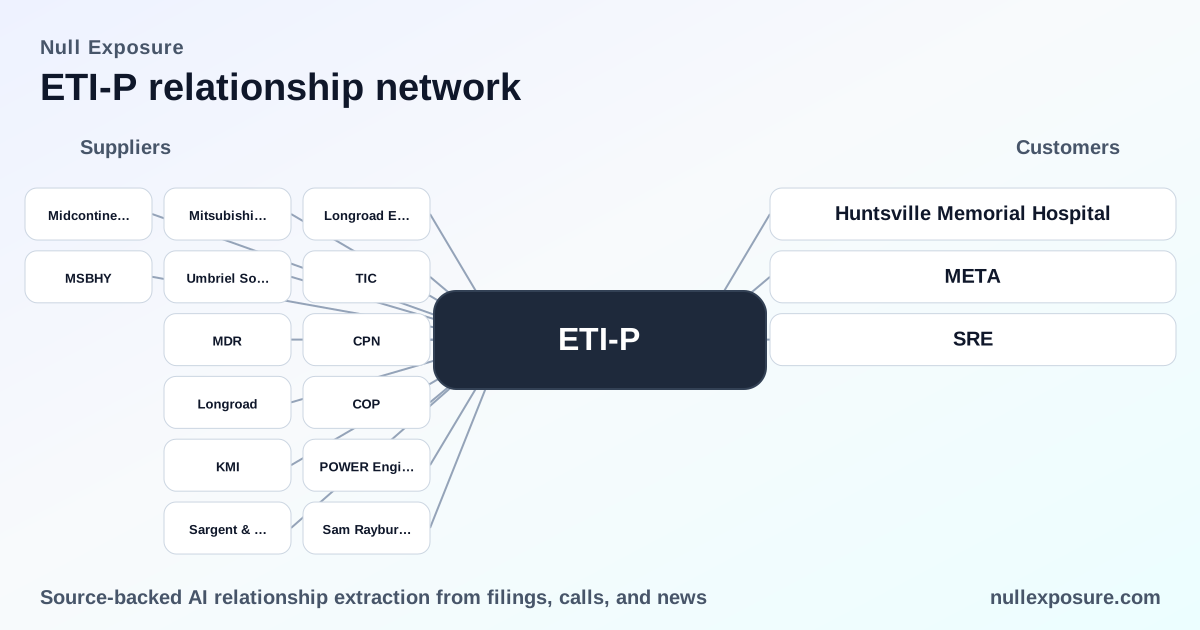
Below are the public relationships in the record and what each means for ETI‑P exposure.
-
Huntsville Memorial Hospital — Huntsville Memorial Hospital became the first healthcare facility to participate in Entergy Texas’ Power Through program, signaling ETI’s expansion of resilience and behind‑the‑meter offerings into the healthcare vertical. Source: Entergy news release, March 9, 2026 (https://www.entergy.com/news/huntsville-memorial-hospital-becomes-first-healthcare-facility-to-join-entergy-texas-power-through-program).
-
Meta (Entergy Louisiana support mention) — Entergy Louisiana is supporting Meta’s new data center with transmission and infrastructure upgrades in Richland Parish, highlighting the company’s role in enabling hyperscale compute load through targeted grid investments. Source: Entergy Q1 financial release, referenced March 2026 (https://www.entergy.com/news/entergy-to-report-first-quarter-2025-financial-results-on-april-29).
-
META (duplicate Entergy mention) — A separate record duplicates Entergy’s notice that infrastructure work to serve Meta’s data center is underway, underscoring multiple public touchpoints and regulatory filings tied to that relationship. Source: Entergy Q1 financial release, March 2026 (https://www.entergy.com/news/entergy-to-report-first-quarter-2025-financial-results-on-april-29).
-
Meta (Utility Dive capital impact) — A March deal between Entergy and Meta is reported to drive approximately $15 billion in capital investment and materially increases Entergy’s near‑term capital plan, reflecting how a single large enterprise commitment can reshape four‑year spending forecasts. Source: UtilityDive reporting, May 2, 2026 (https://www.utilitydive.com/news/new-generation-adds-12b-entergy-capital-plan/818790/).
-
Google — Regulators approved a special rate contract for Google, showing Entergy’s use of negotiated rate arrangements to secure and price hyperscale customer load. Source: Entergy financial results / press materials, May 2, 2026 (https://www.entergy.com/news/entergy-reports-2025-financial-results-initiates-2026-guidance).
-
Sempra / Port Arthur LNG (PR Newswire) — The Legend–Sandling 230‑kV transmission line is described as providing essential power to support industrial growth, including service to Sempra’s Port Arthur LNG facility, confirming ETI’s involvement in large industrial projects that underpin regional economic expansion. Source: PR Newswire, March 9, 2026 (https://www.prnewswire.com/news-releases/entergy-texas-advances-step-ahead-plan-to-meet-southeast-texas-growing-power-needs-302640373.html).
-
SRE (duplicate PR Newswire) — A duplicate entry reiterates the transmission line’s role in supplying Sempra’s facility, reinforcing the same industrial growth exposure. Source: PR Newswire, March 9, 2026 (https://www.prnewswire.com/news-releases/entergy-texas-advances-step-ahead-plan-to-meet-southeast-texas-growing-power-needs-302640373.html).
Investor takeaways: risk / reward and what to monitor
Entergy Texas converts large customer commitments into rate base growth and recurring cash flows, but the investment case depends on regulatory execution and project delivery. Key implications:
- Upside driver: Large enterprise data centers (Meta, Google) and industrial projects create multi‑billion dollar capital programs that expand the earnings base when regulators approve cost recovery. The reported $15 billion Meta‑linked investment is a strategic inflection point for regional load growth.
- Primary risk: Regulatory approvals and rider mechanics are the gating factor; frameworks and forward‑looking riders determine timing and recoverability of returns, and government counterparties (regulatory bodies) materially shape outcomes.
- Concentration nuance: While Entergy reports no single customer >10% of revenue (an immateriality signal), execution on a few very large customers is critical to localized infrastructure plans, creating operational and reputational concentration.
- Operational posture: Entergy’s pattern of using framework agreements and active, negotiated service contracts reduces merchant exposure but increases the importance of project management and rate case outcomes.
To monitor ETI‑P exposure, track ongoing regulatory filings, capital plan revisions tied to the Meta deal, and rider true‑ups that flow through to customer billing.
For deeper customer relationship analytics and how these ties translate into credit and operational signals, visit https://nullexposure.com/.
Bottom line
Entergy Texas offers the classic regulated utility combination of steady retail cash flow and episodic, project‑driven upside. Investor focus should be on regulatory outcomes, capital execution for large enterprise customers, and the mechanics of rider cost recovery, all of which directly determine the translation of customer relationships into earnings and credit stability.