Evogene (EVGN): Platform licensing and collaboration are the cash engine
Evogene operates a computational-biology platform that monetizes primarily through strategic collaborations, exclusive licensing of assets, and selective asset sales. The company advances internal candidates while extracting value via partner-funded programs, milestone and royalty streams, and one-time disposals—an approach that produces lumpy revenue but limits cash burn when partner-funded. For a focused map of customer and partner flows, visit https://nullexposure.com/.
The business model in plain terms
Evogene builds computational discovery engines and spins out or partners on products across two verticals: human therapeutics (via Biomica) and ag-bio solutions (via Lavie Bio and AgPlenus historically). Revenue drivers are collaborations and licensing deals (upfronts, milestones, royalties) plus occasional asset sales, as shown by recent licensing of Biomica’s oncology candidate and the sale of ag assets to ICL. The company reports low absolute revenue and negative margins, so partner monetization is the operational lifeline rather than product sales today.
Company-level operating signals and constraints
- Contracting posture: Evogene’s model is partner-centric—long-term strategic collaborations (Bayer, Corteva) and exclusive licensing deals indicate a reliance on third-party commercialization and milestone receipts rather than direct go-to-market.
- Concentration risk: Revenue is concentrated and episodic; the FY2025/FY2026 commentary highlights revenue step-changes from one-time payments and completed collaborations.
- Criticality of relationships: Major collaborators function as de facto commercialization channels; the platform’s value is tied to strategic partners’ deployment decisions.
- Maturity signals: Repeated references to Bayer and Corteva collaborations reflect platform validation and maturation, enabling asset licensing like Biomica’s BMC128.
- Financial implications: Gains from asset sales (e.g., to ICL) bolster liquidity but underscore the need to monetize IP externally to sustain operations.
Customer and partner relationships — itemized evidence
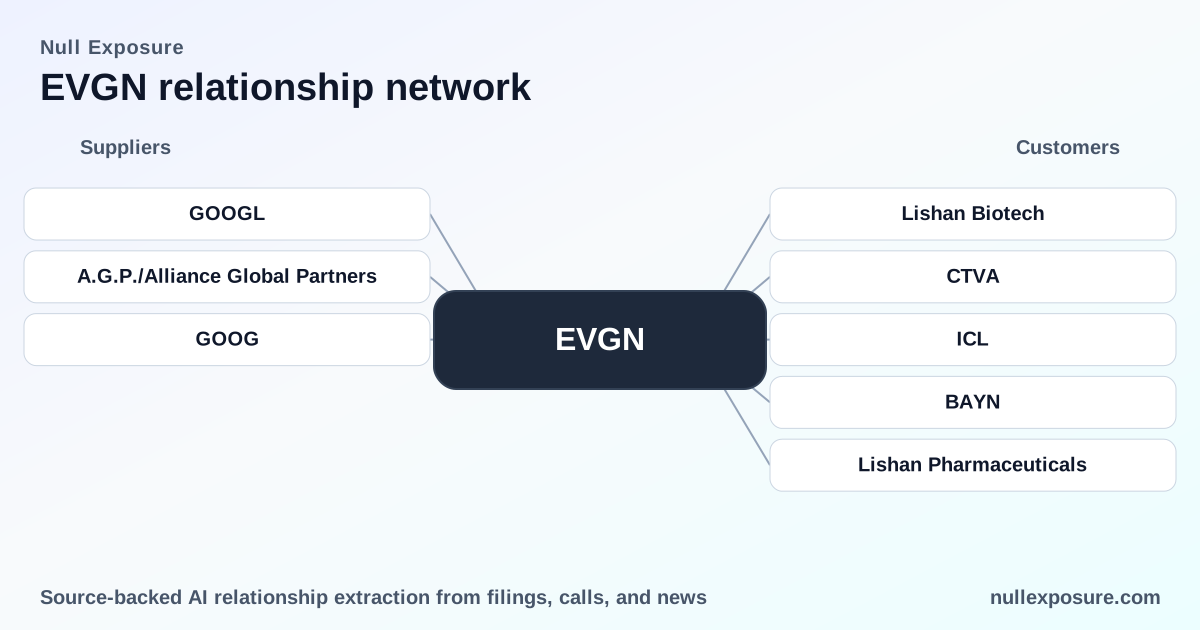
- Lishan Biotech (Intellectia, Mar 9, 2026): Evogene’s subsidiary Biomica signed a global exclusive licensing agreement with China’s Lishan Biotech for BMC128, a microbiome-based therapy focused on enhancing anti‑tumor immune activity. Source: Intellectia news (Mar 9, 2026).
- CTVA — Corteva (InsiderMonkey Q4 2025 earnings call transcript): Evogene reported lower revenue tied to reduced AgPlenus activity and recognition of prior one‑time payments, noting that a collaboration with Corteva completed during 2024 materially affected topline dynamics. Source: InsiderMonkey transcript (Q4 2025).
- Casterra Ag Ltd. (SahmCapital press release, Mar 31, 2026): Casterra uses genomic capabilities licensed from Evogene to support its global breeding network and deliver high‑yield castor seeds for biofuel and bio‑based industries. Source: SahmCapital (Mar 31, 2026).
- Corteva (InsiderMonkey Q4 2025 earning call excerpt): Management reiterated that revenue decreases were primarily driven by lower AgPlenus receipts and the completion of the Corteva collaboration, underscoring prior one‑time recognition in 2024. Source: InsiderMonkey transcript (Q4 2025).
- ICL (InsiderMonkey Q4 2025 earnings call transcript): Lavie Bio Ltd., Evogene’s agriculture‑focused subsidiary, completed the sale of the majority of its operations to ICL, reflecting a strategic divestiture of ag assets. Source: InsiderMonkey transcript (Q4 2025).
- Corteva (PR Newswire CEO letter to shareholders, Mar 2026): In the CEO letter, Evogene highlights the maturity and robustness of its platform through strategic collaborations with Bayer and Corteva alongside a differentiated internal pipeline. Source: PR Newswire CEO letter (Mar 2026).
- Corteva (Morningstar summary of PR Newswire, Mar 5, 2026): Morningstar’s distribution of Evogene’s FY2025 results reiterated the revenue decline was driven by reduced AgPlenus activity and recognition related to a completed collaboration with Corteva. Source: Morningstar/PR Newswire release (Mar 5, 2026).
- ICL (Morningstar/PR Newswire, Mar 5, 2026): Following sales of Lavie Bio assets and Evogene’s MicroBoost AI for Ag to ICL, Evogene recognized approximately $6.4 million gain in discontinued operations for 2025. Source: Morningstar/PR Newswire (Mar 5, 2026).
- Bayer (PR Newswire CEO letter, Mar 2026): The CEO letter cites Bayer as a strategic collaborator that signals platform validation alongside Corteva, supporting the company’s external partnership strategy. Source: PR Newswire CEO letter (Mar 2026).
- Lishan Pharmaceuticals (Morningstar PR Newswire summary, Mar 5, 2026): Biomica entered into a license agreement with Lishan Pharmaceuticals for its lead oncology candidate, BMC128, in early 2026. Source: Morningstar/PR Newswire (Mar 5, 2026).
- BAYN — Bayer (PR Newswire CEO letter, Mar 2026): The PR release reiterates Bayer (BAYN) as a strategic collaborator, underlining the company’s partner‑led commercialization thesis. Source: PR Newswire CEO letter (Mar 2026).
- Lishan Pharmaceuticals (SahmCapital coverage, Mar 2026): SahmCapital’s reporting repeats that Biomica licensed the lead oncology asset BMC128 to Lishan, confirming multiple outlets covered the transaction. Source: SahmCapital (Mar 2026).
- Shanghai Lishan Biopharmaceuticals (Investing.com/NG, May 2026): International outlets report Biomica’s exclusive worldwide license to Shanghai Lishan Biopharmaceuticals for the microbiome‑based cancer therapeutic BMC128. Source: Investing.com Nigeria (May 2026).
- ICL Group Ltd. (SahmCapital, Mar 2026): Coverage notes the acquisition of Lavie Bio assets and MicroBoost AI for Ag by ICL, with Evogene booking a gain on the sale in FY2025. Source: SahmCapital (Mar 2026).
- Casterra Ag Ltd. (Finviz summary, May 2026): Finviz reiterated that Casterra’s field success leveraged genomic capabilities licensed from Evogene to develop commercially viable castor seed varieties. Source: Finviz news (May 2026).
- ICL (PR Newswire CEO letter, Mar 2026): The CEO letter states Lavie Bio’s activity was acquired by ICL and Biomica’s BMC128 licensed to Lishan, summarizing the year’s major disposals and licenses. Source: PR Newswire CEO letter (Mar 2026).
- Lishan Pharmaceuticals (PR Newswire CEO letter, Mar 2026): The PR release again confirms the licensing of BMC128 to Lishan Pharmaceuticals as part of Evogene’s 2026 corporate updates. Source: PR Newswire CEO letter (Mar 2026).
- Corteva (SahmCapital summary of FY2025 results, Mar 2026): SahmCapital echoes management commentary that lower revenues reflected reduced AgPlenus recognition and the completion of the Corteva collaboration in 2024. Source: SahmCapital (Mar 2026).
- Lishan Biotech (Intellectia general news feed, Mar 2026): Additional Intellectia coverage restates the exclusive licensing deal for BMC128 between Biomica and Lishan Biotech. Source: Intellectia news feed (Mar 2026).
- Lishan Pharmaceuticals (InsiderMonkey earnings call coverage, Mar 2026): InsiderMonkey’s earnings call transcript includes the disclosure that Biomica licensed its lead oncology candidate to Lishan Pharmaceuticals in early 2026. Source: InsiderMonkey transcript (Mar 2026).
Investment implications and risk map
- Revenue volatility is structural. Evogene’s financials show negative margins and low TTM revenue; partner payments and asset sales will dictate near‑term cash flows.
- Commercial de‑risking through partners. Licensing BMC128 and selling ag assets offloads development and commercialization risk, converting IP into near-term proceeds. This reduces capex pressure but also caps upside participation if assets succeed commercially.
- Concentration and timing risk. A small number of large deals (Corteva, Bayer, ICL, Lishan) drive results; investors must monitor milestone schedules and partner execution.
- Platform validation supports optionality. Repeated strategic collaborations with global majors are a positive signal that Evogene’s platform delivers partner value, enabling continued licensing opportunities.
For a consolidated view of Evogene’s partner exposures and to track new relationship filings, see https://nullexposure.com/.
Bottom line
Evogene is a platform company monetizing primarily through strategic collaborations, exclusive licensing, and selective asset sales. The company’s near-term performance will be governed by the timing of partner payments and dispositions rather than steady product revenue, so investors should underwrite valuation to episodic cash receipts, partner execution, and potential upside from successful licensed assets.