EVgo (EVGOW) — OEM customer relationships and what they mean for cash flow and execution risk
EVgo operates, owns and monetizes a national public DC fast-charging network by selling charging services to drivers and commercial customers through a mix of usage-based pricing and subscription plans, and by contracting with OEMs for joint marketing, charging credit programs, and co‑funded capital deployments. For investors and operators evaluating EVGOW customer relationships, the critical takeaway is that OEM partnerships are strategic demand drivers and distribution channels that reduce customer acquisition cost while linking future utilization and capital commitments to automaker cooperation and product incentives.
If you want a single place to track EVgo’s customer relationships and related contract signals, visit the Null Exposure research hub: https://nullexposure.com/
How EVgo makes money — straightforward monetization, layered execution risk
EVgo’s revenue model is primarily transactional: drivers pay per session or by subscription membership for lower per‑minute/kWh rates, while commercial and fleet customers pay for managed charging and site access. The company also captures ancillary value from charging credits tied to OEM vehicle programs and from capital-build programs where OEMs co-invest or coordinate site activation. According to EVgo’s FY2024 Form 10‑K, these mechanics underpin the company’s reported revenue streams and gross profit contribution. This structure produces revenue variability tied directly to utilization, with upside from membership penetration and downside from EV adoption pacing or reduced OEM incentives.
Bold takeaway: EVgo’s cash flow profile is usage-driven and highly sensitive to vehicle mix, OEM incentives and the pace of deployed infrastructure coming online.
OEM agreements: scale distribution but concentrate execution
EVgo contracts directly with original equipment manufacturers (OEMs) to provide charging services to their customers and to run joint-marketing and credit programs. These contractual relationships operate as both demand generators and partial financiers of network growth through capital-build programs described in the FY2024 10‑K. The arrangement positions EVgo as the seller and operator of charging services while OEMs function as referral and co-investment partners.
Visit Null Exposure for detailed relationship tracking and historical filings: https://nullexposure.com/
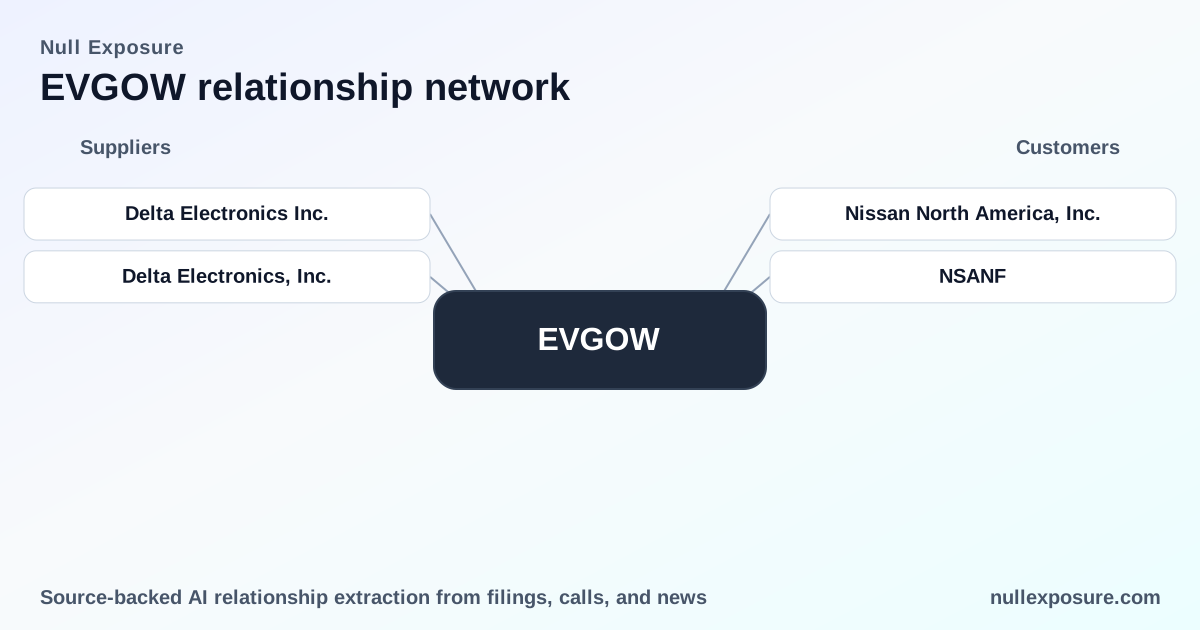
Nissan North America, Inc.
EVgo executed an agreement with Nissan North America, Inc. in June 2019 that established joint marketing activities, purchaser/lessee charging credit programs, and a capital‑build program to expand charging availability tied to Nissan EV models. This agreement is documented in EVgo’s FY2024 Form 10‑K as a continuing commercial arrangement supporting consumer adoption through incentives and co‑sited chargers. (Source: EVgo 2024 Form 10‑K, Nissan Agreement, FY2024 filing.)
Nissan (inferred symbol: NSANF)
EVgo restates the same Nissan Agreement in its FY2024 10‑K language — highlighting joint marketing, charging credits, and capital-build cooperation — and the relationship is also indexed to the Nissan/NSANF identifier in the research results. The filing shows the agreement is an active component of EVgo’s OEM engagement strategy. (Source: EVgo 2024 Form 10‑K, FY2024.)
NSANF (inferred symbol repeated)
The dataset includes a repeated reference to NSANF that mirrors the Nissan agreement language; the operational implication is identical — Nissan participates as an OEM partner under the 2019 agreement, providing structured incentives and a capital-build framework to support EVgo network expansion tied to Nissan EV buyers. (Source: EVgo 2024 Form 10‑K, FY2024.)
Company-level constraints and what they imply for operations
The filings and extracted constraints present several company-level signals that describe how EVgo runs its business and the commercial posture of its customer contracts:
- Contract mix — subscription and usage-based: EVgo offers both subscription memberships with lower per-unit pricing and pay‑as‑you‑go plans; core charging revenues are recognized per usage or over time depending on contract terms. This confirms a blended monetization approach that balances recurring revenue potential with direct usage sensitivity. (Evidence: FY2024 10‑K excerpts describing membership and pay‑as‑you‑go plans.)
- Geographic footprint — United States focus: The network is deployed across 40+ states with over 1,100 fast charging stations, making EVgo a national U.S. infrastructure operator with localized site partnerships in retail, grocery, transit and commercial locations. This concentration in North America defines market exposure and regulatory context. (Evidence: FY2024 10‑K station and state count.)
- Relationship posture — seller and active stage: EVgo contracts directly with OEMs to sell charging services to vehicle purchasers and lessees and lists these OEM contracts as active commercial relationships. This indicates OEM deals are a standing part of go‑to‑market rather than one‑off pilots. (Evidence: FY2024 10‑K references to contracting with OEMs.)
- Business segments — infrastructure and services: The core of the company is building, owning and operating DC fast charging infrastructure while generating revenues from the provision of charging services to consumers, commercial customers and fleets. This means capital intensity on the asset side and recurring/usage revenues on the operating side. (Evidence: FY2024 10‑K segment descriptions.)
These constraints collectively point to an operating model with capital intensity, utilization-dependent revenue, and concentrated channel dependence on OEM partnerships and site hosts.
Investment risk and operational implications investors must watch
- Utilization risk: Because the dominant revenue drivers are usage-based, quarterly results will track closely with EV adoption rates, vehicle range economics, and regional deployment density. Membership growth helps stabilize margins but will not fully offset underutilized sites.
- OEM dependency: OEM agreements like Nissan’s are strategic for customer acquisition and can include capital-build elements that shift deployment economics; however, such partnerships also concentrate execution risk if OEM incentives change or co‑investment commitments shift.
- Capital and scaling: The company’s infrastructure segment requires continued capital for site builds; capital-build programs with OEMs mitigate some outlay but do not eliminate asset operating costs or technology refresh needs.
- Regulatory and geographic exposure: With operations across the U.S., EVgo benefits from federal and state clean energy incentives but faces varying permitting, interconnection and site host conditions that affect rollout speed.
Conclusion — positioning and actionable takeaways
EVgo’s OEM relationships, exemplified by its multi‑year Nissan agreement, are core demand channels and partial capital partners that materially influence utilization and growth economics. For investors and operators, the most important signals are the company’s usage-based revenue profile, subscription upside, U.S.-centric footprint, and active OEM seller posture. Monitor OEM incentive programs and membership penetration rates as the primary leading indicators of revenue durability and margin recovery.
For ongoing tracking of EVgo’s contractual relationships and their implications for cash flow and growth, see Null Exposure’s research center: https://nullexposure.com/
Bold final takeaway: EVgo monetizes scale through usage and membership but execution hinges on OEM cooperation and the efficient roll‑out and utilization of high‑cost charging assets.