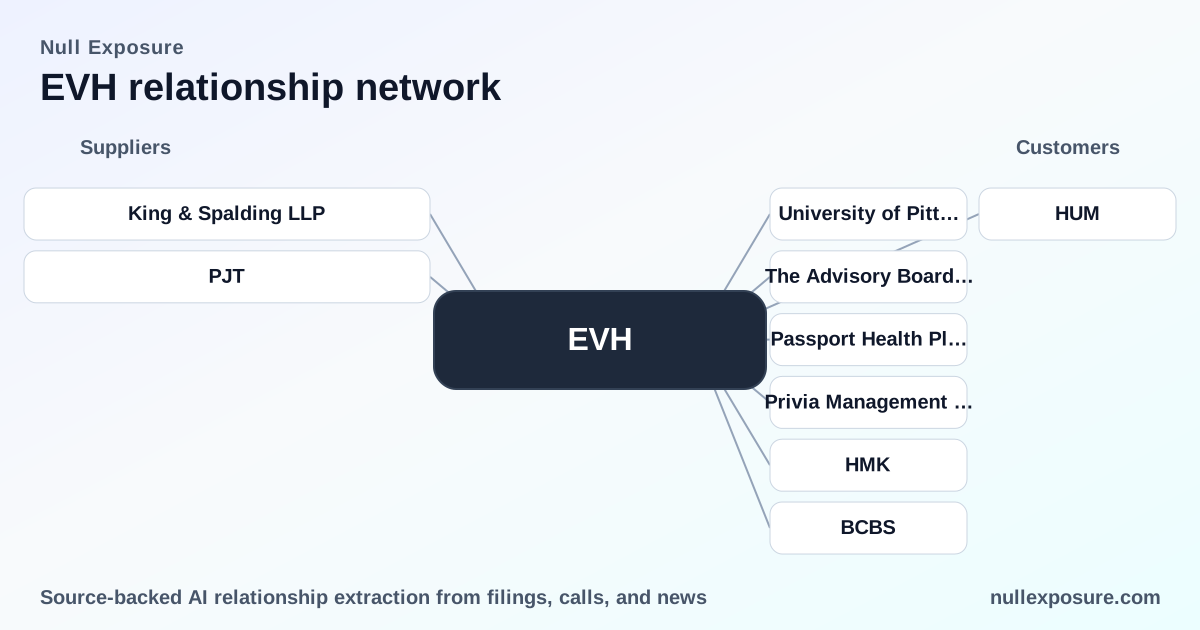
Evolent Health (EVH): Customer relationships that drive a managed‑care services business
Evolent Health runs a platform and services business that sells multi‑year care‑management, specialty services and administrative solutions to U.S. payers and provider systems, monetizing through a mix of per‑member‑per‑month (PMPM) subscription fees and variable, usage‑linked arrangements tied to membership or premium. Revenue is concentrated, contractually durable, and tied to clinical outcomes, so customer retention and product integration determine both near‑term cash flow and long‑term margin expansion. For a deeper look at contract structures and partner exposure visit https://nullexposure.com/.
How Evolent makes money and what that implies for investors
Evolent’s commercial model is straightforward: multi‑year contracts that combine subscription PMPM fees with variable performance or premium‑linked fees, delivered as a principal service provider to health plans and provider networks. The 2024 Form 10‑K describes three primary solutions — specialty care management, total cost of care management and administrative services — and states that Administrative Services revenue is derived from recurring multi‑year platform and operations contracts. That structure produces sticky, recurring cash flows but concentrated counterparty risk; the company disclosed that a small number of partners accounted for a large share of 2024 revenue (Humana, Molina, Florida Blue and Cook County Health together represented material percentages). Evolent recognizes revenue on a gross basis as the principal provider, and the company holds licensing arrangements with founding partners to secure IP and data access that underpin its platform.
- Contracting posture: Long‑term, subscription and usage‑based mix with outcome/volume linkages.
- Concentration: High — several partners represent double‑digit shares of revenue in FY2024.
- Criticality: High for counterparties that outsource care management and plan operations to Evolent.
- Maturity: Established commercial relationships since Evolent’s founding in 2011, with continued product investment and selective divestitures.
If you want the primary corporate filing context behind these claims, see Evolent’s FY2024 Form 10‑K and recent earnings commentary at https://nullexposure.com/.
Customer relationships — who is named in the coverage and what they mean
Below I list every relationship item surfaced in the reviewed results, with a concise plain‑English takeaway and source reference.
The Advisory Board Company
Evolent was founded in 2011 with The Advisory Board Company as an original partner, and Evolent executed intellectual property licensing and development agreements with Advisory Board to secure platform assets early in its history. Source: FY2024 Form 10‑K filing.
University of Pittsburgh Medical Center (UPMC)
UPMC is an original founding partner and counterparty in Evolent’s early IP and development agreements, giving the company clinical and operational provenance in value‑based care. Source: FY2024 Form 10‑K filing.
Passport Health Plan (Courier‑Journal, 2019 report)
Evolent provided administrative services and transferred roughly 470 of Passport’s ~620 employees under a 2016 partnership, a relationship that later became litigated and highlighted governance and fee‑alignment risks in certain partnerships. Source: Courier‑Journal investigative report (August 2019).
Walgreens (BizJournals, 2021 coverage)
Evolent was publicly linked in market coverage to potential strategic interest or a transaction involving Walgreens in 2021, a story that produced a transient move in EVH share price but primarily reflects market speculation rather than a confirmed customer contract. Source: Washington Business Journal (September 2021).
Molina Healthcare (BizJournals, 2020 notice)
Portions of an Evolent subsidiary were sold to Molina Healthcare, reflecting selective divestiture activity and the transferable nature of some managed‑care businesses within Evolent’s portfolio. Source: BizJournals transaction coverage (August 2020).
University Health Care, Inc., d/b/a Passport Health Plan (GlobeNewsWire class action notice)
Litigation filings and investor notices criticized the structure and economics of Evolent’s relationship with Passport, alleging fee extraction and misalignment; the public litigation underscores reputational and contract‑governance risk. Source: GlobeNewswire investor notice tied to class‑action activity (2019).
PRVA / Privia Health Group (MarketBeat notice)
Market commentary in early 2026 noted Privia’s acquisition of Evolent’s ACO business as a strategic move to expand value‑based care scale, a transaction that changes the composition of Evolent’s managed‑care assets and revenue mix. Source: MarketBeat instant alert (March 2026).
Privia Management Company, LLC (MarketScreener, 2025 report)
Privia Management acquired Evolent Care Partners Holding Company from Evolent, confirming an active portfolio rationalization and transfer of certain care‑delivery capabilities to a health‑system/aligned services operator. Source: MarketScreener news release (FY2025 coverage).
Highmark (EVH Q4 2025 earnings call)
Evolent announced a large oncology partnership with Highmark, indicating continued product expansion into specialty navigation services and the company’s ability to win enterprise health plan clients for point‑solution offerings. Source: EVH 2025 Q4 earnings call transcript.
HMK (duplicate of Highmark, EVH Q4 2025 earnings call)
The earnings call repeated that the large oncology partnership is with Highmark, reinforcing that this engagement is a named, strategic customer win in late 2025. Source: EVH 2025 Q4 earnings call transcript.
Blue Cross / BCBS (EVH Q4 2025 earnings call)
Evolent cited a Blue Cross partner that published data showing about a 40% reduction in hospitalizations and ER visits for users of its cancer navigation solution, demonstrating measurable clinical impact that supports product‑led client retention. Source: EVH 2025 Q4 earnings call.
Humana Inc. (SahmCapital news item, 2024)
Industry coverage lists Humana as a prominent Evolent partner; Evolent’s 10‑K also identified Humana Insurance Company as one of the largest revenue contributors in 2024, signaling significant commercial exposure to this single payer. Source: SahmCapital industry note and FY2024 Form 10‑K.
HUM (duplicate Humana entry from the same SahmCapital item)
The duplicate listing reiterates Humana’s prominence among Evolent’s partners and the company’s material commercial exposure to national payers. Source: SahmCapital industry note (FY2024).
What the constraints tell investors about operational risk
Evolent’s filings and evidence excerpts make several structural points that drive investment analysis:
- Contracts are long‑dated and often multi‑year: Revenue is derived from recurring multi‑year platform and operations contracts, creating predictable revenue but also exposure to client renewal cycles.
- Pricing mixes subscription and usage‑based components: The company uses fixed PMPM fees alongside variable, membership‑ or premium‑linked fees, aligning revenue to scale while also exposing margins to enrollment swings.
- Geographic concentration is domestic: All revenue and long‑lived assets are U.S. based, simplifying regulatory context but concentrating policy and payor risk in one market.
- Material customer concentration exists: Evolent disclosed top partners (Humana, Molina, Florida Blue, Cook County Health) representing double‑digit shares of 2024 revenue, signaling notable counterparty concentration risk.
- Evolent operates as principal service provider: The company recognizes gross revenue because it controls and integrates third‑party services for customers, which supports revenue scale but also operational responsibility.
Two things to monitor closely: partner renewals with the large payers (given the concentration) and the margin impact of continuing divestitures like the sale of the ACO business to Privia.
Investment implications and watchlist
- Positive: Durable, subscription‑style revenue with measurable clinical outcomes supports repeatable sales into large payers; product wins (Highmark, Blue Cross engagements) demonstrate commercial traction.
- Risks: High revenue concentration and public litigation around partner economics (Passport) can pressure renewals and pricing. Divestitures change the revenue base and make near‑term growth lumpy.
- Catalysts: Renewal outcomes with Humana and other top partners, execution on oncology and specialty offerings, and any strategic M&A or further portfolio simplification will drive re‑rating.
If you want a structured benchmarking of Evolent’s contract exposures and partner concentration for portfolio decision‑making, visit https://nullexposure.com/ for primary filing links and analyst summaries.