Evolv Technologies (EVLVW) — Customer Relationships and What They Signal for Revenue Quality
Evolv Technologies operates a combined hardware-plus-software security screening business, monetizing through multi-year Security-as-a-Service subscriptions, equipment sales, and professional services (installation, training, event support). The company’s cash flows are increasingly driven by recurring subscription contracts and four-year lease-like terms that convert unit deployments into predictable revenue streams, while channel arrangements (notably with Columbia Tech) expand market reach. For investors assessing revenue durability, the mix of long-term subscriptions, U.S.-centric concentration, and a small set of material reseller relationships are the most consequential dynamics to monitor. For a concise dashboard and continuous tracking of Evolv relationships, visit the research hub at https://nullexposure.com/.
One-sentence framing: how Evolv makes money
Evolv sells Evolv Express physical security systems and recurring SaaS/maintenance under multi-year subscription and lease arrangements, supplemented by product sales and professional services, producing a growing base of predictable, subscription-style revenue.
Customer relationships: named references and what they reveal
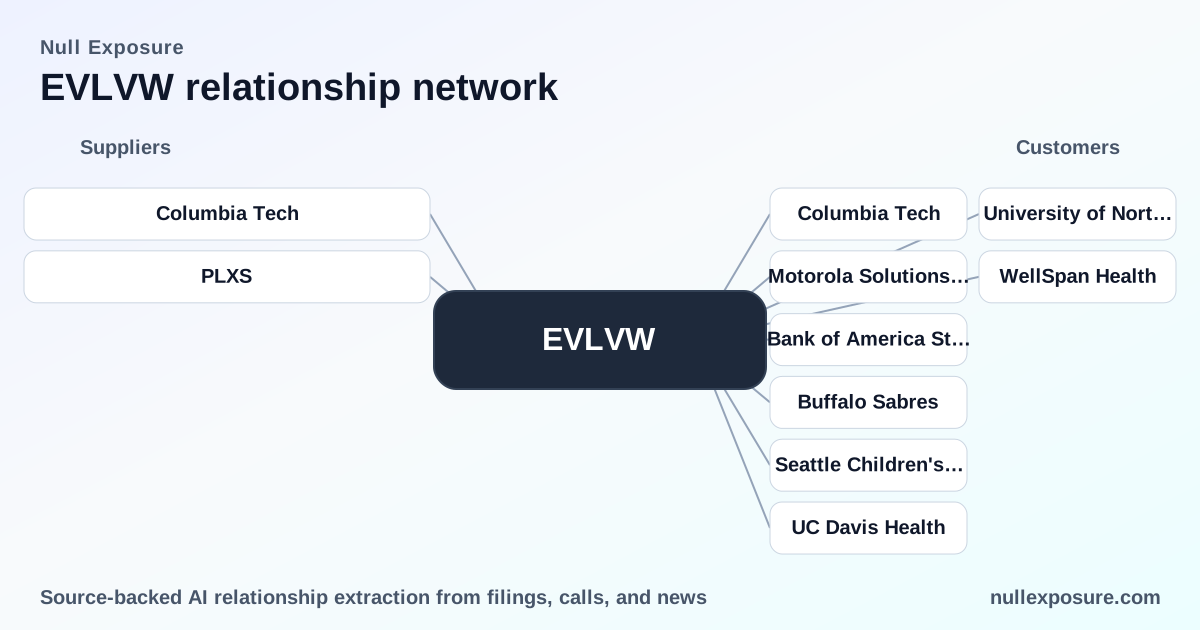
Below are every customer or partner relationship cited in the source results, each summarized in plain English with its source.
Columbia Tech
Columbia Tech is a distributor under a formal Distribution and License Agreement that supports Evolv’s distributor-licensing model and hardware resale to end users; this relationship is explicitly cited in Evolv’s FY2024 10‑K. According to the FY2024 10‑K, Evolv offers a distributor licensing model based on the Distribution and License Agreement entered with Columbia Tech in March 2023, indicating a formal channel partnership and reseller revenue flow (FY2024 10‑K).
Motorola Solutions, Inc.
Evolv’s 10‑K discloses that sales routed through one of its largest channel partners were subject to extra‑contractual terms and conditions, referencing Motorola Solutions as a significant channel-related counterparty and highlighting contract complexity in channel sales (FY2024 10‑K).
Bank of America Stadium
Bank of America Stadium completed a long‑term renewal to upgrade to the Gen2 Evolv Express, reflecting a stadium-level multiyear deployment and ecosystem upgrade that drives subscription revenue and unit refreshes (company earnings call, Q3 2025).
Buffalo Sabres / KeyBank Center
The Buffalo Sabres entered a multiyear subscription agreement to deploy nine Evolv Express Gen2 systems at KeyBank Center, representing a professional sports franchise-level subscription win and recurring revenue commitment (company earnings call, Q3 2025).
Seattle Children’s Hospital
Seattle Children’s Hospital is cited as a recent healthcare win, evidencing adoption within the hospital vertical and furthering Evolv’s penetration into health‑care security contracts, which typically favor long-term institutional agreements (company earnings call, Q3 2025).
UC Davis Health
UC Davis Health is listed among recent healthcare customers, reinforcing multi-site healthcare adoption and the company’s success selling subscription and deployment packages into large health systems (company earnings call, Q3 2025).
University of North Carolina at Chapel Hill
UNC Chapel Hill is deploying Evolv Express to streamline stadium and venue entry, demonstrating traction in collegiate athletics where multi-year campus and stadium contracts can provide sticky, repeatable revenue (company earnings call, Q3 2025).
WellSpan Health
WellSpan Health is another healthcare customer named on the earnings call, adding to a cluster of institutional healthcare deployments that contribute to subscription revenue growth (company earnings call, Q3 2025).
What the customer map implies about Evolv’s operating model
The named relationships combine to produce several distinct operating model signals that matter for investors:
- Long-term subscription posture. Evolv’s contracts are predominantly multi‑year and frequently non‑cancelable; the company states typical initial terms of four years and often collects quarterly or annual fixed payments for lease, SaaS, and maintenance elements (company-level signal from FY2024 10‑K). This creates predictable near-term revenue visibility and amortizable unit economics.
- Subscription-first monetization. Evolv explicitly positions its offering as a Security-as-a-Service product that bundles proprietary hardware and software; subscription revenue growth and higher active unit counts drive the company’s service gross profit (company-level signal from FY2024 10‑K).
- U.S. geographic concentration. Revenue is primarily generated in the United States, with the company disclosing nearly all material revenue coming from U.S. customers and expecting continued domestic adoption (company-level signal from FY2024 10‑K).
- Channel and reseller concentration risk. Evolv disclosed that one customer and two customers (resellers) each accounted for more than 10% of revenue in recent years, indicating material customer concentration that amplifies counterparty and collection risk (company-level signal from FY2024 10‑K).
- Channel complexity and extra-contractual exposure. The 10‑K’s note on sales to a major channel partner being subject to extra‑contractual terms (referencing Motorola Solutions contextually) points to operational complexity in channel management and potential margin or timing variability on recognized sales (FY2024 10‑K).
- Active and ramping deployments. Management credits subscription revenue increases to a higher number of active Evolv Express units and expansion of initial deployments to additional venues, signaling both active installed base and ongoing upsell/ramping dynamics (company-level signal from FY2024 10‑K).
- Product and services mix. Revenue lines include product sales (hardware), subscription SaaS/maintenance (services), license fees under distribution deals, and professional services—supporting a blended margin profile where services/subscription expand recurring revenue over time (company-level signal from FY2024 10‑K).
Note: the Distribution and License Agreement with Columbia Tech is named explicitly in Evolv’s filings and therefore the channel/distributor role is attributed directly to Columbia Tech.
Investment implications — concentrated strengths and operational risks
- Strength: predictable recurring revenue. The shift toward non‑cancelable multi‑year subscriptions and lease treatment of arrangements creates visibility into mid-term cash flows and supports valuation models more typical of recurring software businesses.
- Risk: reseller concentration and channel execution. Having a small number of resellers represent material revenue elevates concentration and contractual risk; channel disputes or extra‑contractual settlements can drive episodic revenue volatility (FY2024 10‑K).
- Vertical diversification is working. Wins across sports venues, collegiate athletics, and multiple health systems (Bank of America Stadium, Buffalo Sabres, UNC Chapel Hill, WellSpan, UC Davis Health, Seattle Children’s Hospital) validate cross‑industry demand and reduce single-vertical exposure (Q3 2025 earnings call).
- Operational complexity from hardware + SaaS delivery. Bundling hardware, software, and maintenance creates higher upfront capital intensity and installation/service requirements relative to pure software vendors; this affects capital allocation and churn dynamics.
For institutional investors and operators assessing Evolv, the key monitoring points are: continued transition of sales into the subscription model, renewal behavior on four‑year term contracts, concentration trends among resellers, and expansion within healthcare and large public venues.
If you want a consolidated view of these customer relationships and how they move Evolv’s revenue mix, explore the full research hub at https://nullexposure.com/.
Bottom line
Evolv’s customer footprint shows repeatable, subscription-driven revenue anchored by multi‑year contracts and high-profile venue wins, but revenue concentration through a few resellers and the operational complexity of channel arrangements are material risks that require active monitoring. Investors should value Evolv with a recurring‑revenue framework while stress‑testing for channel concentration and contract renewal outcomes.