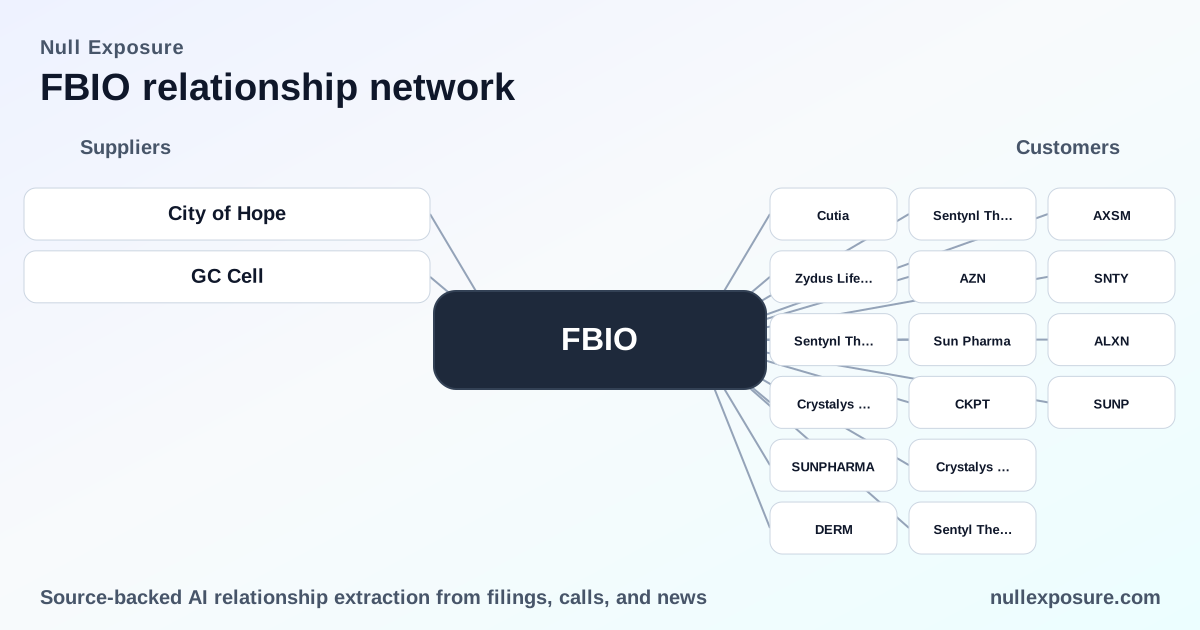
Fortress Biotech (FBIO): customer relationships that drive milestone and royalty economics
Fortress Biotech acquires, incubates and spins out drug assets and subsidiaries, then monetizes those assets through product sales, milestone receipts, royalties and strategic divestitures. The company records near-term revenue from product shipments and one‑time milestone payments while retaining upside through royalty streams and contingent value rights (CVRs) from partner transactions. Investors should value Fortress as a portfolio manager of biopharma IP and minority stakes rather than a traditional commercial-stage specialist. For more on how we track counterparty economics, visit https://nullexposure.com/.
What to watch: portfolio mechanics, not a single sales engine
Fortress’s business model is intentionally diversified across transactional product sales and contract-based monetization events. The firm recognizes most revenue as short‑term product deliveries with single performance obligations, while capturing longer-dated optionality through royalties and milestone schedules sold or retained in partner deals (10‑K and later releases). This dual stream — immediate product revenue plus milestone/royalty upside — explains recent volatile but episodic cash inflows from asset sales and regulatory events.
The full counterparty map — concise, source‑anchored summaries
Below are plain-English summaries for every counterparty mention in the reporting set.
Cutia
Fortress recognized a $1.0 million milestone from Cutia following marketing approval for topical 4% minocycline foam in China, showing how Fortress pockets small, discrete milestone payments tied to regional approvals (Fortress 10‑K, FY2024).
Zydus Lifesciences
Fortress is eligible to receive tiered royalties on net sales of Zycubo and up to $129 million in aggregate development and sales milestones from Zydus, reflecting large structured upside embedded in commercialization partnerships (news reports summarizing the FDA approval, Jan 2026).
Sentynl Therapeutics (Sentynl / SNTY / SNTL)
Sentynl — a Zydus-owned U.S. entity — assumed responsibility for CUTX‑101 development from Fortress’s unit and remains the counterparty responsible for paying Cyprium/Fortress royalties and milestone fees up to roughly $129M depending on approvals and sales (GlobeNewswire and subsequent news, FY2025–FY2026).
Crystalys Therapeutics (Crystalys Therapeutics, Inc.)
Fortress’s Urica unit transferred rights to dotinurad to Crystalys and retains a minority equity position plus eligibility for a 3% royalty on future net sales of dotinurad, illustrating Fortress’s pattern of extracting equity and royalty streams on asset sales (Yahoo Finance release, FY2025).
AstraZeneca / Alexion (AZN / ALXN)
Fortress announced the closing of AstraZeneca’s acquisition of Caelum, which Fortress founded; the deal was executed under a Development, Option and Stock Purchase Agreement that transferred valuable late‑stage rare disease assets to a large pharma acquirer (GlobeNewswire, FY2021 disclosure).
Sun Pharmaceutical Industries / Sun Pharma (SUNPHARMA / SUNP)
Fortress received approximately $28 million upfront from Sun Pharma related to the sale of its subsidiary Checkpoint Therapeutics, with potential additional CVR payments and a 2.5% royalty on future UNLOXCYT net sales, underscoring Fortress’s playbook of monetizing assets via strategic exits (Fortress press releases and investor updates, FY2025–FY2026).
Journey Medical (DERM)
Journey Medical is the commercial partner expected to launch Emrosi™ in the U.S., indicating Fortress’s reliance on partnered commercial channels for dermatology products rather than direct commercialization (company news, FY2024).
Axsome Therapeutics / AXSM
Avenue Therapeutics — a Fortress subsidiary — sold Baergic to Axsome, creating a structure where Fortress‑owned subs receive upfront consideration and potential milestone and royalty contingent value that flows through related subsidiaries (GlobeNewswire / investor release, FY2025).
Checkpoint Therapeutics (CKPT)
Checkpoint was the development partner for cosibelimab (UNLOXCYT) before its sale to Sun Pharma; Fortress historically develops assets at partner companies and captures value on exit or through downstream royalties (company communications, FY2024–FY2025).
Alexion Pharmaceuticals, Inc. (ALXN)
Alexion is referenced as part of the AstraZeneca/Caelum DOSPA transaction; the inclusion signals Fortress’s history of co‑development and option arrangements with specialty pharma acquirers (GlobeNewswire, FY2021).
How these relationships translate into operating constraints and signals
- Contracting posture: Fortress’s revenue recognition reflects short‑term contracts with single performance obligations for product sales, while collaboration and development deals generate over‑time service revenue where applicable (10‑K signals).
- Counterparty mix: The company sells through wholesaler distributors and qualified government healthcare providers, indicating public‑sector exposure on some product channels (company disclosures).
- Geographic footprint: Product revenue is concentrated in North America for Journey products, with APAC exposure via milestone receipts (Cutia approval in China generated a milestone), showing a mix of domestic sales and international event‑driven cash.
- Materiality and concentration: No single dermatology customer accounted for more than 10% of Journey revenue in 2024, which implies low single-customer concentration at the product level but substantial portfolio concentration in a handful of partnered assets.
- Relationship roles: Fortress operates as seller, distributor‑partner and service provider depending on the asset — transactional sales for dermatology products and contracted R&D/collaboration for development stage assets.
- Segment posture: The company’s revenue mix is dominated by core product sales, with royalties and milestones forming a secondary but potentially material part of future cash flows.
Investment implications and risk checkpoints
- Upside drivers: Regulatory approvals and PRV sales (e.g., the $205M PRV sale reported by Cyprium) and royalty-bearing partnerships create episodic, high‑value cash events that can materially boost liquidity and shareholder returns (GlobeNewswire and related items, FY2026).
- Execution risks: Fortress’s monetization depends on partner performance, third‑party commercialization success and contingent payments (CVRs, royalties); partner credit and product uptake are single points of failure.
- Valuation lens: Treat Fortress as a hybrid royalties/milestone playbook — discount near-term product revenue at commercial multiples while valuing milestone/royalty streams as contingent, binary payoffs tied to regulatory and commercial outcomes.
If you want a structured, line‑item view of how each partnership feeds cash flow scenarios, we have analysis templates and counterparty risk matrices at https://nullexposure.com/.
Bold portfolio events and disciplined tracking of milestone triggers will determine whether Fortress’s asset‑light model consistently translates regulatory wins into durable shareholder value.