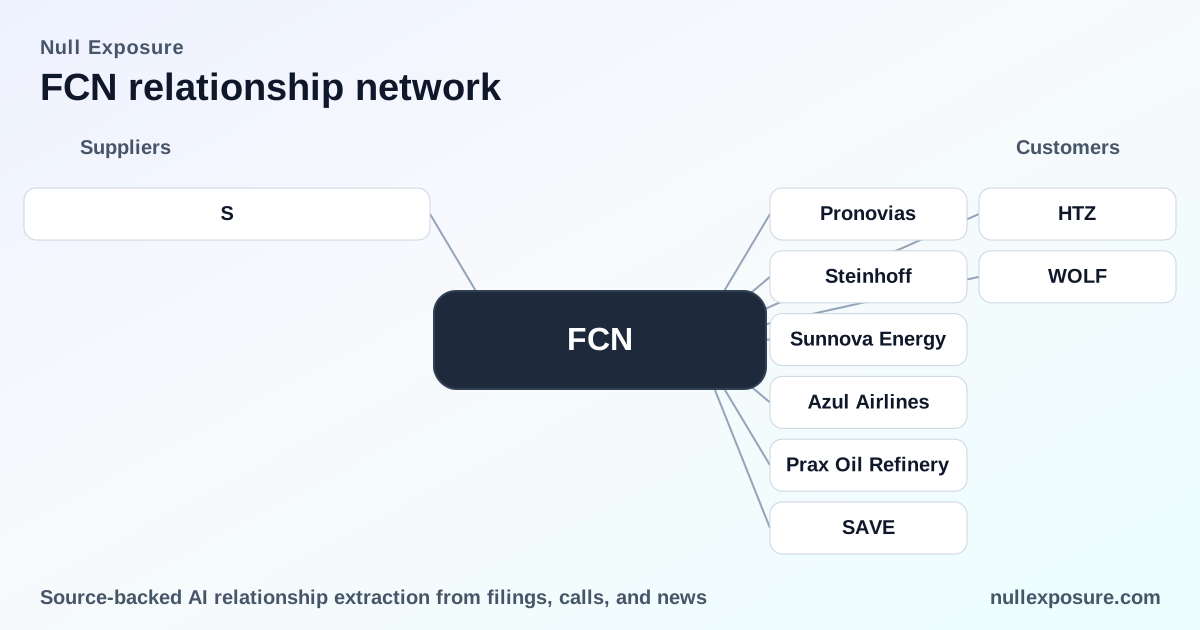
FTI Consulting (FCN): Customer Map and Commercial Signals for Investors
FTI Consulting monetizes by selling professional advisory services—financial restructuring, strategic communications, forensic and litigation support, and technology-enabled legal operations—to a diversified global client base. Revenue comes primarily from fee-for-service engagements across large corporates, government agencies and sponsors, with a mix of recurring managed-service/subscription work in its technology/legal offering and transactional, usage-linked billing in data-intensive projects. This profile supports steady margins tied to utilization and deal flow rather than product-scale leverage.
For a concise, investor-facing snapshot of FTI’s customer relationships and operating constraints, see more at https://nullexposure.com/.
What this customer list tells an investor
FTI’s client roster in public sources highlights three durable commercial truths: breadth over concentration, a mix of short-term mandates and recurring arrangements, and high dependence on reputation and deal wins. The company’s work spans high-profile bankruptcies, strategic communications for listed corporates, and retained media/IR support for life sciences—each contract type drives different cash-flow rhythms and risk profiles.
- Revenue concentration is low: FTI discloses no single customer >10% of revenues, which reduces client-specific tail risk but increases the importance of continual deal generation.
- Contracting mixes: Evidence indicates both subscription/managed services (legal ops) and usage-based billing (data storage and processing), producing a hybrid of predictable and variable revenue.
- Geographic posture: The firm is North America–centric for revenue but operates globally, supporting cross-border engagements that command premium billing rates.
For deeper coverage of engagements and to track how client wins translate to financials, visit https://nullexposure.com/.
Customer relationships: who FTI is advising (concise, source-backed)
Below are every client relationship surfaced in public reporting for the period covered. Each entry is a plain-English summary followed by the cited source.
-
NINE (North American oilfield business) — FTI served as the financial and communications advisor in a prepackaged Chapter 11 filing for a North American oilfield services company. (WhatNow, May 3, 2026)
-
Consumer Portfolio Services (CPSS) — CPSS disclosed that FTI provided consulting services and that a named senior advisor from FTI was engaged; CPSS paid FTI approximately $127k in 2024 and $173k in 2025. (SEC filing reported by StockTitan, March 2026)
-
Volaris (VLRS) — FTI acted as strategic communications adviser for Volaris in the announcement of a new Mexican airline group, supporting investor and media messaging. (GlobeNewswire/HojaDeRutaDigital, Dec 2025 / Mar 2026)
-
Dominion Diamond (DDC) — FTI was the court-appointed monitor in Dominion’s proceedings; FTI’s counsel advised the court that unsecured creditors had no realistic prospect of recovery in that matter. (Cabin Radio, March 2026 reporting a 2021 adjudicator decision)
-
HUTCHMED (HCM) — FTI repeatedly appears as the designated media and investor relations contact for HUTCHMED across multiple press releases and clinical announcements through FY2025–FY2026. (GlobeNewswire, QuiverQuant, Research-Tree, Finance Yahoo; aggregated FY2025–FY2026 press releases)
-
Azul Airlines — FTI referenced Azul as one of several large airline restructurings that contributed to record quarterly revenues in turnaround and restructuring services. (Earnings-call transcript reported by InsiderMonkey, Q4 2025 / FY2026)
-
Prax Oil Refinery — Prax was cited as part of the large U.K. restructuring engagements that drove FTI’s strong turnaround revenues. (InsiderMonkey earnings-call transcript, Q4 2025 / FY2026)
-
Steinhoff — Steinhoff was mentioned among high-profile global restructurings where FTI has been actively engaged as a lead advisor. (InsiderMonkey earnings-call transcript, Q4 2025 / FY2026)
-
Sunnova Energy — FTI listed Sunnova among recent large engagements that underpin its restructuring practice growth and brand leadership. (InsiderMonkey earnings-call transcript, Q4 2025 / FY2026)
-
Pronovias — FTI launched a sales process for Pronovias’ middle‑market transaction, indicating M&A/transaction advisory involvement. (MarketScreener news, March 2026)
-
Spirit Airlines / SAVE — Spirit was cited as a major bankruptcy/turnaround engagement contributing to quarterly revenue strength in restructuring services. (InsiderMonkey earnings-call transcript, Q4 2025 / FY2026)
-
Hertz (HTZ) — Hertz appears in FTI’s cited portfolio of large global engagements where the firm has been a lead adviser on complex restructuring assignments. (InsiderMonkey earnings-call transcript, Q4 2025 / FY2026)
-
Wolfspeed (WOLF) — Wolfspeed was listed among corporate engagements illustrating FTI’s increased role in major global assignments. (InsiderMonkey earnings-call transcript, Q4 2025 / FY2026)
-
Accuray (ARAY) — Accuray referenced a named FTI media contact in announcing a multi‑phase operational transformation plan, indicating retained communications support. (InvestingNews, Mar 2026)
-
New Oriental Education (EDU) — New Oriental’s investor and media contact listings included FTI Consulting phone contacts for China and Hong Kong, reflecting retained communications/IR support. (The Manila Times press release, Dec 2025)
-
Asana (ASAN) — Asana’s 10‑Q reporting included context around financial arrangements where external advisory relationships were referenced; FTI is present in related public filings. (StockTitan summary of SEC filing, Mar 2026)
Each relationship above is drawn from a public item in FY2025–FY2026 reporting and press coverage; these references demonstrate FTI’s mix of short-term advisory mandates and retained communications/IR assignments.
What operating constraints and contract signals imply for investors
FTI’s public disclosures and press references produce a coherent set of company-level operational signals that drive revenue stability and risk:
-
Contracting posture: mixed recurring and variable — Evidence of subscriptions and managed services in legal/technology offerings and usage‑based billing for data-intensive technology work implies a revenue mix that blends predictable recurring cash with variable, deal-driven spikes. This structure supports margin resilience while keeping revenue growth tied to deal flow and client retention.
-
Client type and criticality: large enterprises and governments — FTI’s client roster includes Fortune 500s, governments and financial sponsors, which elevates pricing power and strategic importance but lengthens sales cycles and increases political/regulatory risk on some assignments.
-
Geography: North America core with global footprint — Approximately two‑thirds of revenue derives from U.S. operations while the firm operates globally, enabling higher billing rates in North America alongside growth opportunities in EMEA and APAC.
-
Concentration: immaterial client concentration — No single client accounts for ≥10% of revenue, a positive diversification signal; commercial success therefore depends on continuous origination of mid‑to‑large engagements rather than a small set of large retainers.
-
Role: service provider focused on professional services — The firm’s economics are people‑driven; utilization, bench strength and senior team visibility are direct drivers of near‑term profitability.
-
Segment maturity: services-led — FTI’s core remains professional services rather than scalable product licensing; scale gains come from cross‑selling and winning larger, complex mandates.
These signals shape valuation levers: durable margins from repeatable services, volatility tied to large restructurings and transactional cycles, and low counterparty concentration reducing idiosyncratic client risk but increasing dependence on reputation and deal wins.
Bottom line for investors
FTI’s public-client evidence confirms a diversified, services-led commercial model with a hybrid contracting mix that balances recurring managed services and usage-linked project fees. Key investment variables are deal origination, senior‑partner utilization and continued leadership in high‑profile restructurings and strategic communications. For an active tracker of client-level reporting and relationship flow, see our coverage at https://nullexposure.com/.
Bold, timely client wins will continue to be the primary catalyst for quarterly revenue beat-and-raise narratives; conversely, a slowdown in large restructuring activity would compress near-term revenue given the firm’s services-driven economics.