First Citizens BancShares (FCNCP): Customer Relationships and What They Signal for Investors
Thesis: First Citizens BancShares operates as a diversified regional bank that monetizes through net interest margin, leasing and rental income, and fee-based services across retail, commercial and specialty leasing businesses; its customer relationships — from individual depositors to mid-market corporate borrowers and targeted project financings — drive stable recurring cash flows that support preferred equity distributions. Learn more at https://nullexposure.com/ if you want direct access to the underlying sourcing and alerts.
How First Citizens makes money and why customer relationships matter First Citizens collects interest spread from deposit-taking and lending, earns recurring rental and maintenance fees from lease portfolios, and generates advisory and service fees from commercial clients. The business is structured around a broad branch and digital footprint, segmented lending capabilities, and specialized leasing businesses that together create multiple, complementary revenue streams (Revenue TTM $9.14bn; Profit Margin 24.7%). For holders of the FCNCP preferred, the resilience of these customer relationships underpins distribution reliability more than short-term market price moves.
A single relationship in the dataset — and why it is relevant
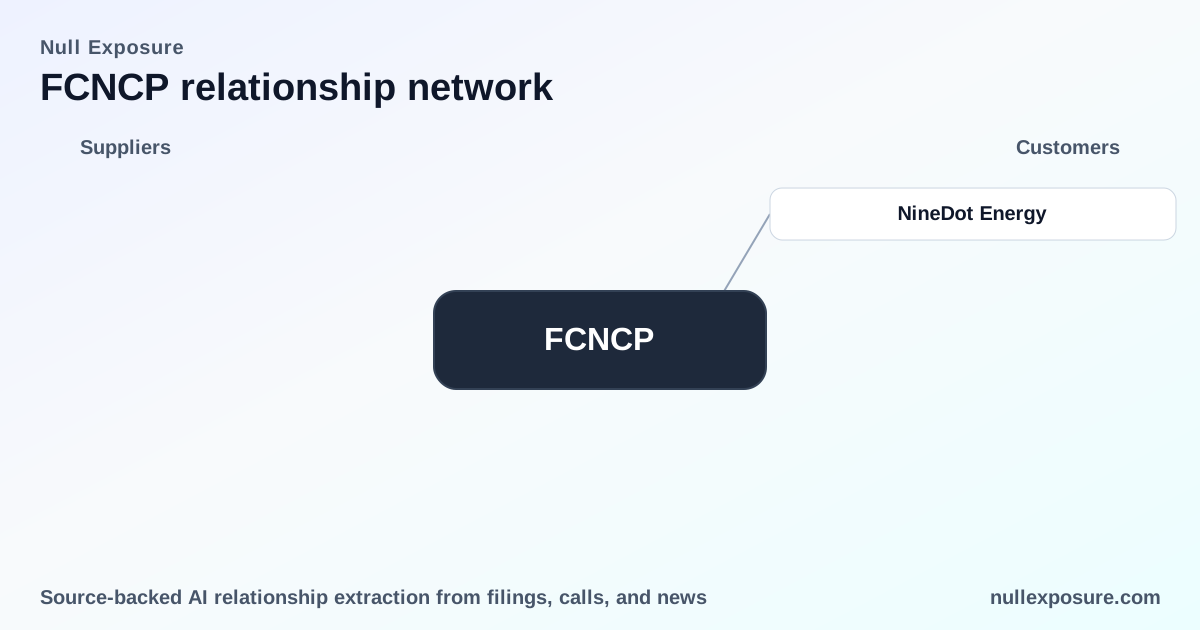
- NineDot Energy: First Citizens Bank led a lender group providing financing to support the purchase of battery energy storage system (BESS) equipment for urban projects in the New York metro area, backing roughly $65 million in support of NineDot’s buildout of up to 50 sites. This is a direct example of First Citizens executing structured project financing for mid-market energy developers, demonstrating the bank’s role as a capital provider to infrastructure-scale, asset-backed projects. (News report: ess-news, January 27, 2025 — https://www.ess-news.com/2025/01/27/new-yorks-ninedot-secures-funds-for-400-mwh-of-urban-batteries/)
What the full set of customer signals reveals about the operating model The available relationship and constraint signals create a coherent portrait of First Citizens as a diversified, service-oriented regional bank:
-
Counterparty mix is broad and intentionally diversified. The firm serves individuals, small businesses, and mid-market companies; disclosures emphasize products for consumers and a commercial bank targeting small and middle-market firms across industry verticals. This reduces single-client concentration risk while balancing retail deposit stability with higher-yielding commercial lending.
-
Geographic reach is national but regionally concentrated. The franchise operates more than 500 branches and offices with strongest presences in the Southeast, Mid-Atlantic, Midwest and Western states, including major markets like North Carolina, California, Texas and New York. That footprint supports scale in deposit gathering and commercial origination, while creating exposure to regional economic cycles.
-
Revenue is multi-modal and fee-accretive. The bank runs traditional lending, leasing and asset management; the rail leasing example in disclosures shows the company will act as lessor under full-service lease contracts (lessor responsible for maintenance) and collect rental income. This mix of interest and noninterest income improves predictability of cash flows that support preferred dividends.
-
Relationship posture is active and service-oriented. The firm functions both as a seller of financial products and a service provider — charging management and service fees to affiliates and delivering branch and digital channel services to end clients. Multiple excerpts indicate an ongoing, active relationship book rather than purely transactional origination.
-
Customer maturity and criticality skew toward established, revenue-generating clients. The bank targets small and middle-market companies and provides sophisticated products — leasing, capital markets and advisory — that are important for client operations. That creates sticky, revenue-generating relationships that deepen lifetime value.
Operational characteristics and contract posture investors should note
-
Contracting tends to be asset-backed and fee-based. Evidence of full-service leases and BESS equipment financing for energy projects shows the bank structures asset-backed financings that include servicing obligations or conservation of collateral value, lowering unsecured credit risk relative to term lending.
-
Concentration is horizontal rather than single-name. While the bank serves various industries, its geographic and sector exposures (regional retail banking plus targeted commercial verticals like energy, healthcare and technology) mean macro or sector stress could affect multiple counterparties simultaneously.
-
Criticality is medium-to-high for commercial clients. For many mid-market borrowers and leasing customers, First Citizens provides essential capital and operational services. That gives the bank pricing power on fees and an informational advantage for underwriting.
-
Maturity of relationships is high. The bank’s branch network, recurring lease portfolios and active servicing indicate long-duration customer ties rather than one-off transactions — favorable for preferred-equity cash flow stability.
Managing risk: what investors should watch in customer exposures
-
Sector lending into infrastructure and energy projects increases construction and operational risk, as demonstrated by the NineDot Energy financing; project delays or equipment cost overruns can stress sponsor credit even when loans are asset-backed.
-
Regional economic shocks can compress deposit margins and increase credit losses because the retail and commercial book is concentrated in several U.S. corridors even though national reach exists.
-
Leasing and maintenance obligations create operational liabilities; full-service leasing shifts maintenance risk to the lessor and requires robust asset management processes.
-
Counterparty mix is broad but shifting — continued growth in commercial loans or specialized asset portfolios could increase volatility if underwriting standards relax.
All relationships covered (no omissions)
- NineDot Energy — First Citizens Bank led a lender group that provided approximately $65 million to finance battery energy storage equipment purchases supporting NineDot’s NYC projects and plans for up to 50 sites. This shows First Citizens’ active role in mid-market project finance for distributed energy infrastructure. (ess-news report, January 27, 2025 — https://www.ess-news.com/2025/01/27/new-yorks-ninedot-secures-funds-for-400-mwh-of-urban-batteries/)
Investor takeaways and action points
-
For preferred-holders, the structural diversity of First Citizens’ revenue streams is supportive of preferred distributions. The combination of interest income, leasing rentals, and recurring service fees produces resilient cash flow characteristics consistent with preferred equity risk profiles.
-
Monitor asset-backed project exposure and regional loan growth. Energy and specialized leasing provide attractive yields but increase operational and construction exposure; track new financings and concentration trends in quarterly disclosures.
-
Assess funding costs and deposit behavior across the branch footprint. Regional pressure on deposits or shifts to wholesale funding would change margin dynamics and could affect distributable cash.
If you want a consolidated view of First Citizens’ customer relationships, active financings and constraint signals organized for due diligence, visit https://nullexposure.com/ for the source documents, tracking dashboards and alerting tools.
Conclusion First Citizens leverages a diversified customer base — retail depositors, small and mid-market commercial borrowers, and specialized leasing clients — to build stable, fee-accretive cash flows. The NineDot Energy relationship illustrates targeted project finance activity that increases yield but also operational complexity; investors should weigh that trade-off when evaluating FCNCP exposure.