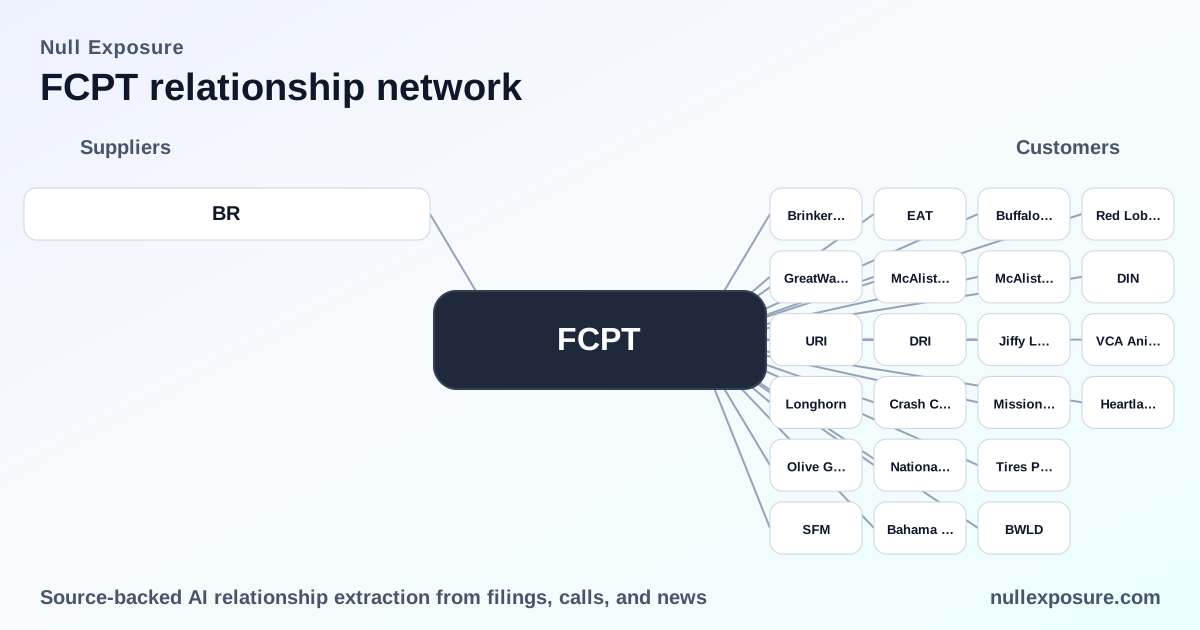
Four Corners Property Trust — tenant relationships, deal flow and investor implications
Thesis: Four Corners Property Trust (FCPT) owns and acquires single-tenant, net-leased retail and restaurant real estate and monetizes by collecting long‑term base rent under triple‑net or net leases and by executing sale‑leaseback and targeted asset purchases that plug into its stable, cash‑flow oriented REIT model. The company sources growth through opportunistic acquisitions of corporate‑operated locations across the U.S., and its underwriting centers on lease term, tenant credit and location quality. For a deeper look at tenant composition and transactional activity, visit https://nullexposure.com/.
What investors need to know up front
FCPT’s model is lease‑driven and acquisition‑led: rent from tenants generates the majority of revenue, while the balance sheet is deployed into acquisitions (including sale‑leasebacks). The 2025 Form 10‑K shows high occupancy, a weighted average remaining lease term near seven years, and concentrated exposure to large casual‑dining operators—factors that drive yield stability but also concentration risk. FCPT is an active buyer of single‑tenant assets and uses committed financing to pursue acquisitions across states in the continental U.S. (1,303 properties across 48 states as of year‑end 2025).
If you want a comprehensive, investor‑oriented summary of FCPT tenant relationships and recent acquisitions, check https://nullexposure.com/ for the underlying coverage and source links.
Operating constraints and business characteristics (how FCPT runs the business)
- Contracting posture — long‑term leases dominate. FCPT’s portfolio is underpinned by long‑term net leases (weighted average remaining lease term ~6.9 years; many assets come with multiple years of remaining term), which supports predictable cash flows and modest rent escalations. This is a company‑level signal drawn from FCPT’s FY2025 disclosures.
- Counterparty profile — national operators and large brands. The company focuses on nationally recognized restaurant, grocery and essential‑service brands, signaling preference for investment‑grade or large enterprise counterparties (company level).
- Geographic diversification within the U.S. — broad but continental. Portfolio coverage across 48 states limits single‑market concentration while keeping exposure strictly to North America (company level).
- Materiality and criticality — leasing is the core revenue engine. Leasing operations (triple/net leases) are the primary revenue source; tenant performance is therefore material to cash generation (company level).
- Active acquirer and occasional seller posture. FCPT behaves as an active buyer of assets (direct purchases and sale‑leasebacks) and can engage in equity financing mechanisms (forward sale arrangements were referenced in filings), indicating a growth posture funded by debt and capital markets (company level).
- Segment focus — restaurants, automotive service and selected medical/retail services. The portfolio remains concentrated in restaurant net leases while expanding into auto service and medical/veterinary assets (company level).
Tenant and transaction roll call — every relationship found in public filings and press coverage
Below are plain‑English summaries of every customer/tenant or operator relationship referenced in FCPT’s filings and press coverage, with source pointers.
-
Darden Restaurants (DRI / Olive Garden / Longhorn): FCPT lists Darden as its largest tenant grouping, with Darden contributing a substantial share of cash base rent and several recent acquisitions (including an Olive Garden property), and the company discussed brand conversions (Bahama Breeze) on its Q4 2025 call. Source: FCPT FY2025 Form 10‑K and Q4 2025 earnings call transcript (March 2026).
-
Brinker International / Chili’s: Brinker is disclosed as a meaningful tenant (about 6.6% of annual cash base rent in FY2025) and FCPT notes Chili’s among core anchor tenants; Brinker same‑store sales were referenced on the earnings call. Source: FCPT FY2025 Form 10‑K and Q4 2025 earnings call (filed/recorded Feb–Mar 2026).
-
GreatWater 360 Auto Care: FCPT completed multiple sale‑leaseback acquisitions of GreatWater sites (transactions reported at $1.2M, $2.3M and other small purchases) under long‑term triple‑net corporate leases. Source: multiple press items and trade coverage (Barchart, MarketScreener, SahmCapital, Mar 2026).
-
National Veterinary Associates (NVA): FCPT acquired corporate‑operated NVA veterinary properties (examples include a $4.4M California purchase) on long‑term net leases—part of the push into medical/veterinary assets. Source: SahmCapital and Investing.com press coverage (Mar–May 2026).
-
United Rentals (URI): FCPT acquired its first equipment rental asset (United Rentals) as part of portfolio diversification outside restaurants and automotive; the company referenced URI on the Q4 2025 call. Source: Q4 2025 earnings call and press reports (Mar 2026).
-
Sprouts Farmers Market (SFM / Sprouts): FCPT bought Sprouts grocery stores (an $8.6M Tennessee acquisition among others), supporting the e‑commerce resistant grocery thesis. Source: press coverage and investor news (Intellectia, Finviz, Mar 2026).
-
Olive Garden (DRI): Individual Olive Garden properties were acquired (for example, a $2.2M Illinois site) and are generally corporate‑operated under long‑term triple‑net leases. Source: Company press release covered by FinancialContent and Markets FinancialContent (Dec 2025 / Mar 2026).
-
LongHorn and Bahama Breeze: FCPT’s portfolio includes LongHorn assets and limited Bahama Breeze exposure (1.3% of base rent across 10 properties), and management discussed conversations with Darden on conversions following brand rationalization. Source: Q4 2025 earnings call transcript (Mar 2026).
-
Crash Champions: FCPT announced the acquisition of a Crash Champions collision repair property for $2.6M under a long‑term net lease. Source: MarketScreener and Zacks/TradingView coverage (Mar 2026).
-
McAlister’s Deli: FCPT acquired a newly constructed McAlister’s Deli in Michigan for $2.3M under a long‑term net lease (franchisee operated). Source: SahmCapital and Finviz press coverage (Jan–Mar 2026).
-
BluePearl Pet Hospital: FCPT purchased a BluePearl pet hospital in Colorado for $3.8M under a corporate net lease. Source: SahmCapital and Investing.com (Mar–May 2026).
-
First Watch (FWRG): FCPT acquired a First Watch restaurant (Wisconsin, $2.8M) under a corporate‑operated net lease. Source: SahmCapital and Investing.com (Mar–May 2026).
-
Carrabba’s Italian Grill (BLMN): FCPT acquired a Carrabba’s site in Florida for $3.4M under a triple‑net corporate lease. Source: The Globe and Mail / press release (Mar–May 2026).
-
VCA Animal Hospital: FCPT purchased VCA properties (examples: Michigan $3.0M and New York $5.8M) under long‑term triple‑net leases. Source: The Globe and Mail, Finviz, SahmCapital (Mar–May 2026).
-
Buffalo Wild Wings (BWLD): FCPT added Buffalo Wild Wings properties to the portfolio (e.g., $2.8M acquisition noted). Source: The Globe and Mail / TipRanks and PropNewsTime (Mar 2026).
-
Jiffy Lube: FCPT acquired a newly constructed Jiffy Lube automotive property for $2.7M. Source: Eastern Progress (Dec 2025 / Mar 2026 coverage).
-
Mission Pet Health: FCPT purchased four Mission Pet Health facilities totaling ~$9.3M across Illinois and Wisconsin under long‑term leases. Source: Eastern Progress and Finviz coverage (Mar 2026).
-
Tires Plus: FCPT bought a Tires Plus property in Georgia for $2.3M under a long‑term net lease. Source: Eastern Progress and Finviz (Mar 2026).
-
Left Lane Auto: FCPT purchased a Left Lane Auto property for $3.1M with a 15‑year triple‑net lease remaining. Source: Investing.com and SahmCapital (Apr–May 2026).
-
Panera Bread: FCPT acquired a Panera Bread site (Kentucky, $3.8M) as part of a multi‑asset tranche of purchases. Source: Investing.com and The Globe and Mail coverage (Mar–May 2026).
-
Heartland Dental: FCPT added a Heartland Dental location in Michigan for $3.3M as part of portfolio purchases. Source: Finviz press roundup (Mar 2026).
-
Red Lobster: Management referenced Red Lobster exposure on the Q4 2025 call, noting most Red Lobster sites are subject to master leases and rents were affirmed in restructuring. Source: Q4 2025 earnings call transcript (Mar 2026).
-
Applebee’s (DIN): FCPT purchased an Applebee’s property for $4.3M in California as part of acquisition activity. Source: TradingView / Zacks coverage (Mar 2026).
This roll call captures every tenant/operator relationship mentioned in FCPT public filings and press coverage through Q1–Q2 2026.
What the relationship mix implies for investors
-
Concentration risk is real and measurable. Darden represents a dominant share of base rent (~44.7% per FY2025 disclosures) and Brinker is the next largest contributor; this creates revenue concentration even as FCPT diversifies into veterinary, grocery and auto service assets. Source: FCPT FY2025 10‑K (filed Feb 2026).
-
Cash flow stability from long‑term net leases. The portfolio’s high occupancy (99.6% by area) and long‑term net leases with escalations deliver durable cash flow, but investor returns are sensitive to tenant credit and brand shifts (company level disclosures).
-
Strategic diversification into e‑commerce‑resistant and essential services. Recent buys in grocery, veterinary and auto service reduce pure casual‑dining exposure and improve resilience to retail disruption—an intentional shift reflected in press coverage and management commentary (Mar–May 2026).
-
Active capital deployment and financing posture. FCPT is executing frequent acquisitions and using term loans and other financing tools to fund growth, indicating a growth‑oriented REIT that balances yield accretion with leverage discipline (company and press reports Apr 2026).
Bottom line
FCPT’s model delivers predictable rent flows from long‑dated, triple/net leases while management actively acquires corporate‑operated assets to grow income and diversify tenant mix. The primary risk for investors is concentration in large casual‑dining operators, offset by an observable pivot into veterinary, grocery and auto service assets that strengthen resilience. For investor tools, deeper source links and a consolidated relationship map are available at https://nullexposure.com/.