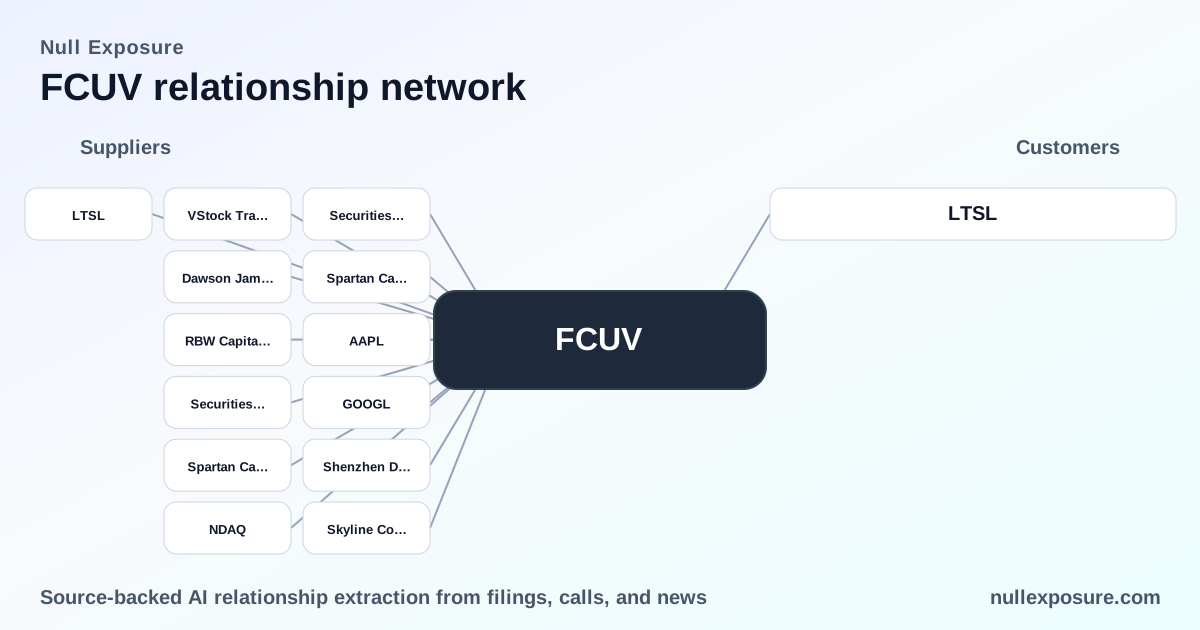
Focus Universal (FCUV) — customer signals and what they mean for investors
Focus Universal develops smart instrumentation platforms and devices and monetizes through hardware product sales, an increasingly explicit SaaS commercialization pathway, and installed-services revenue (LED and IoT installation and management). The company distributes devices through reseller and distributor channels while also running installation and integration services, creating a blended revenue mix that combines one‑time hardware receipts with recurring subscription potential. For direct access to the aggregated customer intelligence behind this note, visit https://nullexposure.com/.
How Focus Universal goes to market and how that shapes revenue
Focus Universal runs a hybrid go‑to‑market model. The company manufactures patented hardware for IoT and 5G use cases and concurrently operates an installation/services segment that handles LED, audio/video and IoT deployments. Company disclosures state: “We intend to commercialize this product under a software as a service (SaaS) model,” indicating management’s strategic pivot toward subscription monetization while continuing to sell hardware through distributors and resellers. The firm’s latest reported TTM revenue is $255,020 with negative gross profit and operating margins, and a market capitalization around $1.9 million—small scale with stretched profitability.
- Commercial prism: hardware sales generate upfront cash flow; SaaS introduces recurring revenue and higher margin potential over time.
- Channel influence: resale and distribution relationships accelerate reach but introduce dependency on partners for scale.
- Financial posture: current financials reflect early commercial stage — low revenue, negative margins, and concentrated customer receipts.
What public signals say about customer relationships
The public relationship signals for FCUV in our review are limited but directionally useful. Below we cover the relationship entries surfaced in public media and filings.
Ladenburg Thalmann (LTSL)
Focus Universal announced a sales agreement with Ladenburg Thalmann and participation in Ladenburg Thalmann’s Technology Innovation EXPO25, with the company noting the agreement on September 22, 2025. This is reported in a Marketscreener news posting that references the sales agreement and the EXPO participation during FY2025. Source: Marketscreener, news item reporting Focus Universal’s Sept. 22, 2025 sales agreement and EXPO participation (published on MarketScreener; first seen Mar 2026).
Note: the public feed contains two identical market‑news hits referencing the same Ladenburg Thalmann item; both entries point to the same Marketscreener story about the sales agreement and event participation (MarketScreener, FY2025/Sept. 22 item).
Constraints and what they indicate about operating risk and upside
The corpus of company disclosures and public excerpts generates several company‑level signals that shape both valuation upside and downside risk. Presenting them as company signals (not attributed to any single customer unless the excerpt names it):
-
Contracting posture — subscription orientation (high confidence): management explicitly says it will commercialize products under a SaaS model, indicating a strategic shift toward recurring revenue streams that change lifetime value dynamics and reduce reliance on one‑off hardware sales. Evidence: company statement “We intend to commercialize this product under a software as a service (SaaS) model.”
-
Channel strategy — distributor / reseller reliance: excerpts state the company will “sell them to a major U.S. distributor” and “distribute our Ubiquitor devices to distributors and retailers directly,” signalling a channel-dependent sales motion that increases route‑to‑market efficiency but also concentrates commercial execution through third parties.
-
Counterparty profile — large enterprise channeling (material signal): an excerpt references selling via a “major U.S. distributor,” suggesting engagement with large enterprise distributors rather than only direct SMB sales; that changes both collection and scaling dynamics.
-
Geographic footprint — North America focus with European exposure: company disclosures say “substantially all revenue and long‑lived assets are attributable to operations in the United States” while other material references indicate product sale activity in North America and Europe, creating a primary NA focus with some EMEA activity noted.
-
Customer economics — low per‑customer spend concentration: disclosed customer line items show multiple customers with receipts in the tens of thousands (Customer A $83,548; Customer B $69,325; etc.), which we group in a sub‑$100k per‑customer spend band; this suggests current revenue is generated from a small number of modest‑size contracts rather than a broad base of large enterprise deals.
-
Materiality / audit sensitivity — critical one‑off transactions: the company identified recognition of a gain on sale of assets as a critical audit matter, which implies that individual transactions (sale/leaseback or similar) have outsized accounting and operational impact on the reported results.
-
Business segments — hardware plus services: excerpts confirm Focus Universal markets both patented hardware and installation/managed services, thereby blending product and service economics.
Taken together, these signals describe a company with early-stage recurring revenue intent, channel dependencies, concentrated per-customer economics, and audit-sensitive transactions—a profile that increases execution risk but also offers leverage if SaaS conversion and channel scale succeed.
What these relationships mean for investors and operators
-
Revenue visibility is currently limited. With TTM revenue of roughly $255k and a handful of customers contributing tens of thousands each, revenue concentration and low absolute scale mean quarter‑to‑quarter results hinge on a small number of sales or transactional events (company disclosures).
-
Channel partnerships are a force multiplier but introduce dependency. The sales agreement with Ladenburg Thalmann is strategically consistent with a distributor/reseller go‑to‑market approach; distribution deals can drive scale rapidly but also create margin pressure and dependence on partner performance (MarketScreener, Sept. 22, 2025).
-
SaaS transition changes valuation calculus. If the company successfully converts hardware customers to subscription contracts, lifetime revenues per customer could rise materially; however, that outcome requires both product maturity and effective channel incentivization (company statement on SaaS commercialization).
-
Accounting and one‑off transactions matter. The company’s identification of a critical audit matter tied to a gain‑on‑sale event means investors should treat reported profits or large one‑time gains as potentially nonrecurring and under close audit scrutiny (company audit disclosures).
If you evaluate customer exposure and partner risk as part of investment diligence, the combined picture is clear: small revenue base, distributor/reseller channeling, early SaaS pivot, and audit‑sensitive transactions. For a deeper, consolidated view of channel and customer signals on FCUV, see our platform at https://nullexposure.com/.
Bottom line: risk/reward in a small, pivoting business
Focus Universal is a micro‑cap hardware-and-services company pursuing a transition to subscription monetization while leveraging distributor and reseller channels. Upside depends on successful SaaS adoption and channel execution; downside is concentrated revenue, negative margins and accounting sensitivity. Investors should prioritize diligence on partner performance clauses, contract terms (upfront hardware vs. recurring SaaS revenue), and the recurrence of any reported gains.
For further reading and consolidated customer intelligence on FCUV and comparable small-cap technology issuers, explore https://nullexposure.com/.