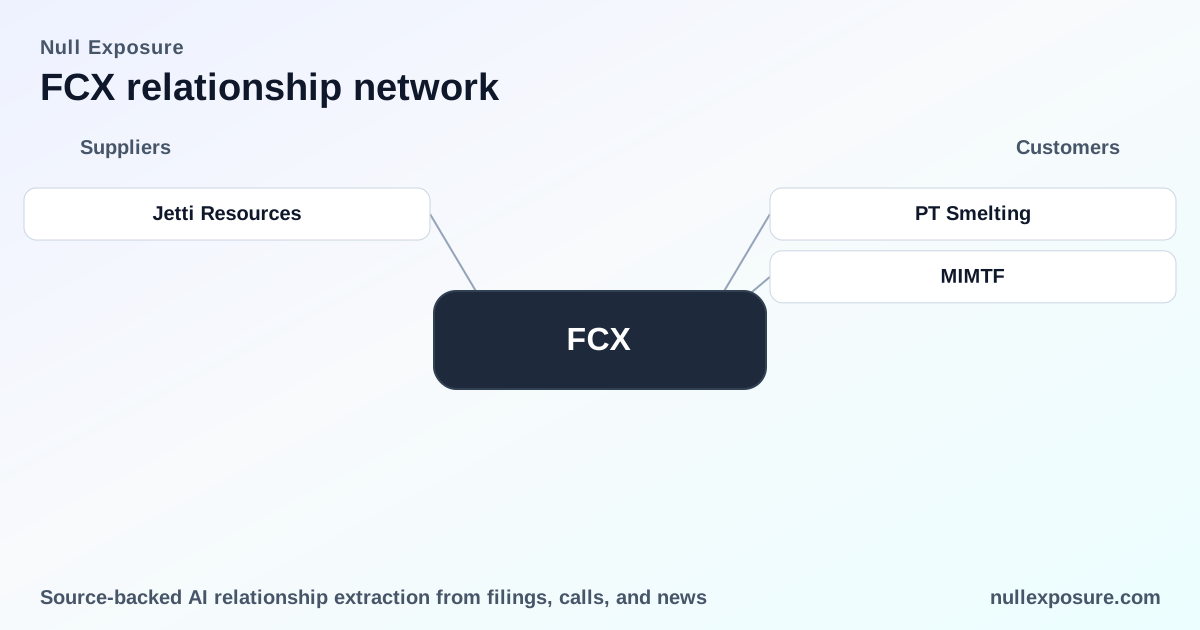
Freeport‑McMoRan customer map: smelters, JV counterparties and what they mean for investors
Freeport‑McMoRan monetizes its asset base by producing and selling refined copper, gold and molybdenum and by offering processing services (tolling) where customers deliver ore or concentrates to Freeport facilities for conversion into finished metal; revenue is recognized at shipment with embedded pricing mechanics tied to LME/COMEX and London gold prices. The company generates operating leverage from integrated mining‑to‑metal flows while retaining counterparty exposure through joint ventures and tolling arrangements that concentrate revenue in a few large industrial buyers. For a concise view of commercial counterparties and risk signals, see https://nullexposure.com/.
Quick read for investors: the core commercial picture
Freeport is both a primary seller of mined metal and an occasional service provider under tolling arrangements. The 2025 Form 10‑K shows a mixed contracting posture — long‑term dollar‑denominated contracts for concentrate sales, supplemented by spot and short‑term structures and tolling agreements that generate fee income. This dual role compresses some transactional risk (processing fees versus finished metal price exposure) but concentrates counterparty credit risk where large buyers or JV partners account for a material share of revenues.
Customer relationships: PT Smelting and Mitsubishi Materials
PT Smelting — tolling counterparty and processing destination
PT Smelting is identified in the 2025 10‑K as the recipient of tolling arrangements where the tolling customer delivers copper‑bearing material to Freeport’s facilities for processing; Freeport returns the processed product to the customer and charges for the service. This establishes PT Smelting as a processing counterparty rather than a pure purchaser of product, with cash flows tied to processing fees and throughput, according to the company’s 2025 Form 10‑K (filed in February 2026).
Source: Freeport‑McMoRan 2025 Form 10‑K (PT Smelting toll arrangements), filed Feb 2026.
Mitsubishi Materials Corporation (MIMTF) — revenue concentration and JV partner
Mitsubishi Materials Corporation is disclosed in the 2025 10‑K as the only customer that accounted for 10% or more of consolidated revenues for the three years ended December 31, 2025; the filing also notes Mitsubishi is the joint‑venture partner in PT Smelting, the 66%‑owned copper smelter and refinery. This makes Mitsubishi both a strategic JV counterparty and a material commercial buyer, a combination that creates concentrated counterparty and strategic exposure, as detailed in Freeport’s 2025 annual filing.
Source: Freeport‑McMoRan 2025 Form 10‑K (customer concentration disclosure on Mitsubishi Materials), filed Feb 2026.
How Freeport contracts, where revenue sits, and what that implies
The company disclosure and extracted constraints signal a multi‑layered commercial model:
- Contracting posture: Freeport operates under a blend of contractual forms. The company notes historically selling concentrate under U.S. dollar‑denominated, long‑term contracts, while also transacting spot sales and short‑term provisional contracts that embed pricing derivatives settled after delivery. These modalities influence revenue volatility and working capital timing (company disclosure in the 2025 10‑K).
- Commercial concentration: Public filings identify Mitsubishi Materials as a single counterparty reaching the 10% revenue threshold in 2024, a clear concentration that raises counterparty‑credit and negotiation risk for pricing and JV governance.
- Role diversity and criticality: Freeport is primarily a seller of refined metals (copper, gold, molybdenum) and also a service provider through tolling—processing third‑party material for a fee. Tolling relationships give Freeport operational criticality as a processor of raw material flows and can produce fee revenue that is less correlated with spot metal prices, but also creates reliance on throughput volumes and JV availability.
- Geographic footprint: Revenue attribution in the filing shows meaningful international distribution (U.S., Japan, Switzerland and Latin American sourcing for concentrate), indicating that commercial exposure is both global and concentrated in industrial markets such as Japan and Switzerland (2025 Form 10‑K revenue by country).
Collectively, these characteristics produce a commercial profile with material revenue cyclicality from commodity prices, localized counterparty concentration, and operational dependency on processing assets and JV arrangements.
Investment implications: risk, runway and what to monitor
For investors evaluating Freeport’s customer relationships and commercial risk:
- Concentration is the principal credit risk. Mitsubishi Materials’ status as a >=10% customer coupled with its JV position in PT Smelting creates a single‑counterparty vector that can affect pricing, offtake and throughput negotiations.
- Pricing mechanics add operational volatility. The company invoices at shipment but settles on LME/COMEX and London prices embedded in provisional contracts; that introduces embedded derivative exposure and working capital compression in softer markets.
- Tolling is a stabilizer — with caveats. Tolling fees diversify revenue away from commodity prices, but they require steady throughput and are dependent on JV and third‑party sourcing agreements.
- Geographic and market mix matters. Revenue attributed to Japan and Switzerland and concentrate sourcing from multiple regions provide diversification, but also expose the business to geopolitical, FX and regional demand shifts.
Practical monitoring checklist for investors: track JV contract terms and throughput at PT Smelting, quarterly disclosures on sales by region and top customers, the mix of spot versus long‑term sales, and changes to embedded derivative accounting that affect cash collection timing.
Bottom line and action items
Freeport’s commercial model combines commodity sales with fee‑based processing and a small number of large counterparties. That hybrid structure delivers strong operating leverage when metal prices are favorable but concentrates governance and cash‑flow risk in a few strategic relationships, notably Mitsubishi Materials and PT Smelting. For a centralized view of customer concentration and counterparty risk mapping, visit https://nullexposure.com/ for further analysis and tools.
Key takeaways:
- Material concentration (Mitsubishi Materials) elevates counterparty and negotiation risk.
- Mixed contracting (long‑term, short‑term, spot and tolling) creates a predictable backbone with episodic pricing volatility.
- Operational criticality of processing assets makes JV and tolling dynamics essential to revenue stability.
For investors and operators, the priority is governance visibility on JV terms and active monitoring of contract mix and tolling throughput rather than only headline production metrics.