4D Molecular Therapeutics (FDMT): How partnerships drive value and fund clinical inflection points
4D Molecular Therapeutics develops adeno-associated virus (AAV) vectors and advances gene therapies through clinical programs that it selectively licenses and co-develops with strategic partners. The company monetizes primarily through licensing and collaboration agreements that deliver meaningful upfront cash, cost‑sharing and milestone income, while retaining upside from later commercialization or opt‑in programs. For investors, the key signal is that partnerships—not product sales—are the principal near-term value drivers and runway anchors for FDMT. Visit https://nullexposure.com/ for additional coverage and comparative relationship analytics.
What the recent customer/partner signals show
Below I catalogue each relationship mention pulled from the coverage set and summarize what it contributes to 4DMT’s financial and operational profile.
-
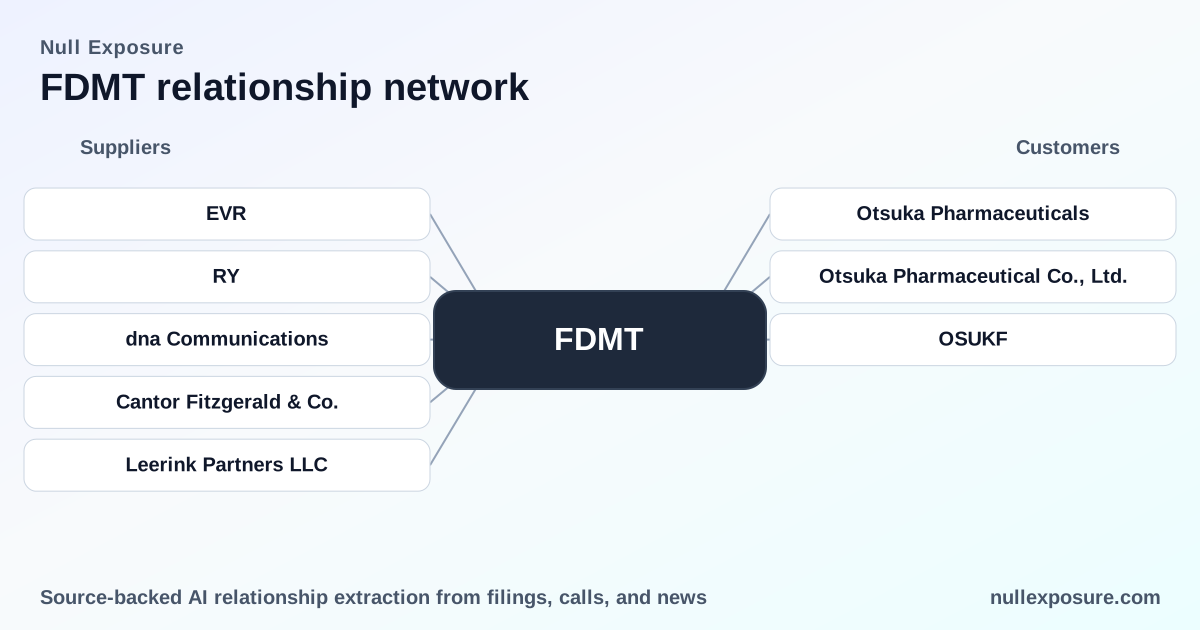
Otsuka Pharmaceuticals — AD‑hoc News (March 9, 2026): The report highlights a partnership with Otsuka for development and commercialization of 4D‑150 in the Asia‑Pacific region that provided upfront payments and commits to potential milestone payments, signaling immediate non‑dilutive funding and commercial support in APAC. (Source: AD‑hoc News summary, March 9, 2026: https://www.ad-hoc-news.de/boerse/news/ueberblick/4d-molecular-therapeutics-gains-momentum-from-clinical-data-and-index/68432013)
-
Otsuka Pharmaceutical Co., Ltd. — GlobeNewswire (March 18, 2026): The company’s full‑year 2025 results press release formally records a “strategic partnership” with Otsuka for 4D‑150 in the Asia‑Pacific region, establishing the collaboration as a disclosed corporate milestone and part of 4DMT’s FY2026 narrative. (Source: GlobeNewswire press release, March 18, 2026: https://www.globenewswire.com/news-release/2026/03/18/3258582/0/en/4dmt-reports-full-year-2025-financial-results-operational-highlights-and-expected-upcoming-milestones.html)
-
Otsuka Pharmaceutical Co., Ltd. — GlobeNewswire (duplicate capture, March 18, 2026): A second capture of the same FY2026 release reiterates the strategic partnership language, confirming consistent messaging across investor‑facing communications. (Source: GlobeNewswire press release, March 18, 2026: https://www.globenewswire.com/news-release/2026/03/18/3258582/0/en/4DMT-Reports-Full-Year-2025-Financial-Results-Operational-Highlights-and-Expected-Upcoming-Milestones.html)
-
Otsuka Pharmaceutical Co., Ltd. — GlobeNewswire (November 10, 2025): The Q3 2025 financial filing and operational highlights disclosed that 4DMT entered a strategic APAC partnership with Otsuka that included $85 million in upfront cash and an expectation to receive at least $50 million in cost sharing, directly bolstering liquidity. (Source: GlobeNewswire Q3 2025 results, Nov 10, 2025: https://www.globenewswire.com/news-release/2025/11/10/3184478/0/en/4DMT-Reports-Third-Quarter-2025-Financial-Results-Operational-Highlights-and-Expected-Upcoming-Milestones.html)
-
OSUKF (inferred / market commentary) — Intellectia.ai (March 9, 2026): An analyst note captured by Intellectia cites 4DMT’s cash position of $372M and states that the APAC deal with Otsuka plus recent capital raises should extend runway by roughly six months into H2 FY2028, specifically funding wAMD and DME pivotal trials. This frames the Otsuka cash as determinative for near‑term program funding. (Source: Intellectia.ai article, March 9, 2026: https://intellectia.ai/news/stock/4d-molecular-therapeutics-grants-23600-rsus-to-new-employees)
-
Otsuka (market commentary duplicate) — Intellectia.ai (March 9, 2026): The same Intellectia coverage repeats the runway analysis and ties the Otsuka APAC payment to an extension of operational runway, reinforcing the market’s interpretation that the partnership materially de‑risks upcoming clinical milestones. (Source: Intellectia.ai article, March 9, 2026: https://intellectia.ai/news/stock/4d-molecular-therapeutics-grants-23600-rsus-to-new-employees)
Why these relationships matter to investors: revenue, runway and commercialization pathways
The body of evidence makes the commercial thesis explicit: 4DMT’s near‑term valuation catalysts are partnership milestones and allied funding. The Otsuka APAC agreement is a classic life‑science de‑risking event—large upfront cash, cost sharing for development, and staged milestone payments—which converts program risk into a quantifiable funding runway and gives 4DMT access to Otsuka’s regional commercialization capabilities.
- Revenue profile: Material non‑dilutive cash flows will come from upfront payments and cost sharing rather than product sales in the short term. The reported $85M upfront is the single largest discrete cash item disclosed in recent filings and press releases.
- Runway implications: Analyst commentary captured in market coverage ties the Otsuka funds and recent financing to a runway extension into the second half of FY2028, which directly funds pivotal programs for wet AMD and DME.
- Commercial strategy: Partnering with a large regional pharmaceutical company for APAC commercialization accelerates market access while letting 4DMT concentrate capital on development and vector innovation.
Company‑level constraints and operating model signals
Corporate disclosures and historical agreements reveal structural aspects of 4DMT’s business model. These are company‑level signals — not relationship‑specific assertions unless the contract text names the counterparty.
- Licensing as the core contracting posture. Company filings document multiple licensing agreements and collaboration arrangements where 4DMT acts as licensor of its vectors and platform capabilities. This indicates a strategic preference for monetizing IP via partner‑led product development and commercialization rather than immediate internal commercialization.
- Licensor role predominates. Multiple historical agreements (e.g., licensing arrangements disclosed in corporate filings) show 4DMT supplying vector technology under exclusive or program‑specific licenses, which positions the company as an upstream technology vendor with downstream commercial partners.
- Non‑profit funding participation. Filings reference awards and development program support from a non‑profit (Cystic Fibrosis Foundation) for specific research programs, signaling a mixed funding model that includes grants and philanthropy for early science.
- Geographic strategy vs. historical revenue concentration. Management states a global commercialization intent, but financial disclosures show revenues historically earned in the U.S., creating a transitional execution risk as the company scales internationally through partners.
- Maturity and concentration. Licensing relationships dating back to 2014—and more recent landmark deals—illustrate a mature, partner‑centric go‑to‑market approach; at the same time, the company’s cash profile is sensitive to the cadence and size of large partner agreements, creating concentration risk around a handful of deals.
Headline takeaways and investor considerations
- Partnerships drive liquidity and de‑risk clinical timelines. The Otsuka APAC agreement is material to cash flow and pivotal study funding. (See GlobeNewswire Nov 10, 2025 and Mar 18, 2026 releases.)
- Licensing model compresses near‑term upside but lowers burn. Expect revenue timing to be lumpy and tied to discrete licensing events and milestones rather than recurring product revenue.
- Concentration risk is real. A small number of large partnerships provide most near‑term financing; failure to close additional deals or realize milestones would materially alter runway assumptions.
- Geographic expansion is partner‑dependent. Global commercialization ambitions are likely to be executed through strategic partners with regional capabilities rather than solo rollout.
- Monitor tranche timing and milestone triggers. Investor returns hinge on milestone realization and on whether partners exercise options or advance commercialization.
For a systematic view of partner economics and to benchmark FDMT’s relationship structure against peers, visit https://nullexposure.com/.
Final assessment
4D Molecular Therapeutics is a platform‑led gene therapy developer that deploys licensing and strategic partnerships as its primary monetization engine. The Otsuka APAC deal represents the most consequential commercial relationship disclosed in the recent record, delivering upfront capital and cost‑sharing that materially extend runway and fund pivotal programs. Investors should trade around milestone delivery and partner option activity: the upside is concentrated and conditional, while downside risk is tied to partnership cadence and clinical execution.