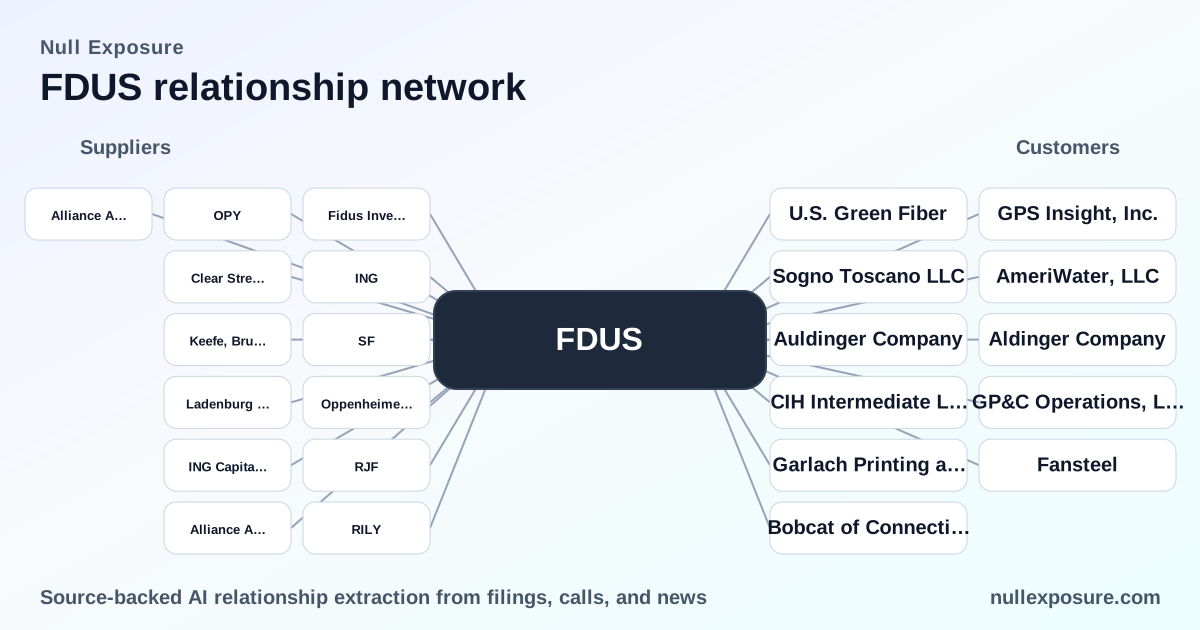
Fidus Investment Corp (FDUS): Portfolio relationships and what they signal for investors
Fidus Investment Corp is a publicly traded business development company that originates and holds customized first‑lien and subordinated loans, plus selective equity stakes, to lower middle‑market U.S. companies; it monetizes through coupon income, prepayment and exit proceeds, and realized gains on equity dispositions while operating as a regulated investment company that pays out income as dividends. The strategy emphasizes multi‑year, income-oriented credit exposure to companies with $10–$150 million of revenue, and selective equity upside, creating a predictable yield profile with episodic realized gains and losses.
Learn more and monitor coverage at https://nullexposure.com/.
Why the deal list matters to investors
Fidus’ recent disclosures show active portfolio rebalancing across services, distribution and software businesses with investment sizes clustering in the $5–$25 million first‑lien band and selective preferred/common equity stakes. That profile supports a thesis of steady interest income with moderate concentration risk and periodic mark-to-market volatility driven by exits and select credit events.
Key operating signals: long‑term loan tenor (typically five to seven years), predominately mid‑market counterparties, U.S. geographic focus, and an average active investment at amortized cost around $12.4 million — all of which support a conservative middle‑market lending posture with active portfolio management.
Deal‑by‑deal run‑through (every disclosed relationship)
U.S. Green Fiber — realized debt loss, FY2026
Fidus recorded approximately $1.5 million of net realized losses from the exit of its debt investments in U.S. Green Fiber during the quarter ended December 31, 2025. Source: Fidus’ Q4/FY2025 earnings call transcript published March 9, 2026 (InsiderMonkey).
CIH Intermediate, LLC — equity exit realized gain, FY2026
Fidus exited its preferred and common equity in CIH Intermediate, LLC and recognized a realized gain of about $3.4 million on a distribution received on January 30, 2026. Source: Fidus fourth‑quarter and full‑year 2025 results (GlobeNewswire, Feb 26, 2026).
Gap Intelligence Acquisition, LLC (dba OpenBrand) — first‑lien loan and preferred equity, FY2026
On January 28, 2026, Fidus invested $6.0 million of first‑lien debt and $1.0 million of preferred equity in OpenBrand, a market intelligence platform serving consumer durables manufacturers and retailers. Source: Fidus fourth‑quarter and full‑year 2025 results (GlobeNewswire, Feb 26, 2026).
GPS Insight, Inc. — large first‑lien exposure, FY2026
Fidus invested $23.2 million in first‑lien debt in GPS Insight, a fleet management software provider, reflecting a sizable credit commitment to a recurring‑revenue software platform. Source: Fidus fourth‑quarter and full‑year 2025 results (GlobeNewswire, Feb 26, 2026).
KG Lawn Care, Inc. (dba King Green) — first‑lien loan plus equity and commitments, FY2026
Fidus provided $10.0 million of first‑lien debt, $0.5 million of common equity and committed up to $2.5 million additional first‑lien capacity to King Green, a regional lawn care and pest control services platform. Source: Fidus fourth‑quarter and full‑year 2025 results (GlobeNewswire, Feb 26, 2026).
PIPCO, LLC — first‑lien, preferred equity and revolving facility, FY2026
Fidus invested $9.0 million in first‑lien debt, $0.8 million in preferred equity and committed up to $3.0 million in a revolving loan in PIPCO, a commercial fire protection and MEP services provider. Source: Fidus fourth‑quarter and full‑year 2025 results (GlobeNewswire, Feb 26, 2026).
Sales Rabbit, Inc. — first‑lien loan, FY2026
Fidus invested $22.8 million in first‑lien debt in Sales Rabbit, a “business‑in‑a‑box” software provider targeting roofing and other verticals. Source: Fidus fourth‑quarter and full‑year 2025 results (GlobeNewswire, Feb 26, 2026).
VMS MSO, LLC (dba NOMS Healthcare) — first‑lien loan with revolver commitment, FY2026
Fidus provided $15.0 million of first‑lien debt and committed up to $1.5 million in a revolving loan to NOMS Healthcare, which supplies administrative and operational support to independent physician practices. Source: Fidus fourth‑quarter and full‑year 2025 results (GlobeNewswire, Feb 26, 2026).
Waterworks Solutions Acquisition, Inc. (dba CITCO Water) — first‑lien debt with additional capacity, FY2026
Fidus invested $16.0 million of first‑lien debt and committed up to an extra $3.5 million in first‑lien funding in CITCO Water, a value‑added distributor to municipalities and contractors in the waterworks industry. Source: Fidus fourth‑quarter and full‑year 2025 results (GlobeNewswire, Feb 26, 2026).
Auldinger Company — equity exit realized gain, FY2026
Fidus recognized realized gains on the sale of its equity investment in Auldinger Company that partially offset other realized losses in the quarter ended December 31, 2025. Source: Q4/FY2025 earnings call transcript (InsiderMonkey, March 9, 2026).
CIH Intermediate LLC — subsequent investment and realized gain noted in call, FY2026
Fidus’ earnings call noted a $3.4 million gain on exit of CIH Intermediate LLC and referenced additional investment activity including a $7.0 million new portfolio commitment after quarter end. Source: Q4/FY2025 earnings call transcript (InsiderMonkey, March 9, 2026).
Garlach Printing and Converting — equity exit realized gain, FY2026
Proceeds from the sale of equity in Garlach Printing and Converting produced realized gains that partially offset other exits in Q4 2025. Source: Q4/FY2025 earnings call transcript (InsiderMonkey, March 9, 2026).
Bobcat of Connecticut, LLC — equipment dealer financing, FY2025
On October 1, 2025, Fidus invested $16.0 million in first‑lien debt, $1.0 million in common equity and committed up to $0.3 million more in common equity in the regional equipment dealer Bobcat of Connecticut. Source: Fidus third‑quarter 2025 financial results (GlobeNewswire, Nov 6, 2025).
GPS Insight, Inc. — first‑lien debt, FY2025 disclosure
An earlier disclosure dated October 17, 2025 shows the $23.2 million first‑lien investment in GPS Insight, confirming this is a staged, material credit position across reporting periods. Source: Fidus third‑quarter 2025 financial results (GlobeNewswire, Nov 6, 2025).
Sogno Toscano LLC — food distributor capital structure financing, FY2025
Fidus invested $8.5 million in first‑lien debt and $4.3 million in preferred equity in Sogno Toscano, a single‑brand Italian food distributor serving food service. Source: Fidus third‑quarter 2025 financial results (GlobeNewswire, Nov 6, 2025).
Air Burners, Inc. — manufacturing first‑lien plus equity, FY2026
Fidus invested $6.4 million of first‑lien debt, $0.8 million in common equity and committed additional common equity capacity in Air Burners, a maker of onsite vegetative waste processing equipment. Source: Fidus fourth‑quarter and full‑year 2025 results (GlobeNewswire, Feb 26, 2026).
Bobcat of Connecticut, LLC — reaffirmed FY2026 disclosure of same commitment
Fidus’ FY2026 release reiterates the $16.0 million first‑lien and $1.0 million common equity commitment to Bobcat of Connecticut, underlining continuity in the position. Source: Fidus fourth‑quarter and full‑year 2025 results (GlobeNewswire, Feb 26, 2026).
E‑PlanSoft Buyer, LLC (dba e‑PlanSoft) — software platform financing, FY2025
Fidus invested $8.0 million in first‑lien debt and $1.5 million in preferred equity in e‑PlanSoft, a vendor of electronic plan review solutions for permitting agencies. Source: Fidus second‑quarter 2025 financial results (GlobeNewswire, Aug 7, 2025).
Laboratory Testing, LLC — testing & calibration financing with revolver, FY2025
Fidus invested $5.0 million in first‑lien debt, $0.4 million in preferred equity and $0.4 million in common equity, alongside up to $4.0 million in a revolving loan commitment in Laboratory Testing. Source: Fidus second‑quarter 2025 financial results (GlobeNewswire, Aug 7, 2025).
PowerGrid Services Acquisition, LLC — equity exit realized gain, FY2025
Fidus received a distribution on its common equity in PowerGrid Services that generated a realized gain of $0.9 million on July 2, 2025. Source: Fidus second‑quarter 2025 financial results (GlobeNewswire, Aug 7, 2025).
Pronto Plumbing & Drain, Inc. — small first‑lien and equity package, FY2025
Fidus committed $1.5 million of first‑lien debt, $0.6 million of common equity and up to $0.5 million of revolving capacity to Pronto Plumbing & Drain. Source: Fidus second‑quarter 2025 financial results (GlobeNewswire, Aug 7, 2025).
Sogno Toscano, LLC — reiterated FY2025 investment disclosure
An additional FY2025 disclosure confirms the $8.5 million first‑lien and $4.3 million preferred equity placement in Sogno Toscano. Source: Fidus second‑quarter 2025 financial results (GlobeNewswire, Aug 7, 2025).
True Environmental Inc. — sizable first‑lien in environmental services, FY2025
Fidus invested $20.0 million in first‑lien debt, $0.5 million in common equity and committed up to $3.4 million additional first‑lien capacity in True Environmental. Source: Fidus second‑quarter 2025 financial results (GlobeNewswire, Aug 7, 2025).
Aldinger Company — equity exit realized gain, FY2025
Fidus exited preferred and common equity in Aldinger Company on October 20, 2025 and realized approximately $2.3 million of gains. Source: Fidus third‑quarter 2025 financial results (GlobeNewswire, Nov 6, 2025).
AmeriWater, LLC — subordinated debt repaid in full, FY2025
Fidus exited its subordinated debt investment in AmeriWater on October 24, 2025 and received payment in full of $2.5 million. Source: Fidus third‑quarter 2025 financial results (GlobeNewswire, Nov 6, 2025).
Choice Technology Solutions, LLC (dba Choice Merchant Solutions) — exit with prepayment fee, FY2025
Fidus received $10.6 million payment in full on a first‑lien loan (including a prepayment fee) and recorded a $0.5 million loss on preferred equity distribution when exiting Choice Merchant Solutions on July 30, 2025. Source: Fidus second‑quarter 2025 financial results (GlobeNewswire, Aug 7, 2025).
GP&C Operations, LLC (dba Garlock Printing and Converting) — equity exit realized gain, FY2025
On October 22, 2025 Fidus exited its common equity in GP&C Operations and received a distribution that produced a roughly $0.6 million realized gain. Source: Fidus third‑quarter 2025 financial results (GlobeNewswire, Nov 6, 2025).
Fansteel — concentrated position note, FY2026
Management disclosed that Fansteel represented roughly 3% of portfolio value and has been a long‑held position, indicating a repeatable concentration level across legacy credits. Source: Q4/FY2025 earnings call transcript (InsiderMonkey, March 9, 2026).
What the contract signals and portfolio characteristics imply for investors
- Contracting posture: Fidus predominantly structures multi‑year (5–7 year) loans with fixed or variable interest, supporting stable accrual income and potential duration sensitivity in a shifting rate environment. This is a company‑level operating signal derived from management disclosures.
- Counterparty profile and geography: Investments target U.S. lower middle‑market companies (revenues $10–$150M) with small exposure to Canada, consistent with a focused domestic mid‑market lending strategy.
- Concentration and materiality: The firm reports no portfolio company exceeding 10% of portfolio fair value, suggesting diversified mid‑market exposure rather than single‑name concentration, although individual commitments like GPS Insight and Sales Rabbit are sizable versus the average investment.
- Role and stage: Fidus acts primarily as credit provider and occasional equity co‑investor, with the portfolio described as active across ~87 active companies at year‑end, indicating ongoing deal activity and realization cadence.
- Spend band and maturity: The average active investment at amortized cost (~$12.4M) and multiple mid‑teens commitments show typical deal sizes in the $10M–$100M band, consistent with the company’s stated target.
Investor takeaway: Fidus offers a yield‑oriented exposure to diversified mid‑market credits with selective equity upside, balanced by active portfolio management and episodic realized gains/losses. Monitor large first‑lien commitments (e.g., GPS Insight, Sales Rabbit) and realized exit activity for short‑term earnings volatility.
For ongoing coverage and relationship monitoring visit https://nullexposure.com/.