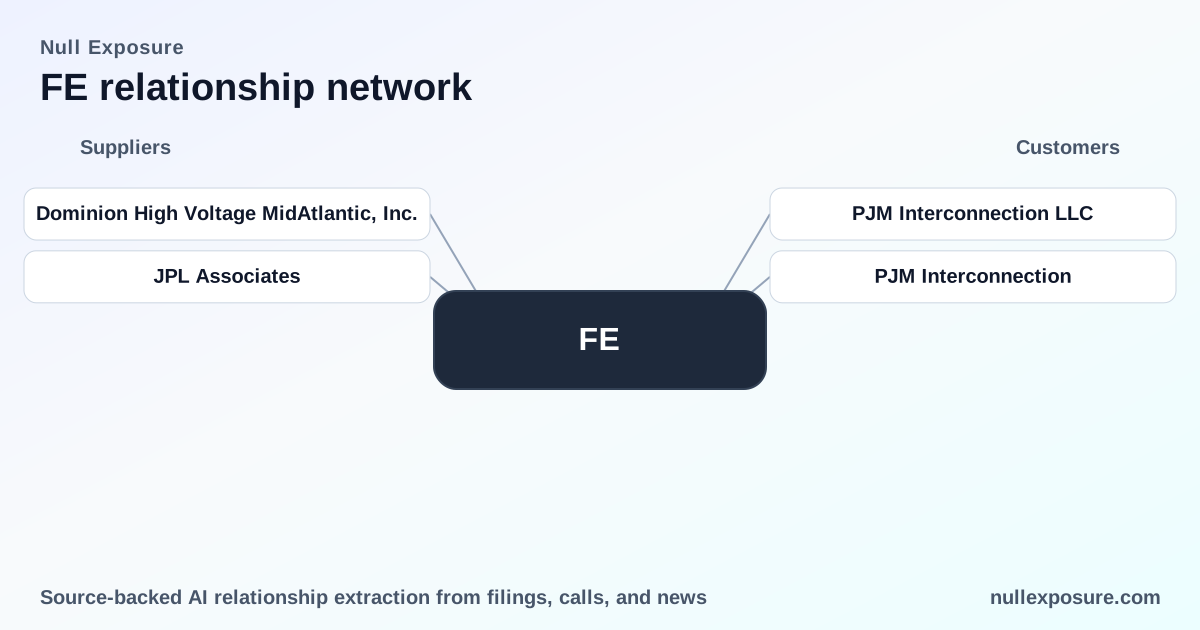
FirstEnergy (FE): Customer relationships that drive a regulated utility cash machine
FirstEnergy operates and monetizes through regulated electricity transmission, distribution and generation businesses across the U.S. Midwest and Mid‑Atlantic. The company earns stable, tariff‑based revenue from millions of retail customers and formula‑rate transmission recoveries, supplemented by regulated generation sales and contracted transmission projects; capital investment and rate filings translate infrastructure spending into a predictable cash flow profile. For investors evaluating counterparty exposure and service dependencies, the company’s customer relationships are dominated by state‑regulated retail load and grid operators that commission transmission projects—relationships that are large in scale, operationally critical, and contractually anchored in regulated frameworks. Learn more at https://nullexposure.com/.
The customer footprint in plain terms: size, scope, and commercial posture
FirstEnergy runs one of the nation’s largest investor‑owned electric systems, serving over six million customers across Ohio, Pennsylvania, New Jersey, West Virginia, Maryland and New York. Its revenue mix is heavily weighted to regulated distribution tariffs and forward‑looking formula rates for transmission, which are updated annually and subject to true‑ups. This creates a predictable, rate‑regulated revenue stream that converts infrastructure investment into allowed returns over long horizons.
Key operating characteristics to keep in mind:
- Contracting posture: framework, regulated rates. Forward‑looking formula rates and state tariffs mean the company operates under formal regulatory frameworks rather than short‑term commercial contracts.
- Counterparty concentration: retail and public authorities. The counterparty base is predominantly individual retail customers and public/regulatory entities rather than a small set of large corporate buyers.
- Criticality: system operations are essential. Distribution and transmission relationships are mission‑critical for grid reliability and subject to regulatory oversight.
- Maturity: long‑tenor revenue and active operations. Customer relationships are durable and largely active, reflecting utility incumbency.
- Scale signal: >$1.5B of customer receivables. The company reports material receivables consistent with large retail exposure and embedded working capital dynamics.
What’s on file: relationships that matter
Below I cover every customer relationship documented in the reviewed results and the precise public reference for each.
PJM Interconnection — transmission project awards and grid work (FY2026)
FirstEnergy Transmission LLC (FET) was selected by regional transmission operator PJM to build multiple transmission projects intended to strengthen reliability and support rising customer demand in Ohio and Pennsylvania, reflecting direct procurement of build‑out services driven by regional planning and reliability needs. This activity is reported in news coverage of PJM awards in March 2026 (Finviz / media aggregation reporting on PJM project awards in FY2026: https://finviz.com/news/327229/firstenergy-transmission-awarded-projects-by-pjm-interconnection-to-enhance-reliability-and-address-rising-customer-demand and related March 2026 coverage).
PJM Interconnection — reiterated in analyst commentary (FY2026)
Market analysts referenced the PJM awards when updating ratings and price targets for FE, reinforcing that FET’s wins are a visible driver of regulated transmission revenue and capital deployment. Morgan Stanley and Scotiabank commentary in March 2026 tied the PJM work to the company’s near‑term outlook and target revisions (see March 2026 analyst notes aggregated via Finviz: https://finviz.com/news/322762/morgan-stanley-keeps-an-overweight-rating-on-firstenergy-corp-fe and https://finviz.com/news/324653/scotiabank-raises-its-price-target-on-firstenergy-corp-fe-to-56-and-maintains-an-outperform-rating).
SOQ (Sonde / SOQ) — FirstEnergy acted as financial advisor (FY2013)
In a historical engagement, the Sonde board retained FirstEnergy in October 2012 to act as financial advisor in exploring strategic alternatives for Sonde’s producing Canadian oil and gas assets and exploratory acreage. The engagement is documented in an SEC exhibit from FY2013 (FirstEnergy referenced in an SEC filing/exhibit regarding the October 2012 advisory role: https://www.sec.gov/Archives/edgar/data/1177470/000117747013000032/exhibit991-informationcirc.htm).
How these relationships reveal the company’s operating model
The public relationships and the company‑level constraints together portray a utility with regulated, contractually governed revenue streams and large, dispersed retail exposure.
- Contracting posture: The company’s transmission revenues are generated under forward‑looking formula rates with annual updates and true‑ups, not short‑term open market contracts. That creates regulatory protection of returns and predictable recovery of investment.
- Counterparty type and concentration: Receivables and distribution operations confirm a retail‑heavy counterparty base—millions of individual customers rather than concentrated industrial concentration—so revenue volatility is largely driven by load and regulatory outcomes rather than single large customers.
- Geography and market footprint: FirstEnergy’s system is regional (Midwest and Mid‑Atlantic), which creates geographic concentration risk balanced by regulatory jurisdictional diversity across multiple state public utility commissions.
- Role and criticality: The company functions as seller, distributor and service provider—it delivers commodity (electricity) and operates transmission/distribution infrastructure that regulators treat as essential services.
- Segment mix and maturity: Distribution is the dominant commercial segment, and a stand‑alone transmission segment exists to own and operate grid assets—business lines are mature and capital‑intensive, with revenue realization tied to long‑dated rate bases.
- Scale and balance sheet signal: Customer receivables above $1.5 billion indicate material working capital and billing exposure; this is consistent with large retail billing cycles and regulated collections processes.
Investment implications: risks and levers
- Stability through regulation: The formula‑rate and tariff structure provides structural stability and makes cash flows more predictable than unregulated generation peers.
- Regulatory execution risk: The key risk vector is regulatory outcomes—rate cases, true‑ups, and state policy decisions materially affect allowed returns and cash timing.
- Capital intensity and execution: Transmission projects (e.g., PJM awards) drive long‑run growth but require disciplined execution and favorable recovery in rates; project wins are a near‑term growth driver and a long‑run cash‑flow commitment.
- Retail exposure: A large base of individual customers dilutes counterpart concentration but creates operational risk around collections, meter cycles and weather‑driven load variability.
- Historical non‑core advisory work: The SOQ engagement is a historical outlier (FY2013) illustrating occasional non‑core advisory roles but not a material element of the current commercial model.
Bottom line for investors
FirstEnergy’s customer relationships are largely regulated, large‑scale, and operationally indispensable, anchored by distribution tariffs and formula transmission rates with annual true‑ups. Recent PJM transmission awards underscore the company’s role as a regional grid builder and a beneficiary of infrastructure investment, while receivables and customer counts reflect substantial retail exposure and working‑capital scale. For a deeper read on how these relationships integrate into FirstEnergy’s overall counterparty landscape and financial impact, visit https://nullexposure.com/.
If you’d like a custom summary connecting these customer relationships to credit metrics or scenario analyses, Null Exposure offers tailored reports and monitoring for investor diligence.