FutureFuel (FF) — Customer relationships, constraints, and what matters to investors
FutureFuel Corp manufactures specialty chemicals and bio-based fuels and monetizes through two complementary channels: custom chemical manufacturing under multi-year agreements for specialty clients, and commodity biodiesel sales sold on short-term purchase orders or master sales agreements to refiners and fuel distributors. The firm's revenue mix and contracting posture create a hybrid operating model that combines service-driven, contract manufacturing economics with commodity trading dynamics. For a deeper look at how those customer relationships translate to commercial risk and optionality, visit https://nullexposure.com/.
The operating model in plain English: contracts, channels, geography
FutureFuel runs two commercial engines in parallel. Its chemicals segment operates as a custom manufacturer — producing tailored specialty products for strategic customers, typically under multi-year or long-term contracts that emphasize quality, regulatory compliance and operational reliability. According to company filings, custom manufacturing “generally” operates under multi-year agreements. At the same time, the biofuels business functions as a commodity supplier: biodiesel is largely sold on a monthly or short-term purchase order basis at prevailing market prices, with revenue recognized when product shipments satisfy performance obligations.
Geography matters. The company bills predominantly in the United States and distributes product from its Batesville site FOB for global distribution, so revenue is US-centric on a billing-address basis but logistics and end markets can be international. These two characteristics—contracted, higher-margin custom manufacturing alongside high-volume, price-sensitive biodiesel sales—define how customer risk maps to cash flow.
Concentration and counterparty dynamics investors must price
- Concentration is meaningful. Sales to two biodiesel customers accounted for roughly 25%–35% of revenue in recent years, creating a tangible dependency on a small set of buyers. That level of concentration elevates counterparty risk in the commodity book even as the chemicals segment remains more diversified.
- Counterparties include large refiners. The company discloses biodiesel sales to two major U.S. refiners in 2023–2024, signaling that counterparties are often large-enterprise buyers with sophisticated procurement practices.
According to company filings covering the years through 2024, the firm reported material sales to a small number of biodiesel customers while also asserting that, because biodiesel is a commodity with a broad potential customer base, the loss of any single biodiesel customer would not be expected to cause a material adverse effect on the segment. Investors should treat this assertion as a management view layered on top of the raw concentration numbers.
How FutureFuel shows up in supply chains: roles and criticality
FutureFuel simultaneously functions as a manufacturer, seller, buyer and service provider. The chemicals business manufactures specialty products sold to third parties; the biofuels business buys and sells petroleum products in trading-like activity (the company explicitly references occasional transactions with Apex Oil Company and affiliates); and customers value dependability, regulatory compliance, and quality assurance. These are classic service-driven obligations — losing operational capability or failing regulatory requirements would directly impair customer relationships and revenue recognition.
Company disclosures also indicate active commercial engagement on contract renewals in certain relationships: the business is “working with this customer on a new long-term agreement while we continue to do business,” which signals ongoing renewal dynamics rather than one-off transactions in parts of the portfolio.
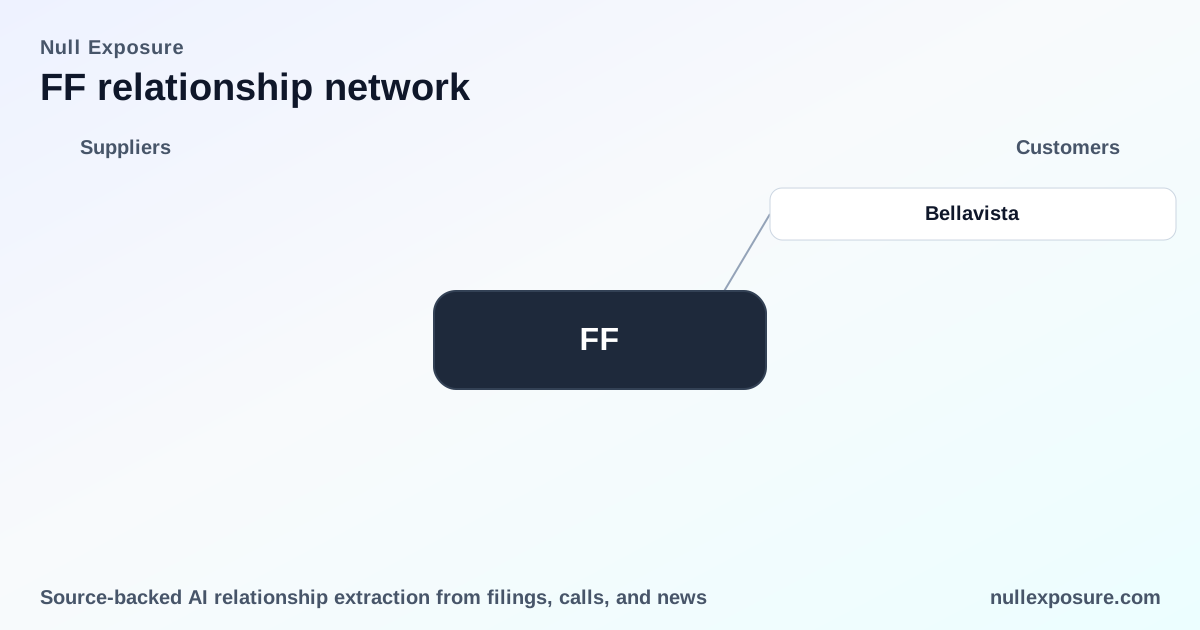
Relationship in the results: Bellavista
A March 9, 2026 news item on Intellectia reports that Bellavista agreed to acquire FireFly’s 70% interest in the Pickle Crow Project and 100% of the Sioux Lookout Project for up to A$86.1 million, with FireFly receiving 60 million Bellavista shares (A$47.4 million) upfront. The Intellectia piece is the cited source for the Bellavista entry in the customer-relationship feed. (Intellectia news, March 2026: https://intellectia.ai/news/stock/firefly-reports-51-increase-in-mineral-resources-at-green-bay-project)
What the constraints tell investors about durability and risk
Pulling the company-level signals together produces a compact investment view:
- Contracting posture is mixed. The chemicals side demonstrates long-term contract behavior and predictable service economics; the biofuels side operates on short-term, market-priced orders. This mix produces revenue volatility on the biofuels side while preserving higher predictability in custom manufacturing.
- Concentration is a structural risk. Two biodiesel customers contribute a large share of revenue; revenue shocks at those accounts transmit quickly because of short-term pricing in the biodiesel channel.
- Criticality is operational and regulatory. Customer value centers on dependability, safety, and environmental compliance — factors that directly affect contractual performance and reputation.
- Commercial maturity is split. The custom manufacturing business shows more mature, long-tenor customer relationships and renewal activity; the biodiesel business behaves like a commodity supplier with spot-to-short-term commercial cadence.
- Geographic footprint is US-first, distribution can be global. Billing data is concentrated in North America while FOB logistics from Batesville facilitate international distribution.
These constraints are sourced to the company’s public disclosures and fillings through the latest filing periods referenced in the corporate record.
Financial context and investor takeaways
FutureFuel reported roughly $95.7 million in trailing revenue with a negative EBITDA in the latest reported period, and it pays a modest cash dividend (recent yield ~4.9%). Insider ownership is high (about 42%), with institutions owning roughly 38% of the float — a shareholder mix that aligns management incentives with longer-term outcomes but also concentrates decision-making authority.
Key takeaways for investors:
- Investors gain exposure to both specialty chemical margins and commodity biodiesel cycles. That duality creates optionality but also requires active monitoring of customer concentration and refinery counterparty stability.
- Operational execution and regulatory compliance are the primary risk levers. Because the business sells both bespoke chemical products and regulated fuel products, operational failure or compliance weakness would have outsized commercial impact.
- Watch contract renewal outcomes and counterparty composition. Long-term agreements in chemicals reduce risk; the biodiesel book needs constant monitoring because revenue is recognized on short-term orders.
For a focused view on customer exposure and counterparty dynamics, review the company’s customer disclosures and recent earnings commentary; additional proprietary research and relationship-level monitoring can add clarity. Learn more or get started at https://nullexposure.com/.
Bottom line
FutureFuel combines stable, contract-backed custom manufacturing with a volatile, commodity-driven biodiesel franchise. That architecture produces a clear trade-off between predictability and cyclical upside. The most immediate investor levers are counterparty concentration, contract renewal behavior in the chemicals segment, and the firm’s operational/regulatory track record — each of which drives short- and medium-term cash-flow resilience.