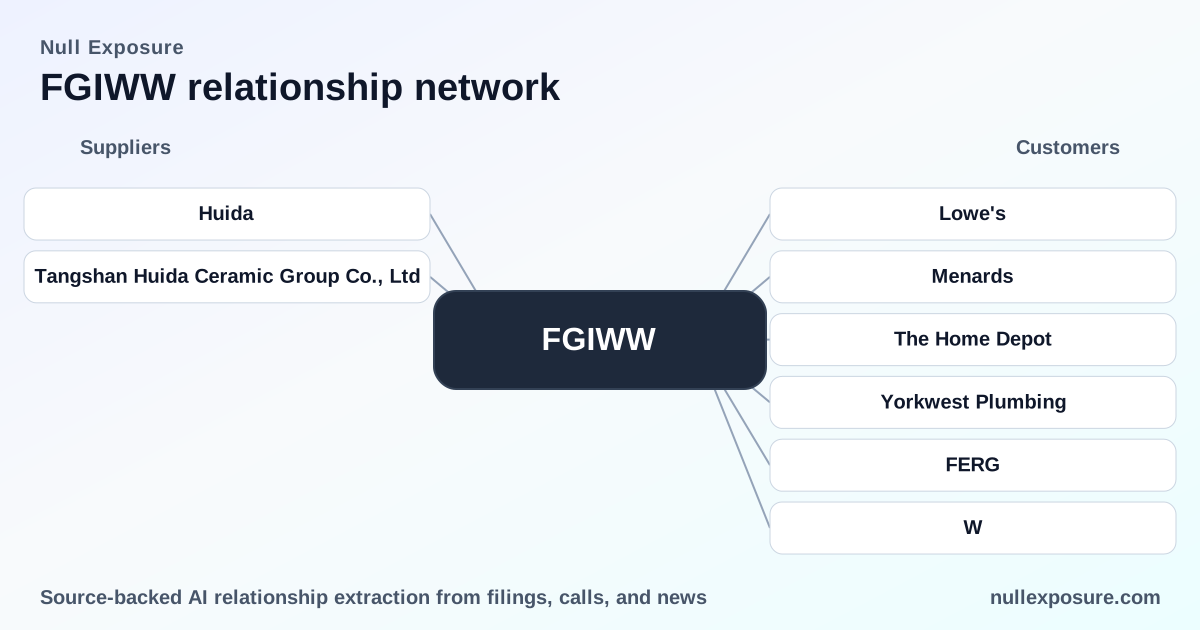
FGI Industries (FGIWW) — Customer Map and Commercial Risk Profile
FGI Industries sells and distributes kitchen and bath fixtures and related products to a mix of mass retailers, wholesalers and independent dealers; the company monetizes through product sales recognized at shipment or delivery and short payment cycles, supported by longstanding retail and wholesale distribution relationships. For investors focused on customer concentration, channel risk and geography exposure, the 2024 Form 10‑K paints a clear picture: large retailers and wholesalers together drive a material share of revenue, while North America remains the dominant market. For a deeper look at customer-level intelligence and how it informs commercial risk, visit https://nullexposure.com/.
Executive thesis: how revenue is generated and where the risk is concentrated
FGI is a merchant supplier: it designs and sources sanitaryware, vanities, cabinets and shower systems and sells them primarily into three channels — mass retail (do‑it‑yourself homeowners), wholesale (contractors and trade professionals), and independent specialty dealers. Revenue recognition is typically at shipment or delivery, and typical payment terms are short (15–60 days), which produces a working‑capital profile tied tightly to inventory turn and seasonal demand. Two customers accounted for roughly 18% and 16.7% of revenue in 2024, marking a clear concentration risk that has implications for negotiating leverage, cash flow volatility and credit exposure.
How these operating constraints shape the business
- Short contract/payment cycles (15–60 days) impose a working‑capital centric operating model where liquidity and trade credit are critical. This is a company-level signal from the 2024 annual report.
- Channel concentration: roughly 32% of net sales came from large retailers while 36% were to wholesale partners, indicating reliance on a small set of high-volume distribution relationships rather than a highly fragmented retail base.
- Geographic concentration in North America: the United States represented about $82.4 million of revenue in 2024 (62.5% of total), with Canada also material; Europe/EMEA is present but smaller by absolute dollars.
- Material customer dependence: the fact that two customers together represent ~34.6% of revenue is a structural risk to top‑line stability if any partner reduces orders or changes vendor mix.
- Active, core product orientation: the company’s relationships are active sellers/distributors of core kitchen & bath categories, not ancillary or nascent product lines.
These constraints translate into predictable commercial dynamics: strong bargaining power for large retail and wholesale buyers, compressed payment timing, and material topline sensitivity to order cadence from a handful of partners.
Customer roll call — every relationship disclosed in the FY2024 filing
Below are the customer relationships named in FGI’s 2024 Form 10‑K, each summarized in plain English with source attribution.
The Home Depot
FGI lists The Home Depot among its largest customers, reflecting the company’s distribution through mass retail home centers that serve DIY homeowners and contractors. Source: FGI Industries Form 10‑K, FY2024.
Menards
Menards is also named as one of FGI’s largest mass‑retail customers, underscoring the company’s exposure to the big‑box home improvement channel. Source: FGI Industries Form 10‑K, FY2024.
Lowe's
Lowe’s appears in the same list of major retailer relationships, reinforcing the company’s multi‑household presence across the leading North American home centers. Source: FGI Industries Form 10‑K, FY2024.
Ferguson (FERG)
Ferguson is identified as a major wholesale partner; wholesalers accounted for roughly 36% of net sales in 2024, signaling that Ferguson and similar distributors are critical conduits to professional contractors and commercial customers. Source: FGI Industries Form 10‑K, FY2024.
Yorkwest Plumbing
The filing notes that in Canada FGI is a leading supplier to market leaders such as Yorkwest Plumbing, indicating targeted national channel penetration in the Canadian market. Source: FGI Industries Form 10‑K, FY2024.
Wayfair
Wayfair is called out as an example of a new e‑commerce retailer channel where FGI sees growth potential, showing the company is pursuing direct online retail partners in addition to brick‑and‑mortar and wholesale networks. Source: FGI Industries Form 10‑K, FY2024.
What these relationships imply about negotiating posture and risk
- Concentration and counterparty power: With roughly one‑third of revenue to large retailers and over a third to wholesalers, FGI operates with limited pricing leverage in those channels and must prioritize service, fill rates and margin discipline to maintain shelf placements.
- Short payment terms create liquidity dependency: Typical customer payment terms of 15–60 days compress receivables cycles and make predictable cash conversion critical, especially as inventory and freight cost pressures fluctuate.
- Channel diversity but concentrated economics: Although sales are distributed across retailers, wholesalers and independents, the revenue mix is concentrated in larger counterparties, so single‑partner disruptions could materially affect receivables and bookings.
- Geographic exposure: North America is the revenue engine, accounting for the majority of sales; EMEA and other regions are supportive but not core to current revenue scale, implying any macro slowdown in the U.S. building and remodeling markets will have an outsized revenue impact.
Growth levers and monitoring checklist for investors
FGI’s commercial playbook offers several monitoring points that track execution against risk:
- Maintain close watch on shipment and receivable days given the 15–60 day terms.
- Track order flow and inventory commitments with The Home Depot, Lowe’s, Menards and Ferguson given their combined materiality.
- Monitor e‑commerce traction, particularly with Wayfair, as online channel growth could alter margin and promotional dynamics.
- Watch Canadian channel performance (e.g., Yorkwest Plumbing) as a regional diversification metric.
If you want a structured way to track these counterparty exposures and translate them into credit and revenue scenarios, explore our analytical tools at https://nullexposure.com/.
Bottom line
FGI Industries sells essential kitchen and bath categories through a concentrated set of high‑volume retail and wholesale partners, with short payment terms and a North America‑centric revenue base. Investors should treat the major retailer and wholesaler relationships as the primary drivers of near‑term revenue volatility and strategic negotiating pressure. The 2024 Form 10‑K provides all the explicit customer names and the company‑level constraints that shape operating risk — and those are the lenses investors should use when sizing revenue concentration and liquidity sensitivity. Source: FGI Industries Form 10‑K, FY2024.