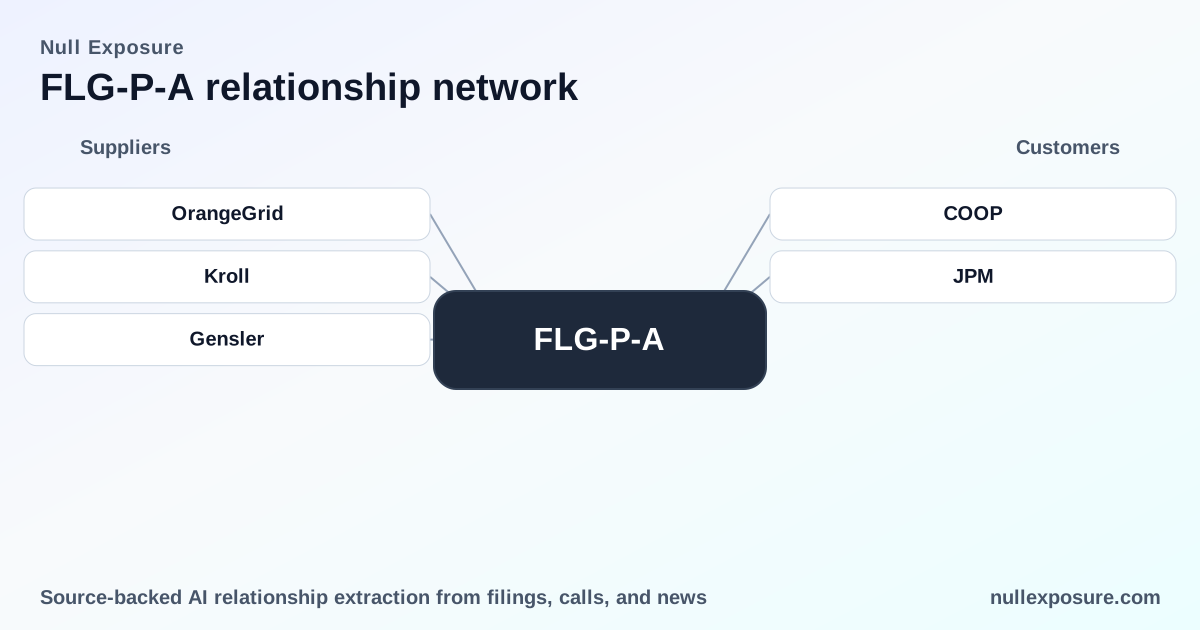
FLG-P-A: Customer Relationships and What the 2024 Deal Flow Signals for Investors
FLG-P-A operates as an investment firm that builds diversified portfolios across sectors and extracts value primarily through long-term capital appreciation and active portfolio management. The firm’s economics are driven by selective deployment of capital, risk-managed exposure to financial services assets, and opportunistic realization events when market conditions create premium exit opportunities. For investors focused on counterparty exposure and client concentration, recent press linking FLG-P-A’s customer footprint to large mortgage servicers and banks is important context for portfolio risk and operational reliance. Learn more about how we assemble relationship intelligence at https://nullexposure.com/.
Why the recent headlines matter for an investor in FLG-P-A
The items surfaced in FY2024 reporting show FLG-P-A’s customer-connected activity intersecting with secondary-market mortgage transactions and servicing transfers—events that are transactional but can be material to earnings volatility for specialist lenders and servicers. Key takeaway: these are not routine vendor notes; they reflect strategic portfolio rebalancing and servicing transfers that influence cash flow timing and counterparty operational risk.
- Counterparty profile: activity centers on large mortgage servicers (Mr. Cooper) and major banks (JPMorganChase).
- Transaction type: sales of mortgage businesses, servicing portfolios, and large warehouse loan packages.
- Timing: activity documented in FY2024 press items dated March 2026 referencing prior FY2024 transactions.
How FLG-P-A’s operating model is constrained and where risk concentrates
There are no explicit contractual constraints included in the available record for FLG-P-A’s customer relationships; that absence itself is a company-level signal. From that, investors should infer an open contracting posture—deals are executed opportunistically rather than under long-term exclusive mandates—and moderate counterparty concentration given the visible prominence of a few large financial players in the cited transactions. Operationally, these relationships are critical when they involve servicing or loan-sale execution because such transactions affect cash collection, servicing fees, and asset-liability timing. Finally, maturity of these relationships looks transactional rather than long-tenured partnership: the press describes discrete portfolio sales rather than ongoing master servicing contracts.
Investment implication: the firm’s earnings and liquidity can be sensitive to timing of similar portfolio sales and the willingness of large servicers to transact; this elevates event risk relative to steady fee-based models.
Relationship-by-relationship: what the articles record
Below I cover each relationship mention from the records with a concise, plain-English summary and source citation.
-
COOP (news_sentiment — Banking Dive, March 9, 2026): The article notes Flagstar Bank named new senior risk and technology leaders and concurrently completed the sale of a $1.3 billion mortgage business to Mr. Cooper, indicating a transfer of mortgage-originations or servicing activity to the servicer. Source: Banking Dive (Mar 9, 2026) — https://www.bankingdive.com/news/flagstar-taps-cio-credit-review-chief/731865/
-
Mr. Cooper (news_sentiment — Banking Dive, March 9, 2026): Mr. Cooper purchased the $1.3 billion mortgage business referenced in the same Banking Dive piece, demonstrating Mr. Cooper’s role as an acquirer of originations/servicing portfolios in FY2024. Source: Banking Dive (Mar 9, 2026) — https://www.bankingdive.com/news/flagstar-taps-cio-credit-review-chief/731865/
-
COOP (news_sentiment — National Mortgage News, March 9, 2026): National Mortgage News reports that a third-quarter action included the sale of a residential mortgage servicing portfolio to Mr. Cooper as part of a broader restructuring, underscoring repeat interaction between sellers and Mr. Cooper on servicing flows. Source: National Mortgage News (Mar 2026) — https://www.nationalmortgagenews.com/news/new-york-community-to-rebrand-corporate-identity
-
JPM (news_sentiment — National Mortgage News, March 9, 2026): The same National Mortgage News coverage documents that New York Community sold nearly $6 billion in mortgage warehouse loans to JPMorganChase, highlighting JPMorganChase’s role as a buyer of large bank loan packages in that period. Source: National Mortgage News (Mar 2026) — https://www.nationalmortgagenews.com/news/new-york-community-to-rebrand-corporate-identity
-
JPMorganChase (news_sentiment — National Mortgage News, March 9, 2026): The report explicitly names JPMorganChase as the counterparty for the multi-billion mortgage warehouse sale, which signals institutional balance-sheet participation in rebalancing transactions. Source: National Mortgage News (Mar 2026) — https://www.nationalmortgagenews.com/news/new-york-community-to-rebrand-corporate-identity
-
Mr. Cooper (news_sentiment — National Mortgage News, March 9, 2026): National Mortgage News reiterates Mr. Cooper’s acquisition of a residential mortgage servicing portfolio in the third quarter, reinforcing the earlier Banking Dive item and showing consistent press coverage of Mr. Cooper’s buy-side activity in FY2024. Source: National Mortgage News (Mar 2026) — https://www.nationalmortgagenews.com/news/new-york-community-to-rebrand-corporate-identity
What investors should monitor next
- Counterparty concentration: track whether additional large sales route through Mr. Cooper or JPMorganChase; persistent reliance on a handful of acquirers increases execution and pricing risk.
- Operational integration risk: servicing transfers create operational friction—monitor related announcements about technology, staffing, and credit governance because those impact cash flows.
- Transaction cadence: if FLG-P-A’s returns hinge on opportunistic portfolio sales, quarter-to-quarter performance will reflect market demand for such assets.
For investors who prioritize counterparty intelligence and transaction-level insight, the relationship signals above warrant active monitoring via transaction announcements and regulatory filings. See how we track these linkages at https://nullexposure.com/.
Bottom line
The FY2024-related press mentions catalog a pattern: asset and servicing transfers involving Mr. Cooper and large banks like JPMorganChase, executed as part of portfolio rationalizations by regional lenders. That pattern implies transactional customer relationships with material short-term impact on cash flow when portfolio sales occur. Investors should price in event-driven volatility and maintain close attention to counterparties and deal timing rather than assuming fee-stable revenue.