1-800 Flowers (FLWS): distribution partnerships are the growth lever — and the cost structure is the constraint
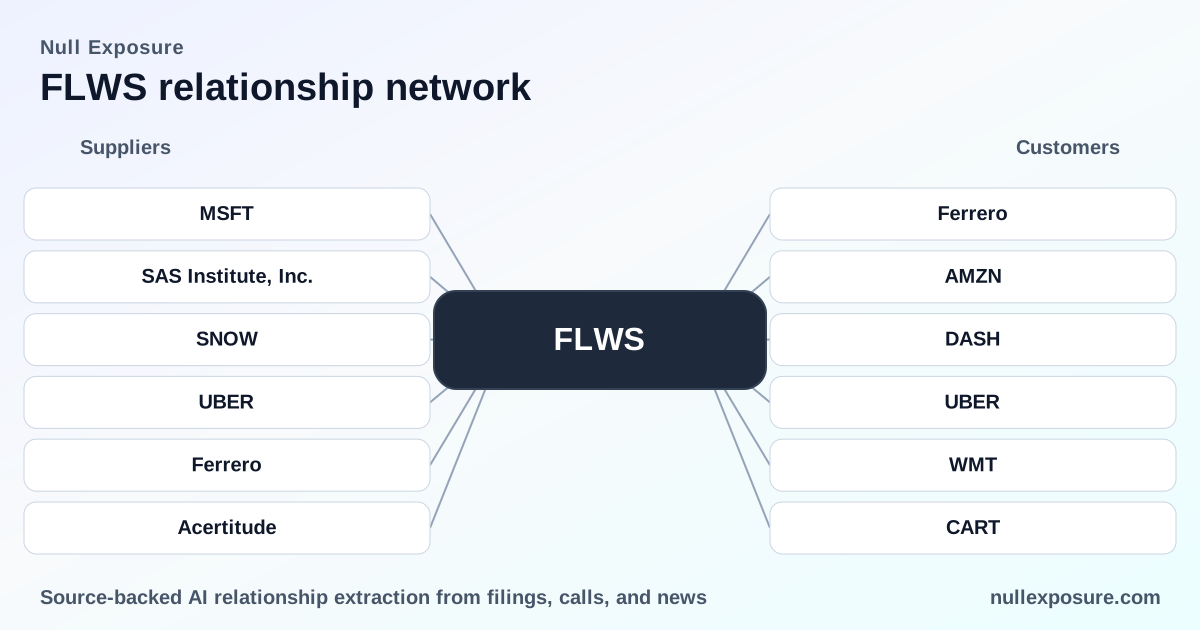
Thesis: 1-800-FLOWERS.COM Inc. operates a two‑pronged retail and services business that sells floral and gift products directly to consumers through its e‑commerce and retail channels while monetizing B2B services through BloomNet subscriptions and support services for florist members. The company’s near‑term growth strategy is to widen distribution via third‑party marketplaces and grocery/instant‑delivery partners to boost order volume, while BloomNet subscription revenue provides recurring cash flow; investors should weigh volume gains against ongoing margin pressure and a mixed profitability profile. For a concise commercial view of FLWS customer relationships and channel exposures, visit https://nullexposure.com/.
How FLWS makes money and why partnerships matter
1-800-Flowers generates the bulk of its revenue from direct-to-consumer flower and gift sales (online, telephone, retail) and supplements that with services revenue from BloomNet: settlement processing, advertising directories, web hosting, wholesale floral supplies and other florist support services. BloomNet operates largely on a month‑to‑month subscription basis, creating recurring, predictable service revenue, while third‑party marketplace placements (Amazon, DoorDash, Uber, Walmart.com, Instacart) function as customer acquisition channels that increase reach but carry margin and fee implications. The company also executed strategic asset sales in past years — for example, divesting Fannie May brands — to refocus on core categories and liquidity.
Key takeaway: FLWS combines direct retail selling with subscription services; distribution partnerships expand reach but must convert into sustained profitability.
Customer and channel relationships you need to know
Instacart / CART
Instacart announced a nationwide floral partnership with 1‑800‑Flowers in March 2026, positioning Instacart as a pure‑play grocery/instant‑delivery channel for FLWS’s floral inventory and same‑day convenience customers. This extends FLWS reach into grocery and on‑demand purchase moments. (Source: IT‑Times press coverage of the Instacart partnership, March 2026; related market commentary in SimplyWall and SahmCapital, FY2026.)
Amazon (AMZN)
Management cited Amazon as a rapidly growing third‑party marketplace channel in FY2026, listing it among partners that broaden the brand’s presence where customers shop today; Amazon is a broad reach channel that shifts fulfillment and fee economics but increases order volume. (Source: FY2026 earnings call transcript reporting, InsiderMonkey and Investing.com, Q2 FY2026.)
DoorDash (DASH)
DoorDash is named by management as an expanding marketplace partner in FY2026, used to extend FLWS product availability for on‑demand deliveries. DoorDash supports same‑day and convenience use cases that are aligned with floral impulse purchasing. (Source: FY2026 earnings call transcript reporting, InsiderMonkey and Investing.com, Q2 FY2026.)
Uber (UBER)
Uber is listed among marketplace partners and is being used as a distribution channel to capture mobile and local delivery demand; Uber strengthens FLWS’s last‑mile coverage for urgent and same‑day orders. (Source: FY2026 earnings call transcript reporting, InsiderMonkey and Investing.com, Q2 FY2026.)
Walmart.com (WMT)
Walmart.com appears in management commentary as a third‑party marketplace expanding FLWS reach to Walmart’s customer base, representing a strategic path to higher volume in value‑oriented cohorts. Walmart.com is a scale channel that trades higher volume for tighter price and fee structures. (Source: FY2026 earnings call coverage and company announcements summarized on TipRanks and Investing.com, May 2026.)
Ferrero / Fannie May (historical)
In a prior strategic divestiture, Ferrero acquired Fannie May Confections and Harry London Candies from 1‑800‑FLOWERS for $115 million (reported in 2017), a transaction that reflected FLWS’s effort to streamline portfolio exposure and raise cash. This is an example of FLWS monetizing non‑core brands to concentrate on core floral and services operations. (Source: ConfectioneryNews report, March 2017.)
What these relationships mean operationally
- Distribution concentration and channel mix: FLWS leans on a set of major digital partners (Amazon, Walmart.com, Deliver/ride‑hail platforms and Instacart) to access customers beyond its owned channels; that increases top‑line reach but introduces fee and margin tradeoffs that show up in FY2026 commentary about margin pressure.
- Customer types and monetization: The firm’s core counterparty is the individual consumer purchasing e‑commerce floral and gift products, while BloomNet provides subscription services to florist members — a dual monetization model (one transactional, one recurring).
- Geographic footprint: The company reports that international revenues are not material, so revenues and channel risk are concentrated in North America.
- Seller posture and control: FLWS operates primarily as a seller of goods (recognizing revenue on shipment) while also operating a services business (BloomNet) that is subscription‑oriented and month‑to‑month in nature.
Constraints and business model signals investors should factor
- Contracting posture: BloomNet subscriptions are typically month‑to‑month, creating recurring but flexible revenue that can ramp down quickly if members churn; this favors agility but limits long‑term revenue lock‑in. (Company disclosures on BloomNet service recognition, FY2025–FY2023 periods.)
- Counterparty concentration: The primary customer base is individual consumers, which makes top‑line sensitive to consumer discretionary cycles and marketing effectiveness. (E‑commerce and telephonic sales descriptions in company filings.)
- Geography and materiality: International sales are immaterial, implying concentration risk in North America and limited geographic diversification. (Company revenue disclosures for FY2023–FY2025.)
- Role and margins: The company’s core identity as a seller of floral/gift merchandise means operating margins are tied to product costs, logistics, and marketplace fees; management commentary in FY2026 highlights margin pressure despite top‑line opportunities.
- Segment mix maturity: FLWS’s business is split into core product retail and services (BloomNet); the former is transactional and volume‑driven, the latter is a mature services line offering predictable revenue but limited contract stickiness.
Investment implications and risk profile
1-800-Flowers is a reach‑and‑scale play: expanding into third‑party marketplaces and grocery/instant platforms increases addressable orders but compresses gross margins through fees and third‑party economics. BloomNet provides a stabilizing subscription layer, but its month‑to‑month nature limits long‑term revenue certainty. Historical portfolio pruning (for example, the Fannie May sale) shows management will divest non‑core assets to sharpen focus and capital allocation.
Key risks for investors: concentrated North American exposure, margin sensitivity to channel mix, and reliance on consumer discretionary spend; key opportunities include converting marketplace volume into higher‑margin repeat customers and extracting margin from services and wholesale supplies.
For further, regularly updated relationship intelligence and channel exposure analysis on FLWS, see our platform at https://nullexposure.com/.
Conclusion: FLWS is executing a channels‑first distribution strategy layered over a recurring services business; the outcome for valuation hinges on management’s ability to translate third‑party distribution volume into durable improvements in customer lifetime value and margins.