FMKT: Navistar Win Validates Enterprise Sourcing Play, But Disclosure Is Thin
FreeMarkets (FMKT) sells enterprise sourcing software and implementation services to large industrial buyers and manufacturers, monetizing through implementation contracts, professional services and ongoing software engagements. The company’s public customer disclosures are limited, but a recent selection by Navistar’s operating unit signals continued traction in heavy OEM procurement transformation — a meaningful commercial reference for investors tracking commercial validation and revenue mix.
For a quick read on what this means for strategy and risk, visit the FreeMarkets customer overview on our site: https://nullexposure.com/.
What the Navistar / International Truck win actually is — and why it matters
International Truck and Engine Corp., the operating company of Navistar International Corp., has selected FreeMarkets Savings Implementation Solution, a named offering in FreeMarkets’ portfolio focused on extracting procurement savings and implementing sourcing strategies. According to a TruckingInfo report published in March 2026, the agreement represents a strategic implementation engagement with a major OEM procurement organization, providing both a reference client and a likely revenue event tied to implementation fees and ongoing service delivery.
This kind of customer win functions as a validation point for FreeMarkets’ enterprise sales motion: large original equipment manufacturers demand robust implementation support, which supports higher-margin professional services and potential follow-on software revenue.
How this relationship fits into FMKT’s operating model
The Navistar selection reflects several company-level operating characteristics that investors should weigh:
- Contracting posture: FreeMarkets sells enterprise solutions that combine software and hands-on implementation services, implying contract structures that embed professional services and sustained client engagement rather than one-off transactions.
- Customer concentration signal: Publicly disclosed customer wins are limited in the record we reviewed, which elevates the importance of each visible reference client for revenue credibility and future sales momentum.
- Criticality to customers: Procurement transformation and savings implementation are strategically important at the OEM level, so these engagements are business-critical for buyers and support stickiness once implemented.
- Product maturity: Adoption by a major industrial buyer indicates the offering is production-ready and competitive for complex, large-scale procurement use cases.
These are company-level signals drawn from the nature of the disclosed engagement and the public footprint of FreeMarkets’ business model, not assertions tied to a single contractual excerpt.
The full set of customer relationships we found
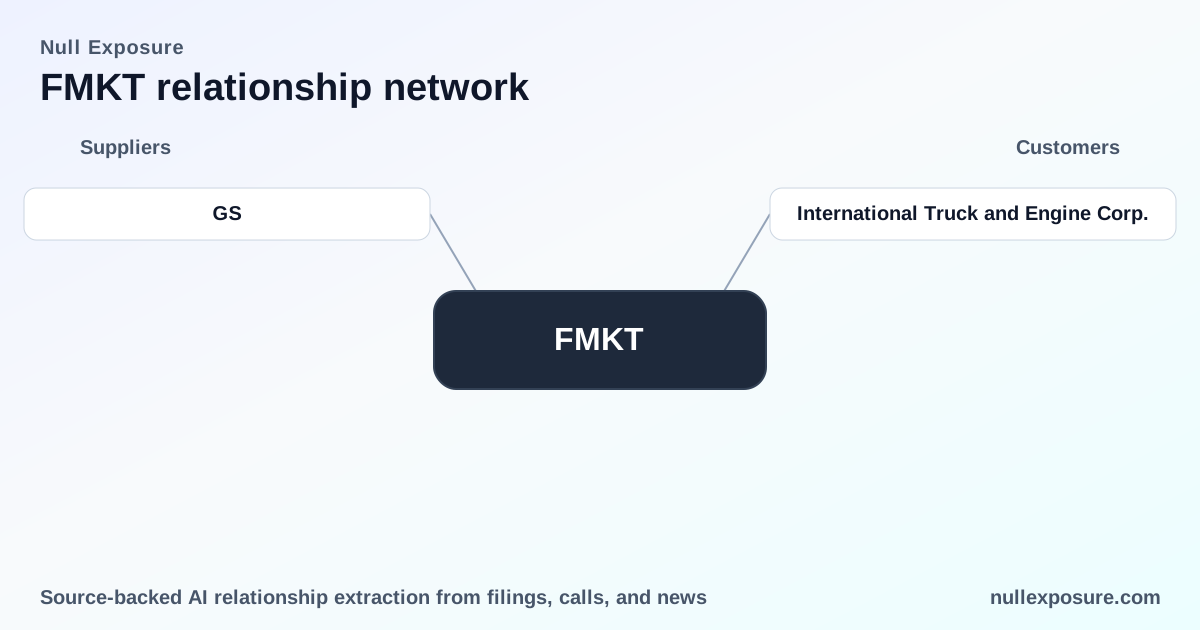
International Truck and Engine Corp., the operating company of Navistar International Corp., selected FreeMarkets’ Savings Implementation Solution as reported in March 2026; this is the sole customer relationship disclosed in the public results we reviewed. According to TruckingInfo (March 2026), the International Truck engagement is an implementation contract aimed at delivering procurement savings through FreeMarkets’ solution set. This single, visible enterprise reference is important both as product validation and as a reminder that public customer disclosure remains limited.
Investment implications — what investors should take away
- Positive commercial validation: The Navistar/International Truck engagement is a meaningful endorsement from a large OEM procurement organization and supports the narrative that FreeMarkets’ implementation-led offering competes for strategic sourcing projects.
- Revenue mix and margin profile: The business model combines implementation services with software, implying a blended revenue profile where implementation fees lift near-term revenue and recurring software/services underpin longer-term retention.
- Concentration and disclosure risk: With few publicly visible customers, each disclosed relationship carries outsized informational value; investors should treat customer-level concentration and disclosure cadence as potential risk factors until a fuller sales pipeline is visible.
- Customer stickiness and upsell potential: Implementation engagements are inherently sticky and present clear upsell pathways for analytics, ongoing sourcing services, and platform expansion.
For deeper client-level detail and to track future disclosures, see FreeMarkets’ customer summary at https://nullexposure.com/.
Constraints, gaps and what the absence of constraints signals
The review of available materials did not surface explicit contractual constraints, third-party concentration limits, or other structured constraints in the dataset we used. That absence is itself a signal for investors: public disclosures around contract length, renewal cadence, revenue concentration, and specific commercial terms are limited, increasing reliance on qualitative validation (reference clients, press coverage) for commercial due diligence. Investors should request granular customer-level metrics (e.g., contract durations, recurring vs. one-time revenue split, and top-customer revenue share) in follow-up diligence.
Tactical recommendations for investors and operators
- Request contract duration, renewal history and revenue attribution for top customers to determine the predictability of the revenue base.
- Prioritize inquiries on implementation-to-recurring conversion rates, since the business model’s health depends on converting implementation engagements into ongoing platform engagements.
- Monitor future press and filings for additional OEM wins or renewals that would demonstrably expand the visible customer base and reduce concentration risk.
Bottom line: validation plus disclosure work remains
The International Truck / Navistar selection is a credible validation of FreeMarkets’ implementation-led enterprise sourcing proposition and supports the thesis that the company can compete for large OEM procurement projects. At the same time, limited public disclosure of customer breadth and contractual terms creates an information gap that elevates the importance of further diligence on contract economics and customer concentration before sizing long-term revenue predictability.
For ongoing tracking of FreeMarkets’ commercial relationships and to get alerts on new disclosures, visit our company page: https://nullexposure.com/.