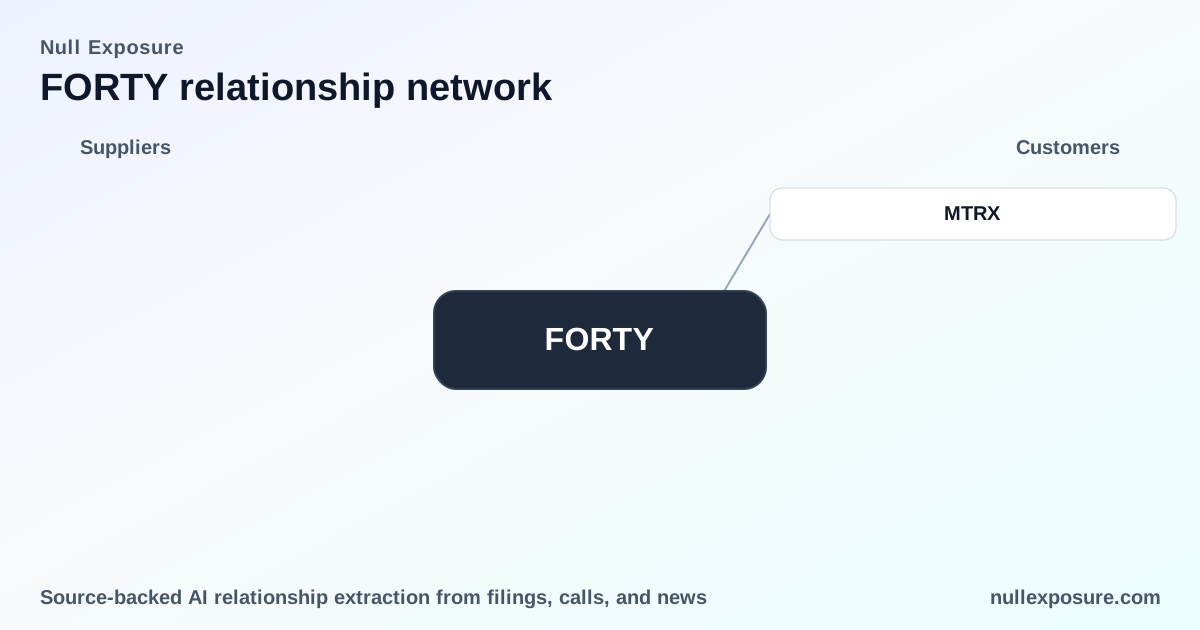
FORTY customer relationships: what investors need to know now
Formula Systems (1985) Ltd (ADR: FORTY) operates as an Israeli software holding and services company that monetizes through software licensing, professional services, and equity ownership in a portfolio of technology subsidiaries. The company generates cash from recurring license and services revenue while preserving optionality through majority and minority stakes in growth-stage and mature technology firms; recent corporate actions show that Formula converts equity into cash via selective divestitures. For a focused view of its customer and partner flows visit https://nullexposure.com/.
A clear operating and monetization model — portfolio plus services
Formula Systems runs a blended business model: a direct software and services provider supplemented by equity investments in specialist technology companies. The firm reported approximately $2.63 billion in trailing revenue and EBITDA of $241.9 million (latest available), indicating an operating footprint large enough to support both steady services revenue and strategic portfolio maneuvers. The holding posture is explicit: Formula holds controlling and material minority stakes across a group of subsidiaries whose performance both drives and diversifies consolidated results.
This structure produces three predictable investor dynamics:
- Recurring cash from software licensing and services that underpins valuation multiples.
- Upside from portfolio exits when the company disposes subsidiaries or sells stakes, as management reallocates capital.
- Cyclical sensitivity to end-market demand for enterprise software, which is mitigated by the portfolio’s sector spread and a reported low beta (0.22).
If you track customer-relationship signals at the subsidiary level, Formula’s positioning is best described as mature, diversified, and strategically active in buy / build / sell cycles.
Recent relationship events you must price in
Matrix IT Ltd. — acquisition completed
Matrix IT Ltd. completed the acquisition of Magic Software Enterprises Ltd. from Formula Systems and others on February 24, 2026. This transaction represents a material divestiture of an operating asset and a clear monetization event for FORTY’s portfolio. (MarketScreener, March 9, 2026: https://www.marketscreener.com/news/matrix-it-ltd-completed-the-acquisition-of-magic-software-enterprises-ltd-from-formula-systems-ltd-ce7e5cdad181f527)
MTRX (ticker record) — same acquisition reported under the Matrix IT symbol
The same MarketScreener report registers the buyer as MTRX (Matrix IT Ltd.), reinforcing that the Magic Software sale is both a corporate and market-level transaction involving a publicly listed Israeli acquirer. The duplication in reporting emphasizes market attention to the divestiture and the potential capital return to Formula’s balance sheet. (MarketScreener, March 9, 2026: https://www.marketscreener.com/news/matrix-it-ltd-completed-the-acquisition-of-magic-software-enterprises-ltd-from-formula-systems-ltd-ce7e5cdad181f527)
United States Army — defense-sector licensing activity
According to Formula Systems’ financial disclosure republished via GlobeNewswire and reported by The Manila Times (November 20, 2025), a Formula subsidiary (TSG) delivered initial software license deliveries to the United States Army under a strategic agreement facilitated with an American partner. This confirms direct defense-sector exposure and recurring licensing potential tied to government procurement cycles, elevating revenue defensibility and contract criticality for part of the group. (GlobeNewswire / The Manila Times, November 20, 2025: https://www.manilatimes.net/2025/11/20/tmt-newswire/globenewswire/formula-systems-reports-third-quarter-and-nine-months-period-ended-september-30-2025-financial-results/2228424)
What the relationship set reveals about FORTY’s positioning
-
Concentration through equity stakes: The company’s filings disclose substantial ownership positions across a range of technology businesses — e.g., majority and significant minority stakes in Matrix IT, Sapiens, Magic Software, TSG and others as of September 30, 2025 — which signal a deliberate portfolio strategy that centralizes economic exposure in a handful of material subsidiaries. (Formula Systems financial disclosure via GlobeNewswire / The Manila Times, Nov 2025)
-
Contracting posture is strategic and long-term: Evidence of license deliveries to the U.S. Army and the sponsorship of defense-related expansions indicates that certain subsidiary contracts are mission-critical and governed by multi-party strategic agreements rather than one-off purchases. That elevates revenue visibility for those lines.
-
Maturity and liquidity options: The completed sale of Magic Software demonstrates an active capital recycling program: holdings can be monetized to crystallize value and redeploy capital. Investors should treat disposals as a recurring lever in the company’s capital-allocation toolbox.
-
Criticality to customers: Defense contracts and enterprise licensing arrangements imply higher switching costs and contractual longevity for parts of the business, increasing the quality of the revenue base where those contracts apply.
For ongoing tracking of these relationship dynamics and how they affect valuation, analysts should monitor further disposals, subsidiary earnings, and contract renewal cycles. For a faster read on relationship signals, visit https://nullexposure.com/.
Risk factors that change the investment case
- Revenue shift after divestitures: While divestitures like the Magic Software sale generate cash and can improve return-on-capital, they reduce operating revenue and shift the earnings mix; investors must evaluate whether proceeds are redeployed into higher-return opportunities or used for shareholder returns.
- Dependence on strategic contracts: Defense and government engagements increase revenue stability but also expose the company to procurement schedules and geopolitical considerations.
- Concentration in portfolio holdings: Significant stakes in a set of subsidiaries concentrate operational and market risk; single-asset performance can materially influence consolidated results.
These are not hypothetical cautions but factual sensitivities derived from recent filings and transaction reports.
Bottom line
Formula Systems operates as a hybrid software operator and active technology investor. The March 2026 divestiture of Magic Software to Matrix IT is a concrete monetization event that alters the company’s revenue profile while crystallizing value, and the disclosure of license deliveries to the U.S. Army signals defensible, contract-backed revenue in the defense vertical. Investors should value FORTY as a combined services operator and portfolio manager: monitor subsidiary earnings and further capital allocation moves closely.
For a concise map of stakeholder relationships and transaction history that affects valuation, see https://nullexposure.com/.