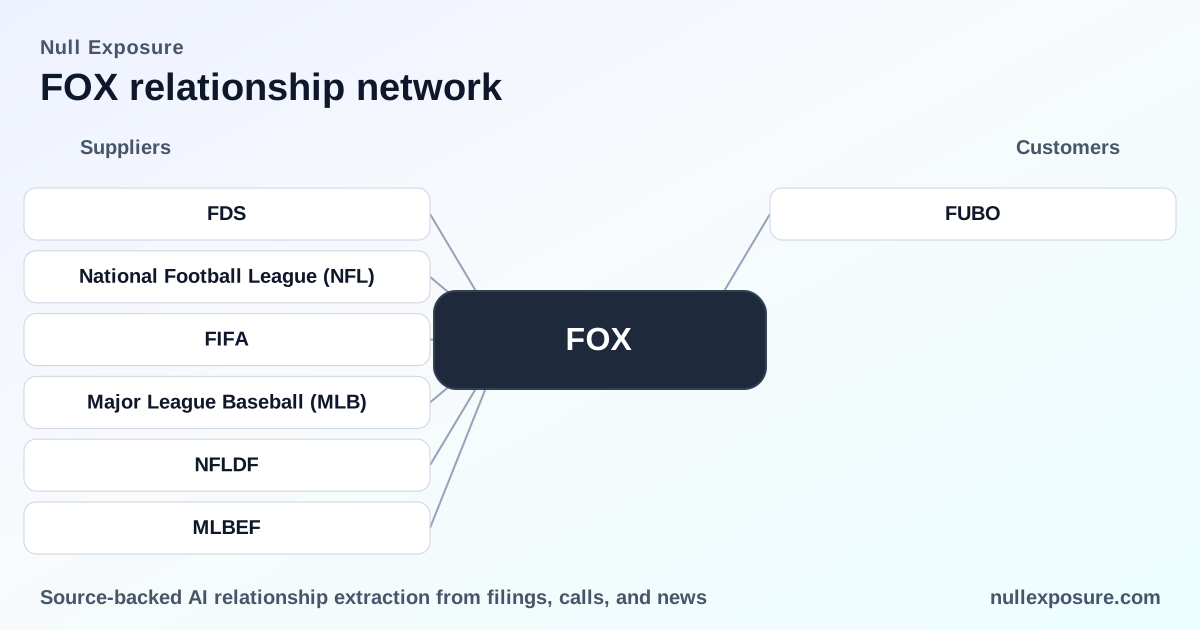
FOX customer relationships: where revenue power and distribution leverage intersect
Fox Corporation operates as a scaled, U.S.-focused media operator that monetizes core assets through three levers: affiliate/licensing fees from distributors, advertising sales against live and filmed content, and an expanding direct-to-consumer subscription play. With roughly $16.6 billion in trailing revenue and a market capitalization near $23.9 billion, Fox converts content ownership and network distribution into predictable affiliate cash flows and high-margin advertising revenues while pushing to capture incremental subscriber economics via its FOX One streaming launch. For investors and operators, the materiality of these customer relationships and the legal/regulatory dynamics around content licensing are central to valuation and operational risk assessment. Learn more at the company homepage: https://nullexposure.com/.
Why customer relationships are the core asset — and the core risk
Fox’s business model is driven by distribution contracts and content licensing, not single-product sales. For fiscal 2025, affiliate fees represented approximately 47% of revenue and advertising roughly 42%, making distribution agreements and advertisers the backbone of cash generation. According to the company filing as of June 30, 2025, roughly $5.4 billion of revenue is expected to be recognized primarily over the next one to three years from remaining performance obligations tied to affiliate and content licensing contracts, underlining the forward visibility embedded in these agreements.
Contracting posture is mixed but favorable to stability: affiliate and retransmission relationships are generally multi‑year and billed monthly, creating recurring, annuity-like cash flows, while advertising contracts are short-term and priced to current market conditions, which injects cyclical variability. Fox’s direct-to-consumer subscription effort is a strategic pivot to capture margin and control distribution economics; the company planned FOX One to launch in Fall 2025, signaling a move from pure wholesale licensing toward hybrid distribution.
Geography is concentrated. The Cable Network Programming segment operates primarily in the U.S., which supports tight cost and ad inventory control but increases exposure to U.S. advertising cycles and regulatory environments. Customer concentration is low: Fox reported no individual customer accounting for 10% or more of revenues, a positive for counterparty diversification even as company-level relationships remain critical across distributor classes.
Constraints that shape the operating model — practical takeaways
The company-level signals from contract language and disclosures offer a precise read on operating constraints:
- Contract types: The business relies on a mix of licensing (fixed fee content contracts), multi-year affiliate agreements, and short-term advertising buys. This split produces a blend of recurring, medium‑term revenue and spot-market sales sensitivity.
- Criticality: Given the revenue breakdown, customer relationships are material and critical to near-term cash flow, especially affiliate partners that deliver steady fees.
- Maturity and posture: Affiliate contracts are mature and multi-year, indicating negotiated stability; advertising relationships are transactional and short-term, which creates earnings volatility.
- Product expansion: The introduction of a subscription product (FOX One) changes bargaining leverage by creating a potential direct revenue stream, shifting Fox from pure licensor/distributor dependency to an owner/distributor hybrid.
- Geography: The focus is primarily North American, concentrating operational risk in the U.S. market.
- Role diversity: Fox functions simultaneously as licensor, distributor and seller, deriving revenue from licensing intellectual property, distributing networks across platforms, and selling studio and production services.
These constraints indicate a hybrid operating model: strong recurring revenue from licensing and affiliate deals, offset by exposure to advertising cyclicality and the commercial/legal friction that arises from bargaining with distributors and new DTC entrants.
Customer relationships in the record — what’s on file
Fox’s identified customer-level mentions in the supplied results focus on a single, high-profile adversarial relationship. Each entry below reproduces the results in plain language.
FUBO
FuboTV has filed an antitrust lawsuit naming Fox Corp. alongside other major media companies, alleging coordinated behavior to disadvantage Fubo’s sports‑first streaming distribution and claiming licensing rates charged to Fubo were substantially higher than to other distributors. This litigation directly signals commercial friction between a growing streaming distributor and Fox’s licensing model. Source: TVTechnology news report, March 9, 2026 (article: fubo sues disney, fox, wbd over antitrust violations — https://www.tvtechnology.com/news/fubo-sues-disney-fox-wbd-over-antitrust-violations).
FuboTV Inc.
The same complaint from FuboTV Inc. accuses Fox and peers of years‑long conduct that harmed Fubo and consumers, including allegations that content licensing rates were 30%–50%+ higher for Fubo than for other distributors. This duplicate record underscores the prominence of the dispute in media coverage and the potential for litigation to intersect with commercial negotiations. Source: TVTechnology news report, March 9, 2026 (https://www.tvtechnology.com/news/fubo-sues-disney-fox-wbd-over-antitrust-violations).
What the relationship picture implies for investors and operators
- Revenue stability is high but not invulnerable. Multi‑year affiliate contracts and a large share of revenue from affiliate fees create durable cash flows; however, advertising exposure and the accelerating battle over streaming distribution introduce margin variability.
- Legal and regulatory risk is now operational risk. The Fubo suit illustrates how pricing and licensing terms can escalate into antitrust litigation, which can force contract renegotiations, award damages, and alter downstream pricing agreements. Investors need to price in potential legal costs and the effect on negotiating posture with other digital distributors.
- Strategic optionality through DTC matters. FOX One’s rollout converts part of Fox’s wholesale economics into consumer-first revenue that captures subscription ARPU and first-party data. That translates into greater leverage in licensing talks and diversified revenue streams, but execution risk and marketing spend will determine payback.
- Low customer concentration cushions counterparty risk. No individual customer represented 10%+ of revenue for fiscal 2025, which reduces outsized dependency on any single distributor or advertiser.
For deeper diligence on how these contracts and relationships translate to cash flow and litigation exposure, see the company reporting and legal filings aggregated at Null Exposure: https://nullexposure.com/.
Investment conclusion — trade-offs and focus areas
Fox’s business remains an advertising-anchored, distribution-driven media franchise with attractive recurring revenue characteristics and improving strategic optionality through DTC. Key investor focus areas are the resolution and broader impact of litigations such as the Fubo suit, execution on FOX One subscriber economics, and the interplay between affiliate pricing power and advertiser demand. Operators should prioritize negotiation playbooks that balance short‑term ad yield with long‑term carriage stability.
Bold takeaways: affiliate fees drive cash flow, advertising drives volatility, legal disputes translate into commercial risk, and DTC is the strategic lever to reprice distribution economics.