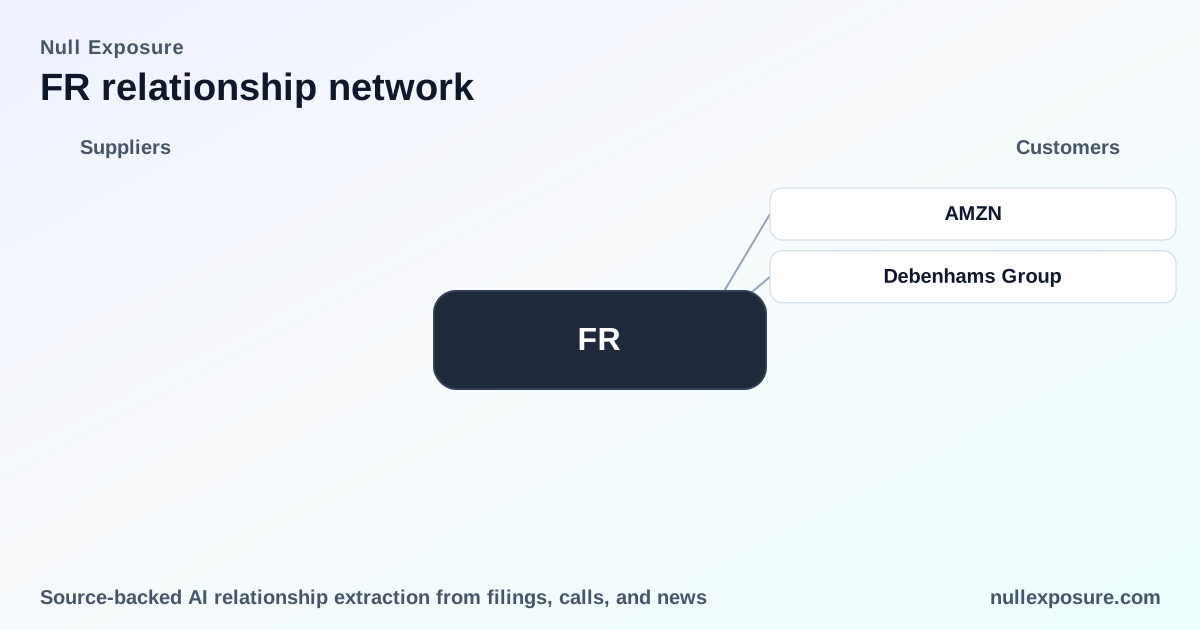
First Industrial (FR) — Customer Map and What It Means for Cash Flow
First Industrial acquires, develops and manages industrial real estate and monetizes through long-term leasing of distribution, logistics and light industrial space across the United States. Rental income underpins returns: the portfolio produces recurring minimum lease payments with a weighted average lease term of roughly 7.7 years and contract structures that embed fixed or CPI‑linked escalators, giving predictable revenue growth and high cash flow visibility. For a closer look at customer-level signals that drive occupancy and rent stability, see https://nullexposure.com/.
How tenant concentration and contract structure drive valuation
First Industrial’s economics are driven by occupancy, lease duration and tenant mix. Long-duration leases with embedded escalators create cash-flow durability, reducing short-term re-leasing risk and smoothing same-store NOI. The company reports approximately 900 tenants across diversified end markets, which spreads counterparty risk, but pockets of concentration still matter: large e-commerce or third‑party logistics tenants act as demand barometers for industrial rents. Management emphasizes the U.S. footprint — 414 properties totaling about 70 million square feet — so geographic exposure is domestic and concentrated on North American industrial markets. These company-level signals explain why investors focus on a small set of named tenants when assessing downside scenarios.
Key operating characteristics to note:
- Contracting posture: Predominantly long-term non-cancelable operating leases with future minimum rentals disclosed and periodic rent escalation (company disclosure as of year‑end 2025).
- Counterparty mix: Broad tenant base spanning e-commerce, 3PL, wholesale, manufacturing, retail and governmental tenants.
- Geography: U.S.-centric portfolio across roughly 19 states, reinforcing regional demand sensitivity rather than international exposure.
Explore the platform that aggregates these customer insights at https://nullexposure.com/.
Named customers and what they imply for FR’s portfolio
Amazon — a high‑quality anchor tenant with scale impact
Amazon accounts for about 6% of reported revenue and is identified by management as the company’s largest tenant; management also cites Amazon’s demand as a market barometer for industrial occupancy and absorption. According to the Q4 2025 earnings call transcript published March 2026, Amazon remains the largest tenant at roughly 6% of revenue. (Source: Q4 2025 earnings call transcript, InsiderMonkey, March 2026.)
Boohoo — current on rent but space is being marketed for sublet
Management reports Boohoo is current on rent payments and settles at month‑end, but the asset tied to Boohoo is actively being marketed for sublease, signaling potential re‑tenanting risk or a change in occupancy if sublease demand is weak. This update comes from earnings call transcripts covering Q1 2026 activity. (Sources: Q1 2026 earnings call transcript, Investing.com, May 2026; Q1 2026 transcript summary, InsiderMonkey, May 2026.)
Debenhams Group (formerly Boohoo) — on the watch list but current
Debenhams Group, referenced as a watch‑list tenant and noted as historically related to Boohoo, is reported as current on payments in management commentary about tenant monitoring. The watch‑list mention signals active surveillance by management but no immediate cash collection issues. (Source: Q4 2025 earnings call transcript, InsiderMonkey, March 2026.)
What the customer list implies about risk and concentration
The named customers highlight two important portfolio dynamics. First, anchor tenants like Amazon reduce volatility but create concentration exposure — a 6% revenue share from a single tenant is material in any scenario analysis. Second, the Boohoo/Debenhams thread shows operational monitoring of transitional tenancy, where management is marketing space for sublease while continuing to collect rent; this reflects a healthy collections process but introduces re‑let risk and potential near‑term vacancy if sublease demand softens.
Company-level disclosures reinforce the defensive aspects of First Industrial’s model: long, non‑cancelable leases and an emphasis on distribution tenants underpin stable cash flow. At the same time, the presence of watch‑listed tenants and active sublease marketing are signals investors should model for leasing downtime and short-term vacancy costs.
Operational constraints that matter to investors
Translate disclosure excerpts into actionable signals for underwriting and scenario work:
- Lease maturity profile: The portfolio’s 7.7‑year weighted average lease term and contractual escalators imply low near-term rollover risk and predictable rent growth, supporting cap‑rate compression assumptions and low terminal yield upside risk.
- Tenant diversity vs. concentration: Roughly 900 tenants provide diversification, but top tenants (e.g., Amazon) exert outsized influence on rental growth expectations in key submarkets.
- Geographic concentration: U.S.-only operations concentrate exposure to North American industrial fundamentals — a positive when U.S. logistics demand is robust, and a vulnerability during regional economic slowdowns.
- Counterparty mix includes governmental tenants: Presence of government and public‑sector leases adds defensive cashflow pockets that are less cyclical than private e‑commerce tenants.
These constraints should be folded into cash‑flow models as company-level assumptions rather than tenant‑specific adjustments unless a disclosure links a constraint explicitly to a named tenant.
Investment implications and thesis refinement
First Industrial’s model is value‑oriented and income‑centric: predictable rents, long lease terms and geographically concentrated industrial assets produce steady AFFO. The tenant callouts in recent earnings transcript coverage validate both strengths (large, creditworthy anchors) and execution items to watch (sublet marketing and watch‑list tenants). For investors, the near-term sensitivity is to sublease market depth and e‑commerce demand cycles in key logistics hubs; for operators, maintaining high re‑let velocity and capturing escalation provisions is the primary performance lever.
If you want to track customer‑level signals and how they map to portfolio cash flow, visit https://nullexposure.com/ for the curated customer relationship feed.
Bottom line
First Industrial’s revenue base is durable thanks to long-term leases and diversified tenant exposure, while named customers such as Amazon warrant active monitoring for concentration risk. Management’s regular commentary on tenant payment status and sublease efforts provides timely inputs for stress tests and re-tenanting assumptions — essential readouts for both investors and operators modeling FR’s forward cash flows.