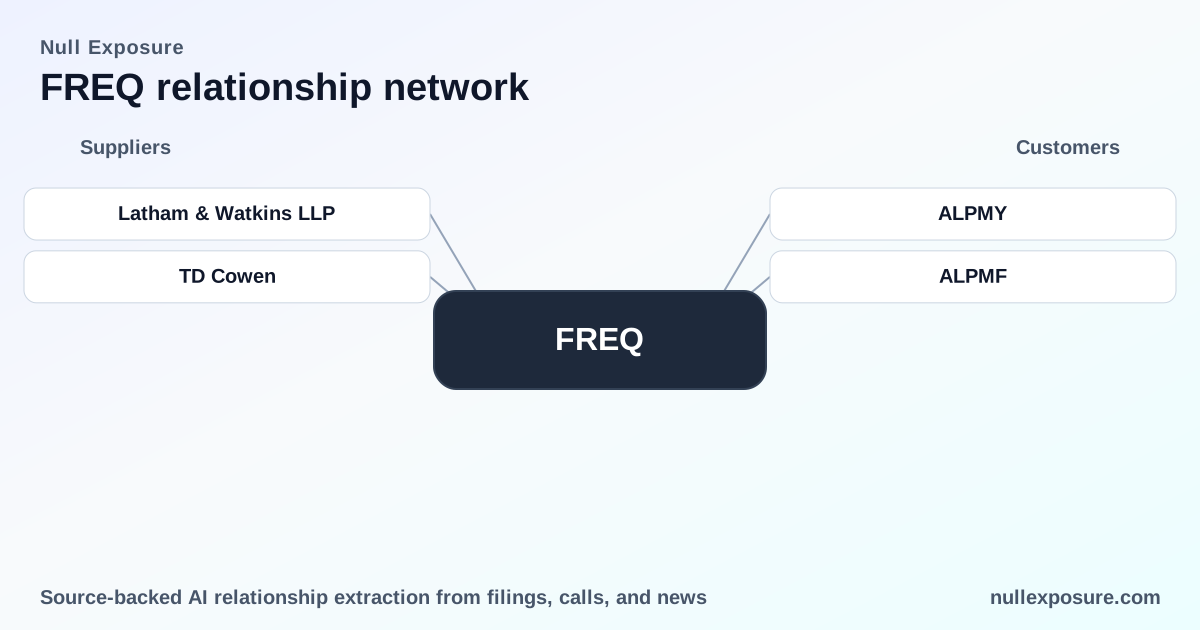
Frequency Therapeutics (FREQ) — Customer relationships that shape value and risk
Frequency Therapeutics develops regenerative therapeutics for inner-ear disorders and other indications and monetizes primarily through out-licensing and collaboration agreements that deliver upfront payments, milestone receipts and potential royalties while the company continues early-stage R&D and IP development. The company’s commercial economics are driven more by partner arrangements than by direct product sales, making the structure and timing of those partner relationships the central lens for valuation and downside protection. (Explore more research at https://nullexposure.com/)
How Frequency runs the business and what that means for investors
Frequency operates as a capital-efficient developer: it advances early-stage assets, secures development and commercialization partners outside the U.S., and captures non-dilutive cash via licensing arrangements and milestone triggers. This contracting posture concentrates commercial exposure in a small number of strategic partners, which creates both upside (large-cap partners accelerating global reach) and concentration risk (partner performance and milestone timing drive revenue recognition).
- Concentration: Astellas and its affiliates are the principal commercial counterparty referenced in historical filings and press coverage, making the Astellas relationship a meaningful revenue and de-risking lever at the company level.
- Criticality: Licensing arrangements for FX-322 and related programs are functionally critical to Frequency’s near-term revenue profile because the company’s own commercialization capability is limited relative to large pharma partners.
- Maturity: The business model sits between discovery-stage R&D and partner-driven development; revenue flows are lumpy and milestone-dependent, not recurring product sales.
- Contracting posture: The firm uses ex-U.S. licenses and academic collaborations to extend scientific reach while preserving upside through royalties and milestones.
Because external partners historically accounted for realized revenue recognition events, investors should read partner disclosures and milestone announcements as primary drivers of short-term cash flow and valuation re-ratings.
Complete inventory: every customer/partner mention in the record
Below are concise, plain-English summaries of every relationship entry captured in the source records, along with the originating publication for each mention.
-
Progentos — According to a Boston Business Journal story, Progentos’ CEO is also a co-founder of Frequency Therapeutics, and Progentos purchased Frequency’s multiple sclerosis program from the company, signaling an IP transfer and program divestiture (Boston Business Journal, May 20, 2024: https://www.bizjournals.com/boston/news/2024/05/20/progentos-ms-launches.html).
-
Astellas (hearingreview FY2022 entry) — Frequency recognized all revenue related to the Astellas agreement by June 30, 2021, leaving no Astellas-related revenue in the three months ending December 31, 2021; this demonstrates a milestone or license accounting event that materially affected FY2021–FY2022 revenue comparatives (Hearing Review, FY2022: https://hearingreview.com/inside-hearing/industry-news/frequency-therapeutics-announced-full-year-2021-financial-results).
-
ALPMY (duplicate hearingreview FY2022 entry) — The same hearingreview item is indexed under the ALPMY inferred symbol and reiterates that Astellas-related revenue was fully recognized as of June 30, 2021, with no comparable late-2021 recognition (Hearing Review / ALPMY, FY2022: https://hearingreview.com/inside-hearing/industry-news/frequency-therapeutics-announced-full-year-2021-financial-results).
-
Progentos Therapeutics (BioPharmaDive entry) — BioPharmaDive reported that Progentos acquired a multiple sclerosis drug originating from Frequency, effectively moving that program out of Frequency’s portfolio and into a startup vehicle (BioPharmaDive: https://www.biopharmadive.com/news/progentos-forbion-biotech-startup-financing-multiple-sclerosis/716620/).
-
Astellas Pharma (UPI profile) — Corporate profiles and press coverage note that Frequency holds a license and collaboration agreement with Astellas Pharma for FX-322 and also maintains collaborations with Massachusetts Eye and Ear, MIT, Scripps Research and Cambridge Enterprises, illustrating a hybrid model of industry partnership plus academic co-development (UPI, coverage of FX-322 collaboration: https://www.upi.com/Health_News/2022/12/05/hearing-loss-drug-injection/9301669138413/).
-
Astellas Pharma Inc. (financialcontent investor conference release) — A market release restated that Frequency has an ex-U.S. license and collaboration agreement with Astellas Pharma Inc. for FX-322, alongside academic and non-profit collaborations; this language reiterates Astellas’s specific role in non-U.S. development and commercialization (BizWire/FinancialContent release: https://markets.financialcontent.com/am-news/article/bizwire-2022-2-28-frequency-therapeutics-to-participate-in-upcoming-march-2022-investor-conferences).
-
ALPMY (duplicate financialcontent FY2026 entry) — The ALPMY-inferred record duplicates the financialcontent release, repeating that Astellas holds the ex-U.S. FX-322 license and that Frequency maintains several academic collaborations, reinforcing the company’s partner-heavy commercialization strategy (FinancialContent/BizWire: https://markets.financialcontent.com/am-news/article/bizwire-2022-2-28-frequency-therapeutics-to-participate-in-upcoming-march-2022-investor-conferences).
-
Astellas (hearingreview FY2021 guidance mention) — Hearing Review noted that Frequency’s public guidance did not include potential future milestones from Astellas for continued FX-322 development, indicating that additional milestone payments remained possible but were not baked into guidance at that time (Hearing Review, FY2021: https://hearingreview.com/inside-hearing/industry-news/frequency-therapeutics-updates-progress-on-hearing-loss-treatments).
-
ALPMF (duplicate hearingreview FY2021 entry) — The same FY2021 commentary is indexed under the ALPMF inferred symbol and reiterates that guidance excluded potential future Astellas milestones, highlighting the asymmetric upside that partner-triggered milestones can create (Hearing Review / ALPMF: https://hearingreview.com/inside-hearing/industry-news/frequency-therapeutics-updates-progress-on-hearing-loss-treatments).
-
Astellas Pharma (UPI duplicate entry, FY2022) — The UPI piece likewise lists Astellas among Frequency’s license and collaboration counterparties for FX-322 and other institutional collaborators, confirming the multi-party ecosystem supporting Frequency’s programs (UPI: https://www.upi.com/Health_News/2022/12/05/hearing-loss-drug-injection/9301669138413/).
What these relationships mean for value and risk
-
Astellas is the dominant commercial partner signal in the record; the company’s ex-U.S. license for FX-322 and the historical recognition of Astellas-related revenue represent both realized and potential cash inflection points. Historical revenue recognition through June 30, 2021 indicates that meaningful contractual milestones have already been achieved and accounted for (Hearing Review; FinancialContent).
-
Program transfers to startups (Progentos) demonstrate Frequency’s willingness to spin out or divest specific assets, which reduces near-term R&D burden but also removes future upside tied to those programs. The Progentos transactions indicate an active approach to portfolio optimization and IP monetization (Boston Business Journal; BioPharmaDive).
-
Academic collaborators (Massachusetts Eye and Ear, MIT, Scripps, Cambridge Enterprises) supply scientific validation and early-stage development capacity while leaving commercialization to pharma partners, reinforcing a model where Frequency’s value is realized through licensing and partnership milestones (UPI; FinancialContent).
Risks that change the investment calculus
- Revenue concentration risk tied to Astellas: large swings in milestone timing or termination outcomes produce outsized P&L effects.
- Milestone timing and recognition: past recognition events reduced near-term revenue potential; absent new milestones, revenue remains lumpy.
- Portfolio pruning via spinouts: divestitures unlock cash but narrow the company’s retained pipeline optionality.
Near-term catalysts and what investors should watch
- New milestone announcements or updated terms with Astellas will be the primary drivers of reported revenue and cash inflow.
- Any additional asset sales or spinouts similar to the Progentos transactions will change the company’s risk profile and should be read as deliberate portfolio management.
- Progress reports from academic collaborators could unlock new licensing interest or additional partnerships.
For a consolidated view of partner-level exposures and how they map to Frequency’s revenue profile, see more analysis at https://nullexposure.com/.
Bold relationships and milestone developments will reprice the stock; prioritize monitoring partner press releases and company filings for concrete milestone triggers and timing.