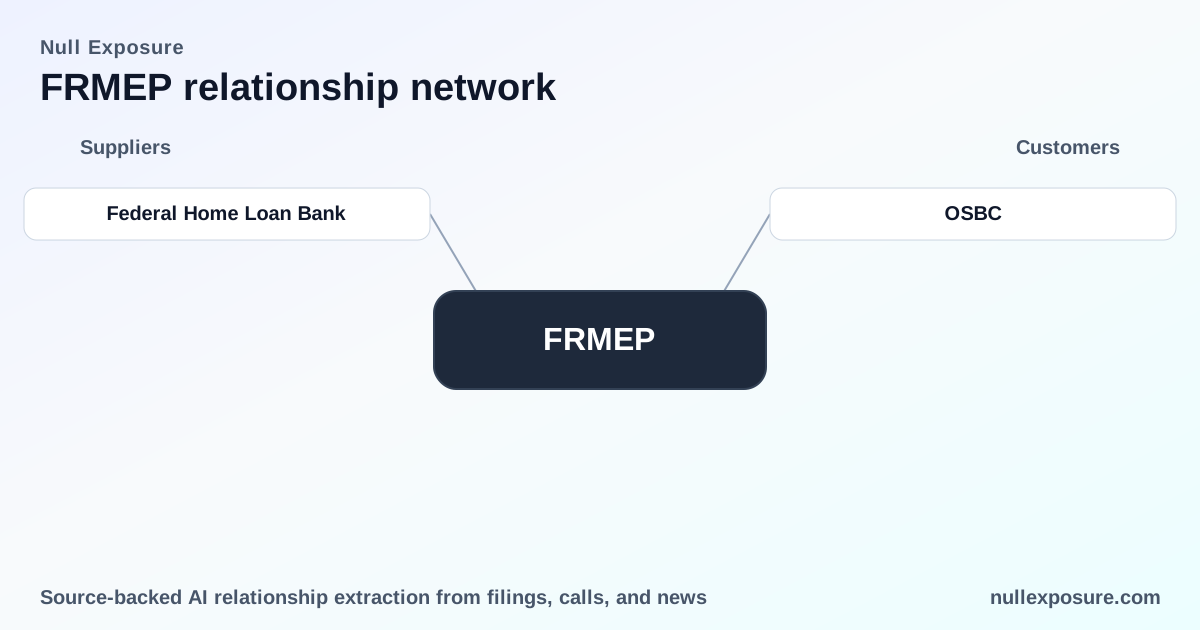
First Merchants (FRMEP): Customer Relationships That Matter to Investors
First Merchants operates as a regional community bank that monetizes a diversified set of banking services — net interest margin on commercial and consumer lending, deposit relationships, fee-based wealth management, and retained servicing rights on sold loans. The company’s business model is anchored in an 110-branch Midwest footprint and a strategy of originating loans (some sold on a non‑recourse basis with servicing retained) while capturing recurring deposit and fee income. For a quick view of relationship mapping and analytics, visit https://nullexposure.com/.
Quick read: why customers drive valuation here
First Merchants is a service-led regional bank: revenue is produced by lending and deposit spread plus advisory and servicing income. The balance of retail and middle‑market customers, combined with occasional portfolio actions (branch sales, loan sales), creates a hybrid of recurring cash flow and episodic P&L events that investors must separate when valuing the franchise.
- Scale and margins: FY trailing revenue ~ $638m with an EPS of $3.81 and a trailing P/E of 6.75 (company data through Q1 2026).
- Regional concentration: operations and customers are domestic and concentrated in Indiana, Ohio, Michigan, and nearby Illinois counties.
- Capital return: consistent dividend policy with the most recent dividend per share at $1.44 and a yield of 5.66% (company disclosure).
Customer relationships described in the public record
Below I cover every customer relationship flagged in the records and provide a concise investor-focused note and source reference for each.
Old Second National Bank (Old Second / OSBC)
First Merchants reported a gain related to the sale of five Illinois branches to Old Second National Bank, a transaction that impacted fourth-quarter 2025 earnings and reduced year‑over‑year comparables. According to the company press release on January 26, 2026, the branch sale closed on December 6, 2024 and was explicitly cited as the driver of a comparative decrease in reported items for the fourth quarter. (GlobeNewswire, First Merchants Corporation Announces Fourth Quarter 2025 Earnings Per Share, Jan 26, 2026 — https://www.globenewswire.com/news-release/2026/01/26/3225979/0/en/First-Merchants-Corporation-Announces-Fourth-Quarter-2025-Earnings-Per-Share.html)
OSBC (ticker inference)
A second relationship record lists OSBC as the inferred symbol for the same counterparty and references the identical branch sale transaction that influenced Q4 2025 results. This duplicate entry confirms the counterparty identity (Old Second) used in the disclosure and links the earnings movement directly to that asset‑sale event. (GlobeNewswire press release, Jan 26, 2026 — https://www.globenewswire.com/news-release/2026/01/26/3225979/0/en/First-Merchants-Corporation-Announces-Fourth-Quarter-2025-Earnings-Per-Share.html)
What the constraints tell us about how First Merchants operates
The extracted constraints provide signals you can translate into operating model characteristics, contracting posture, concentration, criticality, and maturity — all relevant for underwriting the customer book and counterparty exposures.
-
Contracting posture — mixed retail subscription characteristics at the employee level: the firm runs a formal Employee Stock Purchase Plan (ESPP) that is subscription‑style (quarterly payroll deductions, $25,000 calendar cap), signifying established corporate governance and an employee base incentivized around equity ownership (company ESPP disclosures, 2024). This is a company‑level signal of mature HR and capital-alignment practices rather than a customer contract type.
-
Customer concentration and counterparty mix — diversified but regionally concentrated: filings identify individual consumers, small businesses, mid‑market commercial borrowers, and government/public finance as primary counterparty types. This mix signals diversified loan composition across consumer, CRE, and commercial lines, yet regional concentration in the Midwest (110 branches in IN, OH, MI and operations “domestic”) implies localized economic sensitivity (company filings and disclosures).
-
Relationship role — seller and service provider: the bank is both a seller of originated loans (selling certain loans on a non‑recourse basis) and a retained servicer, which produces servicing assets on the balance sheet. This dual role creates fee and servicing income streams while transferring some credit risk to buyers — an important structural feature for cash flow modeling.
-
Stage and maturity — active, established community bank: branch density and ongoing electronic/mobile delivery channels indicate an active retail and commercial delivery platform with established customer relationships and a mature community banking franchise.
-
Segment focus — services / community banking: the company operates in one significant business segment (community banking) which simplifies segmental risk assessment but concentrates exposure to interest‑rate cycles and regional economic health.
For a full view of these signals in a relationship map, see https://nullexposure.com/.
Investor implications and risk considerations
Translate the above into portfolio actions and risk controls.
- Earnings drivers and one‑off volatility: the branch sale to Old Second generated a discrete gain that distorted Q4 2025 comparatives. Investors should normalize earnings for branch divestitures and other non‑recurring items when projecting sustainable earnings power.
- Regional concentration risk: the Midwest footprint creates geographic concentration; stress scenarios should focus on local commercial real estate and manufacturing cycles.
- Asset‑mix complexity: retained servicing rights provide recurring fee income but require careful valuation and liquidity assessment if credit or prepayment behavior changes.
- Performance metrics to watch: quarterly earnings growth and revenue growth were negative year‑over‑year in the most recent reporting period (quarterly EPS growth -52.1%, quarterly revenue growth -2.5%), indicating near‑term headwinds that investors should reconcile with longer‑term return metrics (ROE ~7.95%, profit margin ~31.2%).
Bottom line for operators and investors
First Merchants is a service-driven community bank generating cash from lending margins, deposits, wealth advisory, and servicing income, with episodic portfolio maneuvers (branch sales) that materially affect reported results. Key decisions for investors are whether to value the bank on normalized recurring cash returns or to include the contribution of one‑time transactional gains; for operators, the priority is balancing deposit and loan growth in a regional market while extracting fee income from servicing and wealth businesses.
For more granular relationship intelligence and to map counterparties across your coverage universe, visit Null Exposure at https://nullexposure.com/.