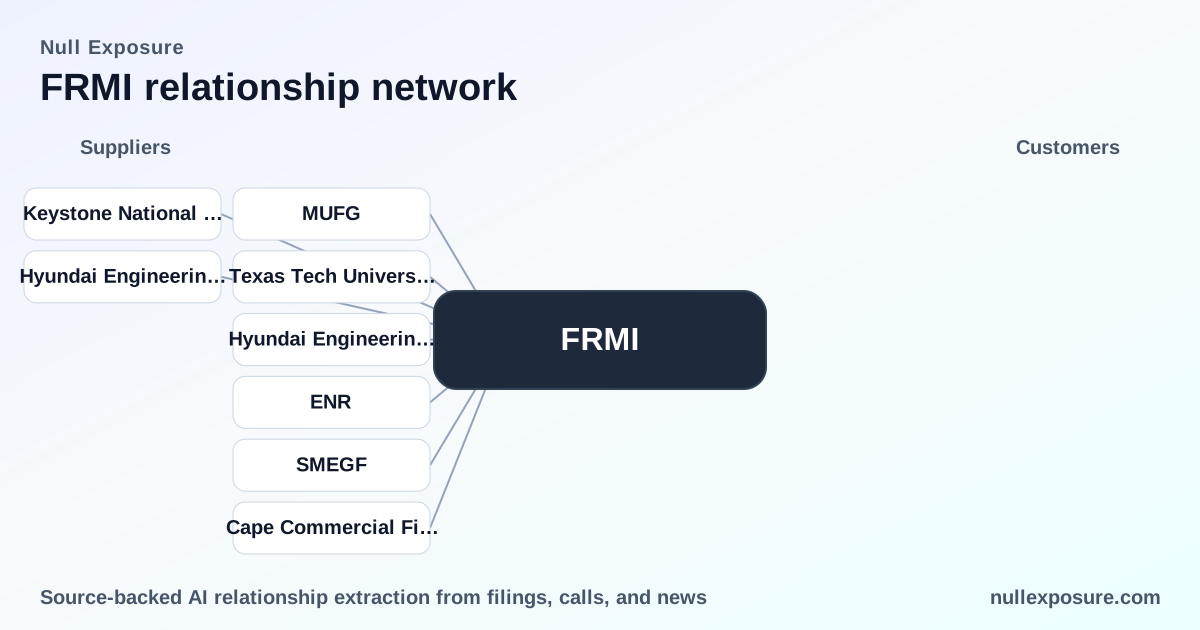
Fermi Inc. (FRMI) — Customer relationships that define a project-stage nuclear play
Fermi Inc. operates as a developer of advanced nuclear energy systems and radiation-detection technologies, monetizing primarily through long-term power and site-lease contracts, strategic partnerships with regional institutions, and targeted sales or services to large energy consumers such as data center tenants. The company's commercial thesis is execution-driven: convert developmental assets like Project Matador into contracted capacity and anchor revenue via large, multi-year agreements with utilities and hyperscalers. For a concise vendor and counterparty profile, see more at https://nullexposure.com/.
Why customers matter for valuation and risk
Fermi’s business model is capital and time intensive: projects require site development, permitting and grid interconnection before monetization. Customers are not interchangeable buyers — they are contract anchors whose commitments directly unlock project financing, accelerate construction, and validate regulatory pathways. With reported zero revenue and negative EPS in the latest filings, customer conversions are the primary short‑term value inflection.
Active customer and partner relationships investors should track
This section covers every customer relationship surfaced in the available results, with a clear, plain-English takeaway and source reference for each.
Southwestern Public Service Company (Xcel Energy subsidiary) — secured grid capacity
Fermi America executed an Electric Service Agreement with Southwestern Public Service Company (a subsidiary of Xcel Energy) to secure up to 200 MW of power capacity, establishing a direct commercial link between Fermi’s supply and an established regional utility. According to a PR Newswire release cited in May 2026, this contract frames grid interconnection and capacity allocation for Project Matador. (PR Newswire, May 2026 via Finviz)
Texas Tech University System — site partner and lease counterparty for Project Matador
Texas Tech University System reiterated commitment to its partnership with Fermi America and is engaged in good-faith discussions to extend milestones in the lease agreement as Project Matador advances into its next phase, signaling institutional support for site development and local stakeholder alignment. This statement was released by Fermi in a PR Newswire notice in May 2026. (PR Newswire, May 2026)
Google — potential hyperscaler customer with visible tensions
A public on-stage disagreement at CERAWeek between Fermi’s leadership and Google’s global head of data center energy indicates a strained dialogue with a major potential buyer of clean, firm power; the interaction suggests relationship management with hyperscalers is consequential and has visible reputational implications. This encounter was reported in a column in the Statesman in 2026. (Statesman column, 2026)
Amazon — named tenant prospect linked to large-scale data center demand
Fermi leadership publicly identified Amazon as a prospective tenant related to its development plans, implying interest from another hyperscaler with material off-take potential for large, long-duration energy supply. Coverage in an energy-sector newsletter referenced comments attributing the tenant to Amazon in 2026. (Distilled.Earth citing Business Insider, 2026)
What these relationships imply about FRMI’s operating model
- Contracting posture: The evidence shows Fermi pursues long-term, capacity-focused contracts (e.g., the 200 MW electric service agreement and lease milestones) consistent with project-financeable energy developments. These contracts are structured to underpin capital deployment and regulatory progress.
- Customer concentration: The named counterparties are few but large — a regional utility, a statewide university system, and hyperscaler tenants — which produces high concentration risk: conversion or attrition of any single anchor could materially change project economics.
- Criticality: Customers are functionally critical. Utility agreements determine grid access and deliverability; institutional site partners enable permitting and land control; hyperscalers provide demand certainty needed to justify construction economics.
- Maturity and commercialization stage: Company-level financials show zero reported revenue and negative EPS (TTM EPS -1.11), indicating a development-stage enterprise that depends on these contractual and partnership milestones to reach commercialization.
No explicit contract constraints were provided in the customer-relationship dataset; this absence itself is a signal that publicly disclosed contractual limitations, such as material exclusivity clauses or financing covenants, are not visible in the current feed, and analysts should treat contract terms as key undisclosed variables to be obtained from filings or direct corporate disclosures.
Investment implications — key takeaways for operators and allocators
- Anchored but thin: Fermi has anchored counterparties that can justify large capital projects — a utility service agreement (200 MW) and a university lease partnership — but the overall customer list is short, producing binary downside if one anchor fails to convert.
- Hyperscaler optionality matters: Interest or friction with hyperscalers (Google, Amazon) translates directly into project scale and revenue cadence; securing at least one firm hyperscaler off-take would substantively de-risk financing.
- Execution is the valuation driver: With no meaningful revenue to date, value is concentrated in contract execution, permitting, and interconnection milestones rather than in short-term financial metrics.
What analysts and operators should monitor next
- Public filings or press releases that provide contract term sheets (tenor, pricing, termination rights, milestone triggers).
- Permitting and interconnection milestones tied to the Southwestern agreement and the Texas Tech lease.
- Any formal off-take letters or power purchase agreements from Google or Amazon that move beyond public comments.
- Changes in insider and institutional ownership; current ownership shows high insider control (64.54%) and low institutional stake (~7.51%), which affects governance and capital-raising dynamics.
For operational diligence, request redlines or summaries of the electric service agreement and lease milestones; for investment diligence, model scenarios that assume staggered customer conversions and sensitivity to single-anchor outcomes.
Learn more about how these customer relationships influence project risk and valuation at https://nullexposure.com/.
Final verdict for investors and operators
Fermi’s customer map is strategically valuable but narrow: utility anchoring and institutional site control provide the necessary scaffolding for project development, while hyperscaler commitments would convert optionality into predictable cash flows. The company remains a classic execution risk play — reward scales with the conversion of named relationships into fully contracted off-take and financed construction. Investors and operators should prioritize contract transparency, milestone verification, and hyperscaler negotiations as the immediate gating items for realizing value.